
M350 AUPHY Mechanical Metronome
4.4Editor score
High-strength PC body
Metal clockwork movement
Transparent dust cover
Compare the top 10 mechanical metronome for piano options to find the perfect tool for accurate rhythm and tempo training across all skill levels.
Finding a reliable mechanical metronome for piano helps musicians maintain steady tempo without relying on batteries or digital screens. These classic devices offer tactile feedback and visual cues that support deep rhythmic understanding during practice sessions.
We evaluated ten highly rated models based on build quality, sound clarity, tempo range, and ease of use. Each product offers unique features suited for beginners, students, and advanced players seeking consistent timing tools.
Every pick highlights key strengths, limitations, and ideal use cases to guide your decision. Keep in mind that product availability and pricing may vary over time, so check current listings before purchasing.
4.4Editor score

4.5Editor score

4.6Editor score
This side-by-side comparison highlights key specifications and features across all ten models to help you quickly identify which metronome best matches your practice needs and budget.



The Tempi mechanical metronome earns top honors for its blend of timeless design and dependable performance. With a solid 4.5 rating, it stands out for musicians seeking a tool that looks as good as it performs.
We may earn a commission when you buy through this link, at no additional cost to you.
Its steel gears provide long-lasting accuracy without the drift common in cheaper models. The brown grain veneer finish adds a touch of elegance to any practice space. A two-year warranty and included microfiber cloth show the manufacturer's confidence in quality.
While it costs more than budget options, the durability and aesthetics justify the investment for serious players. The wind-up mechanism lasts up to twenty minutes, reducing interruptions during extended practice sessions.
Ideal for students and professionals who value precision and style. This metronome helps build strong rhythmic habits without relying on electronic devices or batteries.
The brown grain veneer gives it a classic piano room look while housing reliable mechanical internals.
Steel gears resist wear and keep tempo steady, supported by a two-year warranty for peace of mind.
We may earn a commission when you buy through this link, at no additional cost to you.
The M350 AUPHY delivers impressive value with its classic styling and reliable performance. Rated 4.4 by users, it balances cost and quality effectively for beginners and casual players.
We may earn a commission when you buy through this link, at no additional cost to you.
Its PC body and metal clockwork gears ensure consistent beats with error within one percent. The lowered center of gravity prevents tipping during use. Transparent cover keeps dust out while letting you watch the pendulum.
The accent bell feature helps mark downbeats clearly, aiding rhythm development. Wind-up lasts roughly ten to forty minutes depending on tempo. While lighter than premium models, it holds up well under regular practice.
Great for students or parents seeking an affordable, effective tool. It builds essential timing skills without breaking the bank.
Metal gears inside a PC body deliver precision typically found in pricier models.
Low center of gravity keeps it steady, and the transparent cover lets you track motion easily.
We may earn a commission when you buy through this link, at no additional cost to you.
The Wittner 836 Taktell Piccolo represents premium quality with a minimalist design. With a 4.6 rating, it appeals to players who prefer a quiet, unobtrusive metronome.
We may earn a commission when you buy through this link, at no additional cost to you.
Its compact plastic casing makes it easy to store or transport. The absence of a bell ensures the click remains clear without extra sounds. Wittner's reputation for reliability backs its long-term performance.
While lacking bell options, its pure tick suits classical practice or quiet environments. The higher price reflects build quality and brand trust. It stays consistent over years of use.
Best for professionals or purists prioritizing silence and brand heritage. It delivers pure rhythmic guidance without digital interference.
Without a bell, the metronome offers a clean tick ideal for focused study.
Wittner's legacy ensures this model remains accurate and durable for years.
We may earn a commission when you buy through this link, at no additional cost to you.
The Ueteto mechanical metronome offers loud, clear feedback ideal for noisy rooms. With a 4.4 rating, it provides practical features for musicians who prioritize audibility.
We may earn a commission when you buy through this link, at no additional cost to you.
Its wind-up mechanism delivers up to eighteen minutes per wind. The audible click and bell ring help maintain rhythm while reading sheet music. Tempo spans 40 to 208 bpm with flexible beat selection.
Though simple in design, it performs consistently for daily practice. Setup involves removing brake and cover, then adjusting tempo and beat. It is built for longevity with solid customer support.
Suits students and beginners needing strong sound cues. It delivers essential functions without unnecessary complexity.
Loud clicks ensure the beat cuts through ambient noise during group sessions.
Choose from zero to six beats per bar to match varied musical patterns.
We may earn a commission when you buy through this link, at no additional cost to you.
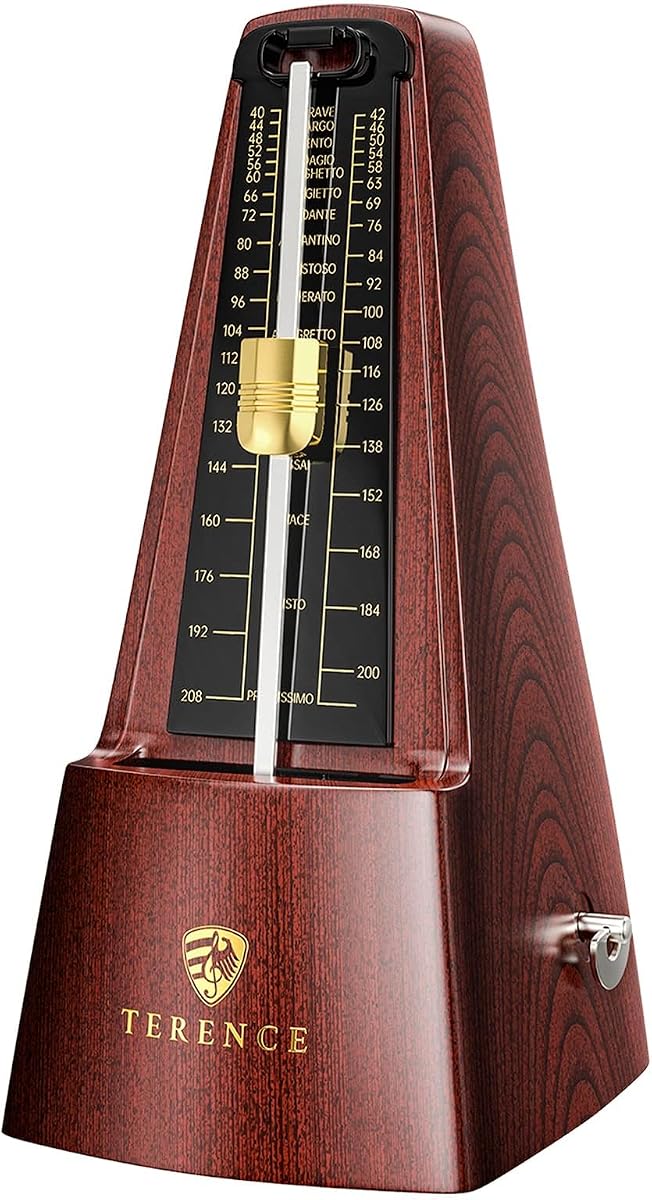
This wood grain mechanical metronome combines aesthetic appeal with reliable performance. Rated 4.4, it targets beginners needing clear beats and steady tempo control.
We may earn a commission when you buy through this link, at no additional cost to you.
Metal movement parts reduce wear and ensure consistent timing over years. Loud sound helps users hear beats clearly. The classic wood grain look complements home studios nicely.
Setup is straightforward for children and new students. It supports various instruments and beats. While lacking battery features, the mechanical design avoids power issues.
Ideal for home practice where visuals matter. It builds solid rhythm foundations without digital distractions.
All-metal movement ensures the beat stays true even with heavy use.
Wood grain finish adds warmth to your instrument setup.
We may earn a commission when you buy through this link, at no additional cost to you.
This model emphasizes loudness and precision for effective practice. With a 4.2 rating, it offers high accuracy for users needing strong audio feedback.
We may earn a commission when you buy through this link, at no additional cost to you.
High-strength PC body with metal movement ensures beats stay consistent. Loud sound helps in louder environments. Transparent cover keeps mechanisms clean and visible.
Operation steps are clearly defined for quick setup. Tempo spans 40 to 208 bpm with multiple beat choices. It meets practice needs without extra features.
Best for those prioritizing volume and accuracy. It supports all instruments with reliable timing.
Loud tick ensures the beat is heard over ambient noise.
Dust cover protects internal gears while allowing visual monitoring.
We may earn a commission when you buy through this link, at no additional cost to you.
This universal metronome offers versatility and durability across instruments. With a 4.6 rating, it stands out for robust construction and customer satisfaction.
We may earn a commission when you buy through this link, at no additional cost to you.
High-hardness plastic and metal parts ensure long life. Multiple colors let users pick their preferred look. One-year warranty and thirty-day returns add security.
Beats range 40 to 208 bpm with heavy bell options. Easy use suits children and adults. It provides stable rhythm without complexity.
Ideal for households with multiple instruments. It combines practicality with reliable performance.
Choose from several colors to match your personal style.
Satisfaction guarantee ensures confidence in purchase.
We may earn a commission when you buy through this link, at no additional cost to you.
This wood grain Ueteto model delivers precision with a classic aesthetic. With a 4.3 rating, it balances design and function well for serious practice.
We may earn a commission when you buy through this link, at no additional cost to you.
Loud crisp tick cuts through ambient noise. No batteries needed; full wind lasts minutes depending on tempo. Clear bell options help mark beats accurately.
Winding requires care to avoid spring damage. Setup is quick for beginners. It supports a variety of instruments with steady beats.
Best for visual appeal and reliable timing. It helps musicians focus on rhythm without tech issues.
Loud click ensures you never lose the beat.
Wood grain finish looks elegant on any piano.
We may earn a commission when you buy through this link, at no additional cost to you.
This transparent model offers a modern twist on classic metronomes. Rated 4.0, it attracts users seeking a visually distinctive practice tool.
We may earn a commission when you buy through this link, at no additional cost to you.
All-metal movement and bell provide loud, clear beats. ABS material stays bright without yellowing. Transparent design shows internal mechanics, appealing to hobbyists.
Portable and suitable for teaching. It supports all major instruments. While not top-rated, it offers unique aesthetics.
Great for gift-giving or style-focused users. It combines function with eye-catching design.
Transparent body reveals gears and pendulum motion.
Contemporary design stands out among traditional models.
We may earn a commission when you buy through this link, at no additional cost to you.
This budget-friendly option provides loud beats for basic rhythm training. With a 3.8 rating, it suits entry-level users prioritizing cost.
We may earn a commission when you buy through this link, at no additional cost to you.
Simple operation steps get you started quickly. Loud sound helps in noisy rooms. No batteries needed; wind mechanism offers reliability.
Five tempo settings cover standard practice needs. Materials are basic but functional for casual use. It gets the job done without extra cost.
Best for beginners or occasional players. It offers essential rhythm support at minimal expense.
Low cost makes it accessible for first-time buyers.
Delivers core features without unnecessary complexity.
We may earn a commission when you buy through this link, at no additional cost to you.
Selecting the right mechanical metronome involves weighing build materials, sound clarity, tempo range, and ease of use against your specific practice needs and budget.
Metal movements last longer and maintain accuracy better than plastic ones, especially under frequent use. Look for steel or metal gears to ensure your beat stays steady over time.
Prioritize metal movement for longevity and consistent rhythm.
A range of 40 to 208 beats per minute covers nearly all classical and contemporary pieces. This flexibility lets you practice slow passages and fast passages without changing devices.
Choose a model with 40 to 208 bpm for maximum versatility.
Selectable bell settings (0, 2, 3, 4, 6) help emphasize downbeats, improving your internal pulse. If you prefer pure clicks, ensure the bell can be turned off.
Opt for adjustable bells to match your rhythmic training goals.
Loud clicks are essential in shared spaces or for learners who need clear auditory feedback. Some models offer louder ticks or accent bells to ensure the beat is never missed.
Pick a loud model to guarantee you hear every beat clearly.
Classic wood or sleek plastic finishes impact aesthetics and longevity. Durable casings resist wear, while elegant designs complement home studios. Ensure the base is stable to avoid tipping.
Balance aesthetic preference with sturdy construction for daily use.
Beginner-friendly models have clear markings, simple winding keys, and straightforward beat adjustments. Test that the brake and cover are easy to access for quick setup.
Look for clear instructions and intuitive controls for hassle-free operation.
Some brands offer one to two-year warranties, adding confidence in quality. Customer support responsiveness matters if parts like springs or weights need replacement.
Choose a product with a warranty for added peace of mind.
Budget models work well for beginners, but higher-priced options often offer better materials and accuracy. Consider how often you will use it to justify the investment.
Balance cost with expected usage to find the best value.
Start by placing the metronome on a flat, stable surface to prevent wobbling during operation. Remove the bottom brake and transparent cover gently before any adjustments.
Set your desired tempo by sliding the pendulum weight to the matching mark on the scale. Select your preferred beat pattern, such as 4 or 6, using the switch or dial at the base.
Wind the key clockwise until you feel slight resistance to avoid damaging the spring. Flick the pendulum to one side to start the ticks, and wipe the exterior with a soft cloth after each use.
Mechanical metronomes provide visual cues from the pendulum, helping develop a deeper sense of time. They require no batteries, making them reliable in any setting.
A full wind typically lasts between 10 to 20 minutes depending on the tempo setting. Lower tempos extend wind duration, while faster tempos shorten it.
Yes, mechanical metronomes work for guitar, violin, drums, and other instruments. The tempo range and beat options suit most musical needs.
Place it on a soft mat or lower the volume by reducing wind tension. Some models allow adjusting the bell to minimize extra sounds.
Store in a dry place away from direct sunlight. Ensure the pendulum is secured or covered to prevent damage during transport.
High-quality metal parts resist rust, but avoid humid environments. Clean the exterior regularly to maintain performance and appearance.
The Tempi, M350 AUPHY, and Wittner models lead this list for their balance of quality, style, and performance. Each offers unique strengths tailored to different practice needs and budgets.
Prioritize movement material and sound volume to ensure reliable beats during long sessions. Visual design and ease of use also impact your daily practice experience.
Prices and availability shift, so review current listings before purchasing. With the right mechanical metronome, you can build lasting rhythmic discipline and musical confidence.