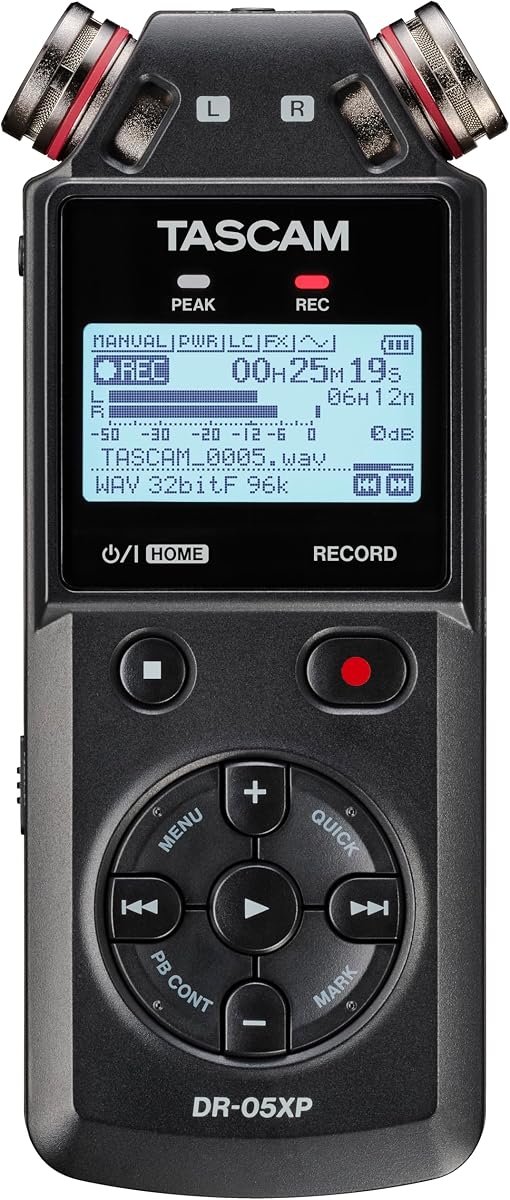
TASCAM DR-05XP Portable Handheld Recorder
4.2Editor score
32-bit float recording
USB-C audio interface
17.5 hours operation
This guide compares the top handheld recorders for journalists, evaluating audio quality, portability, and features to help you choose the right tool for field
Journalists need reliable audio tools to capture clear interviews and ambient sound in any environment. A good handheld recorder offers professional quality, long battery life, and ease of use for on-the-go reporting.
We evaluated ten top models based on microphone quality, storage options, connectivity, and durability. Each device was reviewed for its ability to handle real-world field conditions and deliver consistent performance.
Our selections highlight the best options for budget, premium, and specialized needs. Note that product availability and features may change, so verify details before purchasing to ensure the best fit.
4.2Editor score

4.7Editor score

4.6Editor score
The following table provides a side-by-side comparison of all ten recorders. It highlights key specifications to help you quickly identify which model meets your specific reporting needs and budget.




The Zoom H5 is a top choice for journalists needing versatile audio capture. It earns an Editor's Choice badge for its robust feature set and reliability in the field. Its interchangeable capsules allow you to adapt quickly to different recording environments.
We may earn a commission when you buy through this link, at no additional cost to you.
Key strengths include four-track simultaneous recording and professional XLR/TRS inputs. This means you can connect external mics or mixers while recording high-quality stereo directly. The built-in X/Y capsule provides excellent stereo imaging for ambient sound.
Trade-offs involve its weight and cost compared to simpler devices. However, the flexibility it offers justifies the investment for professionals who need to handle complex audio tasks or high-fidelity interviews consistently.
Journalists seeking a reliable workhorse should choose this model. It is ideal for those who need future expandability and premium audio quality without compromising portability for on-the-go reporting tasks.
The system of interchangeable capsules lets you swap microphones like camera lenses for different scenarios.
XLR/TRS combo connectors support external microphones and mixers for expanded audio capabilities.
We may earn a commission when you buy through this link, at no additional cost to you.
The TASCAM DR-05XP is a standout budget option for journalists. It offers professional features like 32-bit float recording at an accessible price point. Its compact design ensures it fits easily into a pocket or small bag.
We may earn a commission when you buy through this link, at no additional cost to you.
This device captures clear audio with omnidirectional microphones that handle loud environments well. The USB-C interface allows direct recording to computers and charging. You get flexibility with multiple bit depths and sampling rates.
While it lacks advanced features, it delivers reliable performance for interviews and voice notes. The main downsides are the need to buy batteries separately and simpler menu navigation compared to higher-end models.
For reporters on a budget, this recorder is an excellent starting point. It balances cost with essential high-quality recording needs, making it ideal for daily fieldwork without breaking the bank.
This format prevents clipping, capturing a wider dynamic range without needing precise gain adjustments.
Connect directly to computers for audio interface use or quick file transfers during fieldwork.
We may earn a commission when you buy through this link, at no additional cost to you.
The Pocket AI Voice Recorder redefines field recording with AI integration. It acts as an assistant to transcribe and summarize meetings instantly. This device is a premium choice for journalists who value efficiency and organization.
We may earn a commission when you buy through this link, at no additional cost to you.
Its standout feature is the ability to generate action items and conversation maps from audio. You can capture conversations instantly with a simple tap. The MagSafe design allows hands-free recording on your phone.
The main trade-off is its higher price and reliance on digital features. However, the time saved on post-processing makes it a powerful tool. It is perfect for interviews and note-taking where quick insights matter.
Journalists needing advanced tools will appreciate this recorder. It transforms raw audio into structured notes, reducing manual transcription work and keeping you focused on gathering stories.
Automatic summaries and key action items help you review conversations quickly without listening to entire files.
Attach easily to iPhone for hands-free use, freeing your hands while capturing meetings or events.
We may earn a commission when you buy through this link, at no additional cost to you.
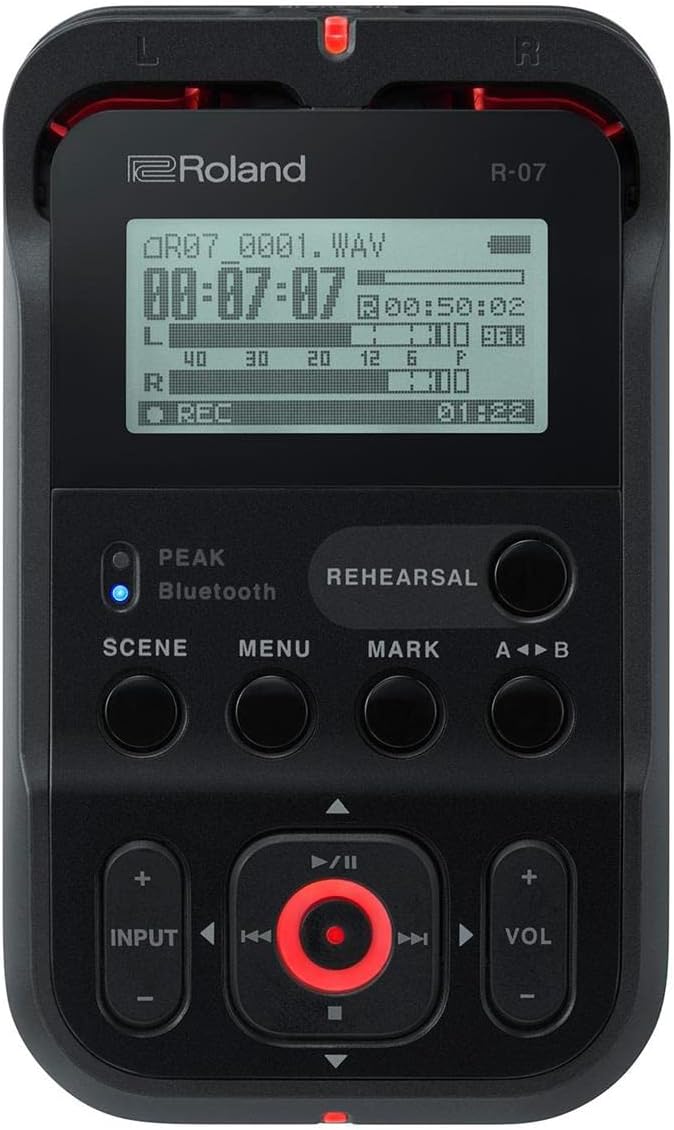
The Roland R-07 is a lightweight hi-res recorder designed for convenience. It features Bluetooth control and simultaneous MP3 and WAV recording. These features make it ideal for journalists who need quick setup and long battery life.
We may earn a commission when you buy through this link, at no additional cost to you.
Integrated stereo microphones capture excellent audio quality in various settings. You can use Bluetooth speakers for monitoring content wirelessly. One-touch templates simplify setup, saving you valuable time during interviews or events.
Trade-offs include dependence on AA batteries and limited external connections. While not as flexible as XLR-equipped models, it performs well for general reporting. The built-in speaker is useful for quick playback anywhere.
Journalists prioritizing ease of use should consider this model. It balances high-quality recording with wireless features, making it a reliable tool for daily coverage and live updates.
Use supported smart devices to control playback and monitoring wirelessly for greater flexibility in the field.
Runs up to 16 hours on AA batteries, ensuring you can cover long shifts without constant recharging.
We may earn a commission when you buy through this link, at no additional cost to you.
The EVISTR 64GB recorder is designed for extended recording sessions. It stores up to 4,660 hours of files with its high capacity. Voice activation helps save storage by recording only when sound is detected.
We may earn a commission when you buy through this link, at no additional cost to you.
Its dynamic noise reduction microphone captures crystal-clear stereo sound. The metal body ensures durability in demanding environments. You can set recording gain levels to capture distant conversations effectively.
Trade-offs involve a simpler menu and lack of external audio inputs. However, for note-taking and interviews, it offers excellent value. The Type-C charging ensures quick power-ups between sessions.
Journalists needing long-term archiving will appreciate this device. It handles hours of interviews without storage worries, making it a practical tool for research and daily documentation tasks.
Adjust sensitivity to record only when human voice is present, saving storage and reducing silent segments.
Store thousands of hours of files, eliminating the need for frequent transfers or memory management.
We may earn a commission when you buy through this link, at no additional cost to you.
The Tonfarb 64GB recorder focuses on simplicity and efficiency. Its one-click record function ensures you never miss important moments. This is ideal for journalists needing quick and reliable recording without complex setups.
We may earn a commission when you buy through this link, at no additional cost to you.
It stores up to 4,600 hours with a 600mAh battery supporting 48 hours of use. Advanced noise reduction delivers clear playback for interviews. Password protection safeguards sensitive files stored on the device.
Trade-offs include lack of professional external inputs and basic sound quality. However, its ease of use makes it effective for memos and brief interviews. The large screen helps navigation during fieldwork.
Journalists valuing speed and storage should consider this model. It offers a no-fuss solution for capturing notes and brief conversations efficiently in busy environments.
Push the side button to start recording instantly, even when powered off, for quick capture.
Secure sensitive recordings with a password to prevent unauthorized access to your files.
We may earn a commission when you buy through this link, at no additional cost to you.
The Tascam DR-40 offers professional multi-track recording at a reasonable price. It supports XLR/TRS inputs for external microphones. The X/Y microphone array provides high-quality stereo recording for field reports.
We may earn a commission when you buy through this link, at no additional cost to you.
Its 4-track simultaneous recording allows flexible overdubbing for interviews. This versatility is useful for journalists needing layered audio. The compact design fits easily into field kits without adding bulk.
Trade-offs include no wireless features and a simple menu. However, its solid audio performance makes it reliable. It is a great option for those transitioning from phone recording to dedicated hardware.
Journalists seeking expandable audio capabilities should choose this model. It provides a solid foundation for professional fieldwork with essential professional connectors and recording modes.
Record four tracks simultaneously to layer interviews or ambient sound for complex field production.
Connect external microphones and mixers for high-quality audio capture in challenging environments.
We may earn a commission when you buy through this link, at no additional cost to you.
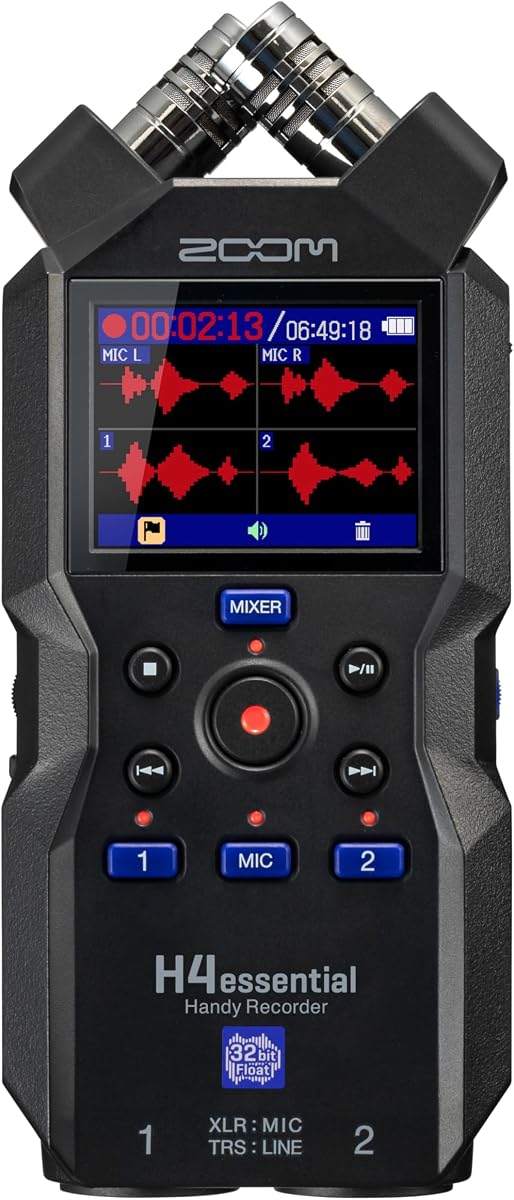
The Zoom H4 Essential is designed for creators needing accessibility and ease of use. Its spoken menu guidance helps visually impaired users navigate features easily. It records interviews and podcasts with professional XLR/TRS inputs.
We may earn a commission when you buy through this link, at no additional cost to you.
USB-C streaming connects directly to phones or computers for live use. This recorder balances advanced capabilities with intuitive controls. It captures high-quality audio without overwhelming complexity during fieldwork.
Trade-offs include fewer advanced features compared to high-end models. However, its focus on accessibility and usability makes it unique. Journalists needing clear audio and simplicity will find it reliable.
Journalists prioritizing accessibility should consider this recorder. It ensures inclusive fieldwork while delivering professional audio quality for interviews and content creation tasks.
Audible menu guidance makes navigation easier for visually impaired users and simplifies operation for everyone.
Connect directly to devices for live streaming and remote meetings, offering versatile recording options.
We may earn a commission when you buy through this link, at no additional cost to you.
The Zoom H1 Essential is a lightweight recorder ideal for quick capture. It offers natural stereo sound for interviews and ambient recordings. Its USB-C connection allows direct linking to computers for streaming.
We may earn a commission when you buy through this link, at no additional cost to you.
This device is ready when inspiration hits with simple controls. It captures conversations clearly with minimal setup. The compact design ensures it fits in any pocket, making it perfect for mobile reporting.
Trade-offs involve lack of external inputs and single-track recording. However, for solo fieldwork, it provides excellent value. The audio clarity makes it a solid choice for simple interviews and voiceovers.
Journalists needing a portable solution should choose this model. It delivers reliable audio capture without bulk, ensuring you are always prepared for spontaneous interviews or soundscapes.
Compact body fits in your pocket, ensuring you are always ready for spontaneous interviews.
Connect to computers or phones for streaming and fast file transfers during field reporting.
We may earn a commission when you buy through this link, at no additional cost to you.
The Zoom H2 Essential offers versatile recording patterns for different environments. Its three built-in microphones support nine selectable patterns. This device is ideal for capturing ambient sound and interviews with high-quality audio.
We may earn a commission when you buy through this link, at no additional cost to you.
With 32-bit float recording, it captures clip-free audio at any volume. Bluetooth sync allows multiple units for multi-angle recording. Accessible menus in multiple languages ensure ease of use for all users.
Trade-offs include lack of external inputs and limited editing tools. However, its flexible patterns make it adaptable. It suits journalists needing diverse sound capture without needing complex setups.
Journalists seeking adaptability should choose this model. It provides rich audio options and accessibility, ensuring you can handle various field recording tasks effectively.
Choose from nine microphone patterns to capture everything from interviews to wide soundscapes.
Wirelessly control and sync multiple units for perfectly aligned multi-angle recordings in the field.
We may earn a commission when you buy through this link, at no additional cost to you.
Choosing the right recorder involves balancing audio quality, portability, and specific features needed for field reporting.
Microphone quality is critical for capturing clear interviews and ambient sound. Look for omnidirectional or stereo mics that handle different environments effectively. High-quality mics reduce background noise and ensure voice clarity.
Long battery life ensures you can record throughout shifts without interruptions. Check if the device uses AA batteries or rechargeable options for convenience. Continuous operation is vital for long interviews or events.
Adequate storage prevents losing important recordings during long days. Consider internal memory or SD card support for expansion. Large capacity is essential for archiving interviews and field data.
Connectivity like USB-C allows direct transfer and streaming to computers. Bluetooth enables wireless monitoring and remote control. These features speed up workflow and simplify file management in the field.
Lightweight and compact designs make it easier to carry a recorder all day. A small device fits in a pocket and reduces fatigue. Portability ensures you are always ready to capture breaking news.
Support for WAV and MP3 formats ensures compatibility and quality. Higher bit depths like 24-bit or 32-bit float preserve audio details. Choose formats that suit your editing and distribution needs.
Durable construction withstands bumps and drops in field environments. Look for metal bodies or protective designs. Reliability is key to ensuring your recordings are safe in any situation.
Simple interfaces allow quick operation during interviews. Clear buttons and menus prevent mistakes under pressure. Intuitive controls save time and help focus on reporting rather than technology.
Always test the recorder before an interview to ensure batteries and memory are ready. Check microphone positioning for best sound capture and avoid handling noise during recording.
Regularly update firmware to access new features and improve performance. Store recordings on external drives or cloud services to prevent data loss from accidental deletion or damage.
Keep the device clean and dry to maintain longevity. Use protective cases when traveling and avoid exposure to extreme temperatures that could affect internal components.
The Zoom H5 is often considered the best due to its interchangeable capsules and XLR inputs. However, for budget needs, the TASCAM DR-05XP offers excellent value. Consider your specific field conditions before deciding.
While not strictly necessary, 32-bit float prevents audio clipping in unpredictable environments. It offers a safety net that ensures you capture loud sounds without distortion. This feature is highly recommended for field reporters.
Storage needs depend on recording length and format. A 32GB card can hold many hours of interviews. If you record frequently, consider models supporting larger SD cards or internal storage options.
Many professional recorders like the H5 or DR-40 support XLR inputs for external mics. Budget models may lack this. Check compatibility if you plan to use specialized microphones for specific interviews.
AA batteries are common in portable recorders for easy replacement in the field. Rechargeable Li-ion options are found in newer models. Consider availability of power sources when choosing a device.
Apps are convenient but often lack audio quality and battery life. Dedicated recorders offer superior microphones and stability for interviews. For professional journalism, hardware is generally preferred over apps.
Use windshields outdoors and position the mic close to the source. Avoid handling noise by holding the device firmly or using mounts. Regularly clean microphones to maintain sensitivity and clarity.
AI transcription saves time converting audio to text for notes. Devices like Pocket offer this feature. While helpful, human verification is still needed for accuracy in professional reporting contexts.
We have reviewed ten recorders ranging from budget-friendly options like the EVISTR to premium choices like the Zoom H5. Each offers unique benefits tailored to different reporting needs.
Prioritize battery life, microphone quality, and ease of use based on your field conditions. The right tool can significantly enhance your ability to capture accurate audio during interviews.
Prices and availability may vary. Always check current listings and verify specs before purchasing to ensure the device meets your current reporting needs.