
Zoom H1 XLR
4.5Editor score
Compact design
32-bit float recording
XLR/TRS inputs
This guide compares the top audio field recorders for film, analyzing features like 32-bit float, timecode, and input channels to help filmmakers choose the
Capturing pristine audio is essential for professional filmmaking. Field recorders provide the control and quality needed to record dialogue and sound effects on set or in the wild.
We evaluated ten top models based on input options, recording formats, timecode sync, and portability. Each unit offers unique strengths for different production scales and budgets.
Our reviews highlight key specs, pros, and cons to simplify your decision. Prices and availability may change, so verify details before purchasing your next recording tool.
4.5Editor score

4.7Editor score
4.6Editor score
The following table provides a side-by-side comparison of all ten recorders, highlighting key specifications like input count, recording bit depth, and special features for quick reference.



The Zoom F3 stands out as a top choice for indie filmmakers needing reliable audio capture. With a strong rating and versatile features, it balances performance and portability effectively.
We may earn a commission when you buy through this link, at no additional cost to you.
Its 32-bit float recording ensures no clipping even during unexpected loud noises. The dual XLR inputs with locking mechanisms make it ideal for securing mics on busy sets.
While it lacks timecode and extra inputs, these trade-offs keep the device lightweight and affordable. Most solo shooters will find these limitations acceptable for the cost.
Buyers prioritizing simple, high-quality dialogue recording should consider the F3. It delivers professional results without the complexity of larger mixers.
This technology captures audio at any level without distortion, allowing post-production normalization.
Locking XLR inputs prevent cable disconnection during movement, crucial for fieldwork.
We may earn a commission when you buy through this link, at no additional cost to you.
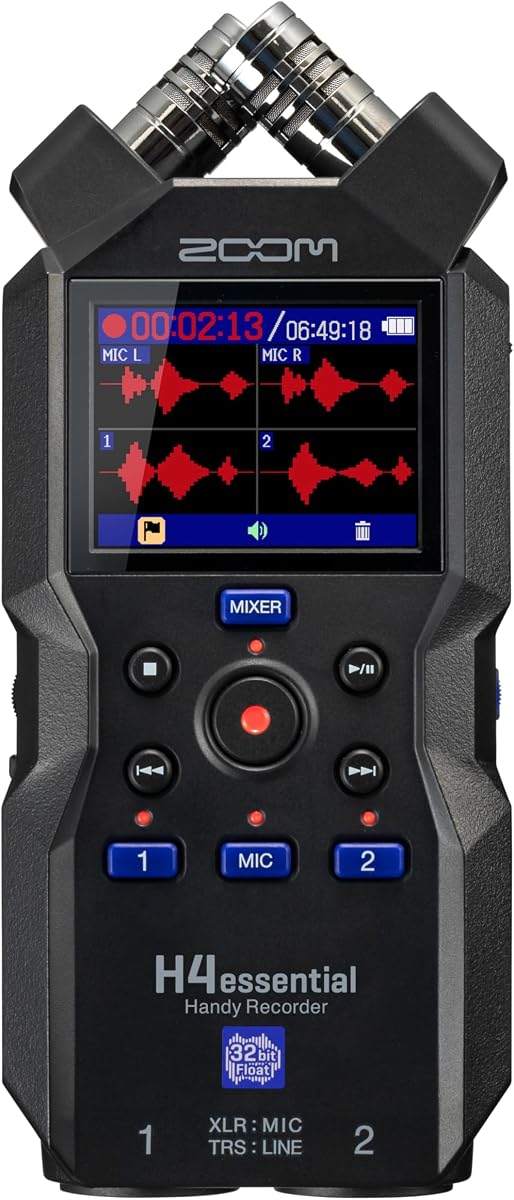
The Zoom H4 Essential offers four tracks at a budget-friendly price point. It suits creators who need to record multiple sources simultaneously without investing in premium gear.
We may earn a commission when you buy through this link, at no additional cost to you.
Its guided menu helps new users navigate settings quickly. Built-in mics plus external inputs provide flexibility for interviews and location sound on small projects.
However, it lacks the ruggedness of the F series. Users needing robust build quality might prefer other options despite the extra cost.
This model is perfect for students or podcasters expanding into video. It provides essential tools without overwhelming complexity.
Spoken menu guidance makes setup easier for visually impaired users or novices.
Four tracks allow separate recording of dialogue and ambient sound for easier editing.
We may earn a commission when you buy through this link, at no additional cost to you.
The Zoom F6 is a powerhouse for serious filmmakers requiring precise timecode and multiple inputs. Its high rating reflects reliability and advanced features suitable for complex shoots.
We may earn a commission when you buy through this link, at no additional cost to you.
Timecode I/O ensures frame-accurate sync with cameras. With six XLR inputs and up to fourteen tracks, you can record every mic separately for maximum post flexibility.
The cost and menu complexity may deter casual users. But for production teams, the sync and input capabilities are invaluable for streamlining workflow.
If you need a standalone recorder that interfaces well with cameras, the F6 is unmatched. It combines portability with professional-grade control.
Frame-accurate synchronization eliminates manual alignment during editing, saving time.
Up to 14 tracks allow mixing inputs and pre-fader outputs simultaneously.
We may earn a commission when you buy through this link, at no additional cost to you.
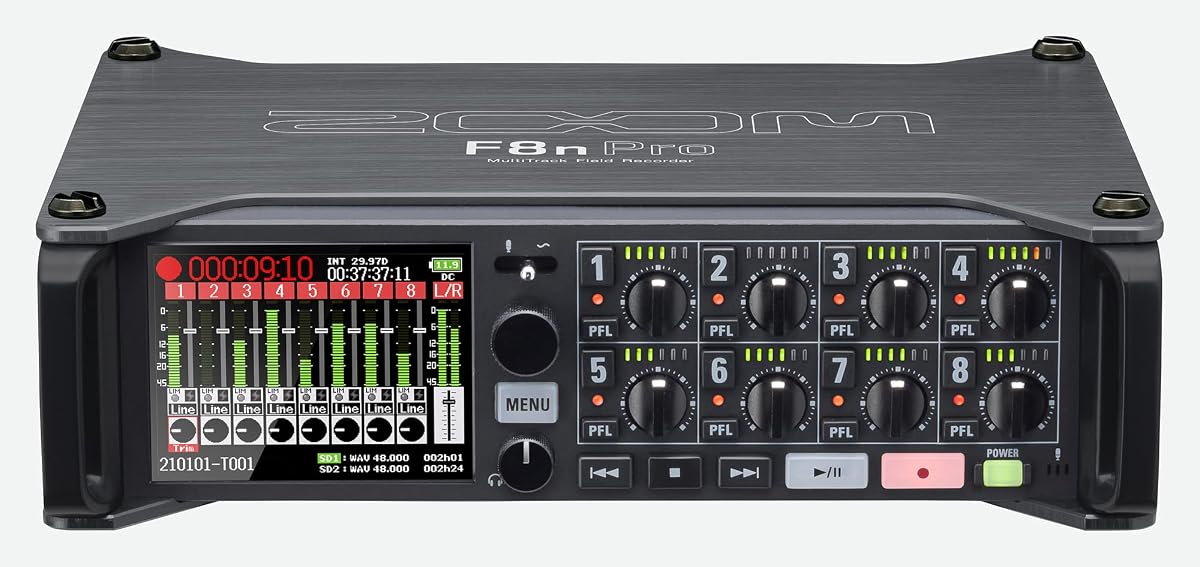
The Zoom F8n Pro is the top pick for large-scale productions needing redundancy and precision. Its high-end build supports complex rigs with confidence.
We may earn a commission when you buy through this link, at no additional cost to you.
Dual SD slots allow redundant recording to prevent data loss. The TCXO timecode ensures synchronization accuracy down to 0.2ppm, vital for broadcast standards.
The price and weight are significant factors. For solo operators, it may be overkill, but for teams, these features are essential insurance.
Invest in the F8n Pro if budget allows and reliability is critical. It sets the standard for professional field audio.
Dual SD slots record simultaneously, safeguarding against card failure during shoots.
Highly accurate clock ensures perfect sync over long shoots without drift.
We may earn a commission when you buy through this link, at no additional cost to you.
The Zoom H1 XLR brings professional XLR inputs to a budget price. It is ideal for filmmakers needing better audio than cameras provide without breaking the bank.
We may earn a commission when you buy through this link, at no additional cost to you.
The OLED waveform display helps monitor levels easily. With 32-bit float, you can ignore gain staging during recording, focusing on the shot.
Its input limit restricts complex setups. However, for interviews or one-on-one scenes, it performs admirably with minimal fuss.
Newcomers or indie creators should start here. It offers essential upgrades over built-in camera mics at a low cost.
OLED display allows quick checks of audio levels during recording.
Simple controls and XLR inputs make it easy to start recording immediately.
We may earn a commission when you buy through this link, at no additional cost to you.
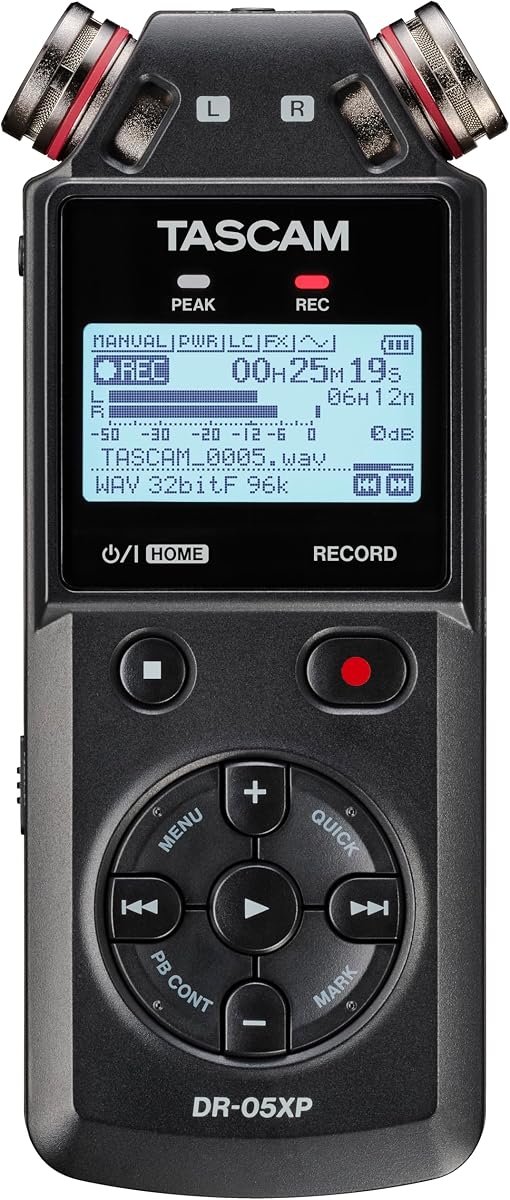
The TASCAM DR-05XP is a compact tool for quick capture. It suits vloggers needing better audio than a phone without carrying extra gear.
We may earn a commission when you buy through this link, at no additional cost to you.
Omnidirectional mics handle various environments well. The 32-bit float recording prevents clipping even when unexpected loud sounds occur.
Lack of XLR inputs limits mic upgrades. But for casual use, its portability and price are hard to beat.
Travelers and solo creators will appreciate its small size. It fits in a pocket while improving audio quality significantly.
Small size allows easy transport on daily shoots or travel.
Long battery runtime ensures recording throughout the day without changes.
We may earn a commission when you buy through this link, at no additional cost to you.
The Zoom H5 allows swapping capsules to fit recording needs. This modularity makes it useful for various audio types from dialogue to music.
We may earn a commission when you buy through this link, at no additional cost to you.
Built-in XY mics provide excellent stereo imaging. External inputs with phantom power enable condenser mic use on location.
While slightly heavier than newer models, its build is robust. The versatility keeps it relevant for many creators.
Choose the H5 if you need adaptable recording options. It offers a great mix of features and reliability.
Swappable capsules let you change mic patterns without buying a new recorder.
External inputs support professional condenser microphones with 48V power.
We may earn a commission when you buy through this link, at no additional cost to you.
The TASCAM DR-10L Pro excels at capturing interview audio. It includes a high-quality lavalier mic ready for quick setup.
We may earn a commission when you buy through this link, at no additional cost to you.
LTC Jam Sync ensures your audio stays synced with video files. The compact design allows discreet placement during filming.
It is limited to one input and lacks backup options. However, for one-on-one interviews, it is highly effective.
Documentarians and interviewers should consider this unit. It simplifies audio capture for single-subject shoots.
Included lavalier mic is optimized for the recorder for clear voice capture.
Small size allows hidden placement on talent for natural sound.
We may earn a commission when you buy through this link, at no additional cost to you.
The Zoom H1 Essential is a straightforward tool for capturing ambient sound. It helps creators improve video audio without technical complexity.
We may earn a commission when you buy through this link, at no additional cost to you.
Built-in stereo mics record room tone well. USB-C allows direct streaming, useful for live content creation.
It lacks external inputs for professional mics. But for casual use, it provides a noticeable upgrade over cameras.
Students and hobbyists will find it adequate. It focuses on simplicity for everyday recording tasks.
Built-in mics record natural room tone effectively for background audio.
USB-C connection enables direct audio use for online live sessions.
We may earn a commission when you buy through this link, at no additional cost to you.
The Zoom F2 is a tiny wearable recorder ideal for discreet audio. It fits easily on subjects without drawing attention.
We may earn a commission when you buy through this link, at no additional cost to you.
Precision clock ensures audio and video stay synced over time. Long battery life supports full-day shoots without worry.
It is limited to one input and lacks advanced features. However, for lavalier setups, it performs admirably.
Events and interviews benefit from its unobtrusive design. It is a practical choice for capturing personal audio.
Clip-on design ensures stability and discretion on talent.
Precision clock prevents drift during long recording sessions.
We may earn a commission when you buy through this link, at no additional cost to you.
Selecting the right field recorder depends on your production needs, budget, and technical requirements. Consider these factors to find the ideal unit.
Field recorders vary from one to eight or more XLR inputs. More inputs allow recording multiple microphones simultaneously, which is vital for dialogue and ambient sound separation. Consider your typical project size when choosing input count.
Look for locking XLR inputs to secure cables during movement. Adequate inputs prevent the need for external mixers in complex setups.
Modern recorders offer 32-bit float recording, which captures audio without clipping regardless of input level. This simplifies field work by removing the need for constant gain adjustments. Traditional 24-bit formats require careful gain management.
Prioritize 32-bit float for unpredictable environments where sound levels fluctuate widely. It provides a safety net for capturing usable audio.
Timecode I/O allows your recorder to sync audio with camera video automatically. This saves hours of manual syncing in post-production. Some units have built-in timecode generators for multi-camera shoots.
Choose a recorder with TCXO for high precision if working on professional sets. It ensures frame-accurate alignment between audio and video.
Field work often means long days away from power. Recorders with AA or dedicated battery packs offer flexibility. Look for units that support extended runtimes for full-day shoots without charging.
Check battery type and capacity before buying. Swappable batteries are ideal for continuous recording on location.
Size and weight matter for run-and-gun filmmaking. Compact recorders fit in pockets or small rigs. Heavier models offer more features but may hinder mobility.
Balance features with portability. For travel, prioritize lightweight options. For studio or controlled sets, larger mixers may be acceptable.
High-quality audio files consume significant storage space. Ensure your recorder supports large SD cards to accommodate long sessions. Dual slots offer redundant recording for safety.
Select models supporting SDXC cards up to 1TB if possible. Redundant slots prevent data loss during critical takes.
Clear menus and displays help adjust settings quickly on set. Some units offer spoken guidance or simplified workflows. Avoid overly complex interfaces that slow you down.
Test the UI before committing. Intuitive controls reduce mistakes during important recordings.
USB-C connectivity allows the recorder to act as an audio interface for computers. This is useful for streaming or direct editing. Some units offer Bluetooth syncing for timecode.
Choose models with versatile ports to match your workflow. Compatibility with your camera and computer matters.
Begin by formatting your SD card in the recorder before each shoot. This ensures the file system is compatible and reduces errors during recording. Always check battery levels and have spares ready.
Set your gain or rely on 32-bit float features to avoid clipping. Monitor levels using headphones to ensure clean audio. Record room tone for at least 30 seconds at the start of every take.
After recording, transfer files to a backup drive immediately. Store your recorder in a padded case to protect against dust and moisture. Clean inputs regularly to prevent connection issues over time.
Yes, 32-bit float eliminates clipping regardless of volume levels, simplifying gain management in the field. It allows you to normalize audio in post-production safely. This is especially valuable for dialogue where sudden peaks occur.
For simple interviews or single-camera setups, timecode may not be essential. However, for multi-camera shoots, it saves significant time syncing audio and video. It is standard for professional production workflows.
Solo shooters or simple interviews may only need two inputs. Larger productions with boom mics and lavaliers should opt for four or more. Consider future needs to avoid outgrowing your unit quickly.
Yes, most models support USB audio interface mode for recording directly to a computer. This is useful for streaming or direct capture without SD cards. Check compatibility with your OS before purchase.
High-quality uncompressed audio requires significant space. SDXC cards up to 1TB provide ample room for long sessions. Dual card slots are recommended for redundant recording safety.
AA batteries offer convenience for swapping during long days. Internal rechargeable batteries are lighter but require charging. Choose based on your access to power sources while filming.
Use external shock mounts for microphones and secure cables with ties. Record ambient room tone separately to use as a bridge in post. Avoid touching the recorder body directly while recording.
Yes, most field recorders accept wireless receivers via XLR inputs. Ensure the receiver matches the recorder input levels. Some systems integrate timecode for seamless sync.
Our top picks cover a range of budgets and production scales. The Zoom F6 stands out for its balance of inputs and timecode, while the F3 offers simplicity and 32-bit float at a lower cost.
Prioritize inputs and timecode if you need multi-mic setups. For solo work, compact models like the H1 XLR or F2 provide sufficient quality without bulk. Match the gear to your typical shoot complexity.
Always check current availability and pricing before buying. Technology evolves quickly, and newer models may offer additional features. Choose the unit that best supports your workflow today.