Lowrance Eagle Fish Finder
4.3Editor score
IPS portrait screen
Auto-Tuning Sonar
Bullet Skimmer included
Finding the right fish finder for a small boat requires balancing performance with portability. Modern units offer advanced sonar and GPS in compact designs ideal for kayaks pontoons and runabouts. These tools help anglers locate structure and targets efficiently without cluttering limited deck space on smaller craft.
We evaluated ten leading models based on sonar clarity display quality ease of installation and value. Each product was analyzed for its specific strengths in small boat environments including resistance to weather and compatibility with various transducer types. Our goal is to highlight units that deliver reliable data where space and budget are often limited.
Each pick below includes detailed specifications pros and cons plus real-world usage notes. Prices and availability change frequently so always verify current listings before purchasing. We focus on factual features from manufacturers to ensure you get an accurate picture of what each device can do on the water.
4.3Editor score

4.7Editor score

4.4Editor score
As an Amazon Associate we earn from qualifying purchases.
The following table provides a side-by-side comparison of all ten products selected for this guide. It highlights key specifications and capabilities to help you quickly identify which unit aligns best with your specific small boat needs and fishing preferences.
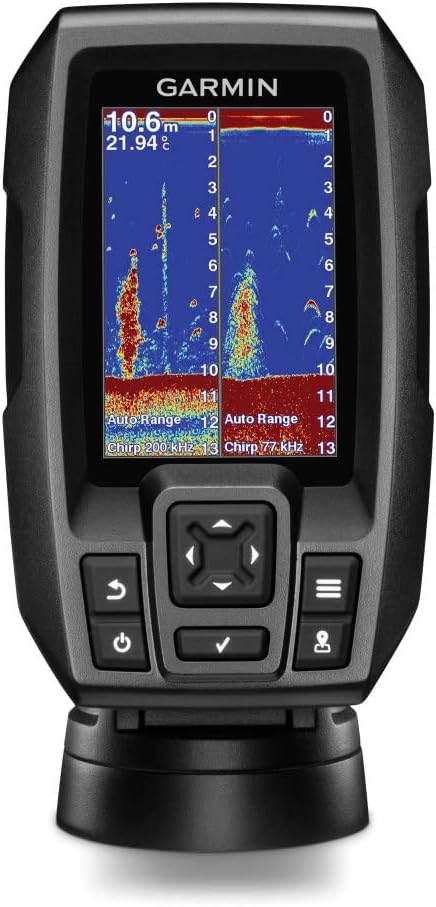

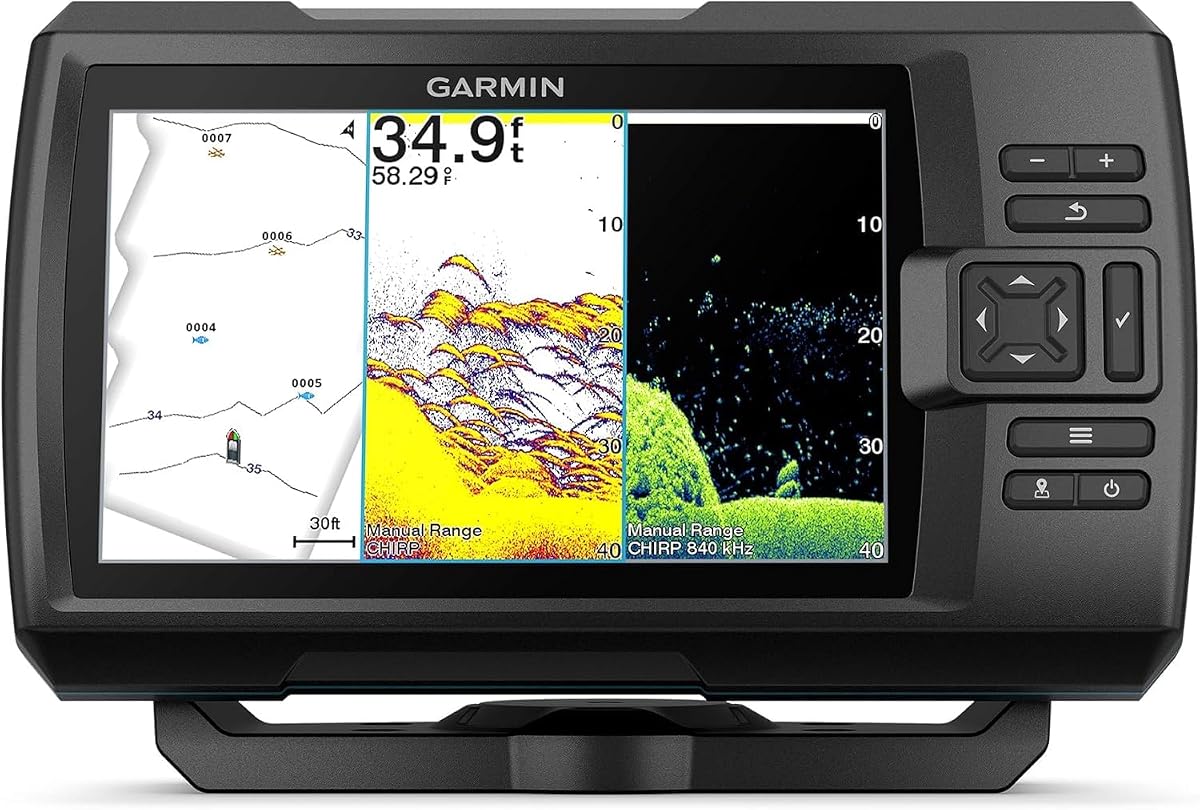


The Garmin Striker 4 stands out as a top choice for small boat anglers seeking reliable performance. With a high rating of 4.6 stars it delivers crisp sonar views using ClearVu scanning technology. The device is designed to be straightforward and durable enough for daily use on the water.
We may earn a commission when you buy through this link, at no additional cost to you.
Its ClearVu sonar provides near photographic images that help distinguish fish and structure clearly. The Chirp Sonar adds depth by creating crisper arches and better target separation. This combination ensures that even small schools of fish are visible against the bottom structure or vegetation.
While the screen is only 3.5 inches the interface uses dedicated buttons which makes operation intuitive even in rough weather. The built in flasher mode is a unique addition for vertical jigging or ice fishing transitions. However users wanting advanced mapping may find the GPS features relatively basic compared to larger units.
This unit is ideal for those who want a plug and play solution without complex setup. Its water rating ensures resilience against splashes and rain. For small runabouts or center consoles where space is tight the Striker 4 offers the right balance of power and simplicity for serious fishing trips.
The high frequency sonar provides detailed representations of objects structure and fish around your boat for enhanced visibility.
A keyed interface with dedicated buttons makes the device easy to use and easy to install for any user.
We may earn a commission when you buy through this link, at no additional cost to you.
The Humminbird PiranhaMAX 4 is an excellent entry level option for anglers on a budget. It scores a 4.6 rating due to its solid sonar performance and ease of use. This unit focuses on core functionality without extra bells and whistles that drive up costs for small boat owners.
We may earn a commission when you buy through this link, at no additional cost to you.
Dual Beam Sonar allows you to choose between a narrow beam for detail or a wide beam for coverage. This flexibility helps identify fish and structure contours efficiently. The tilt and swivel mount included ensures you can adjust your viewing angle quickly without tools or complex hardware.
Although it lacks GPS waypoint features the unit provides accurate depth and fish location data consistently. The 1-year limited warranty adds peace of mind for new users. It is a practical choice for those who already have a chartplotter or just need sonar functionality.
Buy this if you need a dependable transom mount unit that gets the job done. The included transducer is robust and easy to install on most hulls. It represents one of the most affordable ways to get brand name sonar performance on a small boat this season.
Choose from a narrow and a wide beam for great detail or a generous coverage area to help identify targets.
The tilt and swivel mount allows quick adjustment of your viewing area angle for optimal visibility on deck.
We may earn a commission when you buy through this link, at no additional cost to you.
The Humminbird Helix 5 brings premium features to smaller vessels with its G3 series capabilities. Rated 4.4 stars it offers advanced navigation and sonar technology typically found in larger units. This model is perfect for anglers who want detailed mapping and high definition sonar in one device.
We may earn a commission when you buy through this link, at no additional cost to you.
Dual Spectrum CHIRP Sonar delivers clear fish arches and structural details in both wide and narrow modes. The Enhanced GPS Navigation includes coverage of over 10000 lakes in the US. Real-Time Mapping via AutoChart Live allows you to create depth contour maps while out on the water.
The user interface relies on softkey controls which are reliable in various weather conditions. While the price is higher than basic units the included mapping capabilities save money on separate chart purchases. Users can also upgrade with premium charts for even more detailed navigation data.
Consider this unit if you plan to fish unfamiliar waters or need precise navigation. The keypad design ensures easy operation even with gloves on. It is a long term investment for serious small boat anglers who value data accuracy and chart detail over pure cost savings.
Equipped with Humminbird Basemap this chartplotter includes coverage of 10,000 plus lakes and coastlines.
AutoChart Live creates maps of depth contours bottom hardness and vegetation while boating with built-in recording time.
We may earn a commission when you buy through this link, at no additional cost to you.
The Garmin STRIKER Vivid 4cv offers a vibrant display in a compact package rated at 4.7 stars. Its vivid scanning sonar color palettes make it easy to distinguish fish and structure at a glance. This unit is designed for simplicity without sacrificing the quality of the sonar data.
We may earn a commission when you buy through this link, at no additional cost to you.
High-sensitivity GPS allows you to mark waypoints and routes quickly. The included GT20 transducer supports both traditional CHIRP sonar and ClearVü scanning sonar. This dual capability ensures you can see the bottom clearly and also spot fish suspended in the water column.
The quickdraw contours mapping is built-in which saves time and money on chart downloads. The unit is bright enough to be read in direct sunlight without glare. However it lacks the Wi-Fi connectivity found in larger models which limits remote data transfer options.
This is the ideal choice for small boats needing color and clarity without bulk. The tilt/swivel bailmount bracket makes adjustment simple. If you prioritize screen quality and ease of use over complex networking this model delivers top performance in its size class.
New vivid scanning sonar color palettes help you easily distinguish fish and structure on the display.
Built-in Quickdraw Contours mapping lets you mark waypoints and create routes quickly with the high-sensitivity GPS.
We may earn a commission when you buy through this link, at no additional cost to you.
The Garmin STRIKER Vivid 7cv provides a larger 7-inch screen for better visibility. It retains the vivid scanning sonar and color palettes of the smaller version. Rated 4.5 stars this unit appeals to boat owners who have a bit more deck space and want enhanced connectivity.
We may earn a commission when you buy through this link, at no additional cost to you.
Wi-Fi connectivity allows you to connect to the ActiveCaptain app on a smartphone. This enables waypoint transfer software updates and access to the Quickdraw Community. The visual clarity on the 7-inch screen helps in low light conditions or when multiple anglers are looking at the display.
The GT20 transducer supports both CHIRP traditional sonar and ClearVü scanning sonar. Built-in Quickdraw Contours mapping is included for route planning. While it needs more space the screen size makes target separation much easier for all users.
Choose this if you want a future-ready unit with app connectivity. It is well suited for pontoons or runabouts where mounting space permits. The combination of size and smart features makes it a strong contender for those upgrading from smaller or older models.
Wi-Fi connectivity allows you to connect to the ActiveCaptain app with compatible smartphone to transfer waypoints.
The easy-to-use 7-inch color fishfinder uses vivid scanning sonar palettes to distinguish fish and structure easily.
We may earn a commission when you buy through this link, at no additional cost to you.
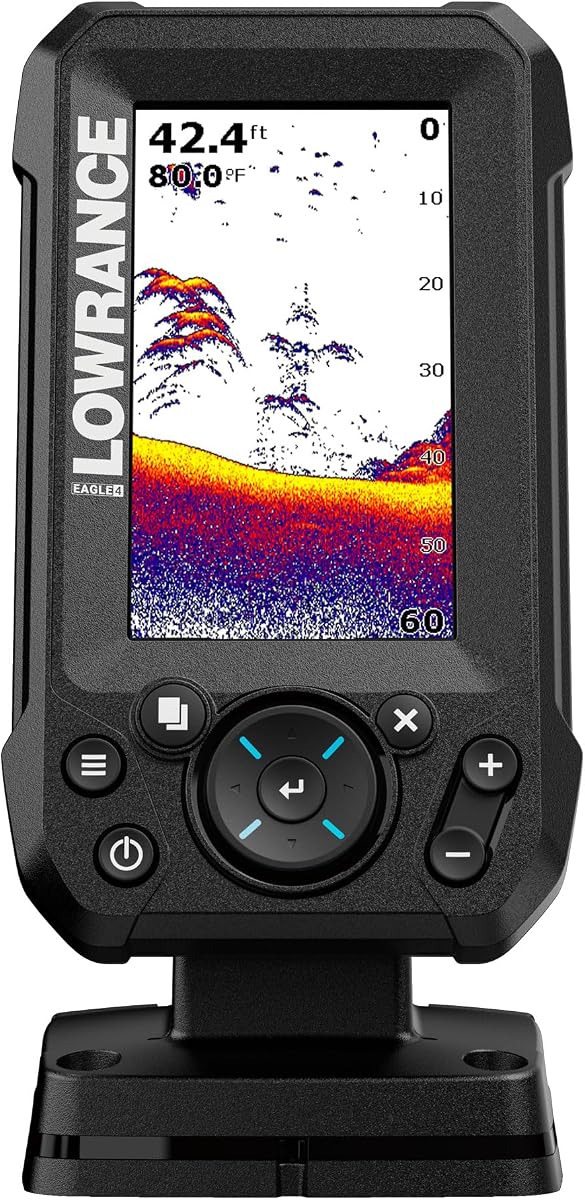
The Lowrance Eagle offers a solid performance option with its 4-inch IPS portrait screen. Rated 4.3 stars it excels in clarity and ease of use. The Auto-Tuning Sonar feature simplifies the setup process by automatically providing optimized settings for your environment.
We may earn a commission when you buy through this link, at no additional cost to you.
The included Bullet Skimmer transducer delivers a broad 44-degree beam ideal for kayaks and small boats. The screen stays clear in bright sunlight and works well through polarized sunglasses. This ensures you can see your data without removing eyewear or adjusting angles frequently.
Installation is straightforward thanks to the twist-lock connector which simplifies connecting and removing the display. The compact portrait design fits well in limited spaces. While the menu system is basic it avoids the complexity that can overwhelm new users on the water.
This is a great value for those who want reliable sonar without advanced navigation. The fish identification icons help you spot schools quickly. If you need a no fuss unit that works immediately out of the box this is a strong choice for your small boat.
The 4-inch IPS portrait screen stays clear in bright sunlight from wide viewing angles and through polarized sunglasses.
Auto-Tuning Sonar automatically provides optimized settings so you can focus on finding fish rather than adjusting dials.
We may earn a commission when you buy through this link, at no additional cost to you.
The LUCKY Kayak Portable Fish Finder provides unparalleled freedom for anglers on kayaks or shore. Rated 4.5 stars it features a massive 853ft operation distance which is one of the longest ranges on the market. The wireless control means no wires to trip over or manage on small craft.
We may earn a commission when you buy through this link, at no additional cost to you.
It reveals the exact depth of fish and their location relative to structure. The 3.5 inch horizontal LCD shows fish icons with depth numbers for clear intuitive readouts. You can cast the sensor like a bobber to scan water you cannot reach from the boat easily.
The design is all-season ready making it suitable for summer lakes or frozen holes. The handheld display and floating sensor together are lighter than a one liter water bottle. There is no need for drilling brackets or complex wiring to start fishing.
Buy this if you prioritize portability and versatility over permanent mounting. It works for shore fishing as well as on a boat. For travelers or those with multiple small watercraft this unit offers the flexibility to move quickly without carrying heavy gear.
Experience ultimate freedom with massive 853ft operation distance and no wires to limit your movement.
Tie the sensor to your fishing line and cast it like a bobber into promising water for flexible scanning.
We may earn a commission when you buy through this link, at no additional cost to you.
The Garmin Striker Plus 4 offers a bright 4.3-inch display that is sunlight-readable. Rated 4.6 stars it is built for rugged environments and reliable performance. The dual-beam transducer provides crystal-clear images and remarkable target separation for accurate readings.
We may earn a commission when you buy through this link, at no additional cost to you.
Built-in Garmin Quickdraw contours mapping software lets you create and store maps with one-foot contours. The built-in GPS allows you to mark waypoints and view boat speed. Bluetooth support enables connectivity with other devices for enhanced navigation capabilities on the water.
The unit supports traditional frequencies from 50 to 200 kHz for versatility. The transmit power of 200 watts ensures strong penetration for deep water targets. It is a robust choice that balances mapping with core sonar performance effectively.
Consider this unit for consistent performance in challenging conditions. The intuitive user interface helps you focus on fishing. It is a reliable workhorse for small boats needing traditional sonar with mapping features included.
Includes dual-beam transducer with Garmin Chirp traditional sonar for crystal-clear images and remarkable target separation.
Built-in Garmin Quickdraw contours mapping software lets you create and store maps with 1-foot contours for up to 2 million acres.
We may earn a commission when you buy through this link, at no additional cost to you.
The Humminbird PiranhaMAX 4 DI focuses on visual clarity with Down Imaging. Rated 4.6 stars it shows a clear view of what is happening below your boat. You can see timber brush bridge pilings and rocks with sharp detail that traditional sonar often misses.
We may earn a commission when you buy through this link, at no additional cost to you.
The 4.3-inch color display makes it easier to identify different features. Equipped with Fish ID+ and alarms this unit helps you manage the data effectively. The Dual Beam Sonar provides great detail or generous coverage depending on your needs.
The interface is redesigned for even easier use compared to older models. It includes a tilt and swivel mount for quick viewing adjustments. The included transducer is optimized for down imaging to ensure the best results.
This is the right choice for those who want detailed images of structure. The color screen aids in distinguishing objects. For anglers who need precise visual confirmation of structure this model delivers excellent value and performance.
Get a clear view of what is happening below your boat with sharp detail on structure and fish.
View what is below your boat on a 4.3-inch color LCD with a redesigned even easier-to-use interface.
We may earn a commission when you buy through this link, at no additional cost to you.
The Garmin STRIKER 5CV provides a balanced mix of size and performance. Rated 4.5 stars it includes a 5-inch display for better visibility. The unit supports both CHIRP traditional sonar and CHIRP ClearVu scanning sonar for versatile target detection.
We may earn a commission when you buy through this link, at no additional cost to you.
Built-in Quickdraw contours mapping software lets you create and store maps with one-foot contours. The built-in GPS allows you to mark waypoints and create routes. This combination of features makes it suitable for various fishing scenarios.
The bright sunlight-readable display ensures visibility in all conditions. Its rugged design is built for every fishing environment. The intuitive user interface makes operation straightforward for all users on the boat.
Buy this if you need a reliable unit that combines sonar and mapping. The 5-inch screen offers a good compromise between space and clarity. It is an excellent all-rounder for small boats requiring consistent daily performance.
Includes transducer for built-in Garmin CHIRP traditional sonar plus CHIRP ClearVu scanning sonar.
Built-in Garmin Quickdraw contours mapping software lets you create and store maps with 1-foot contours.
We may earn a commission when you buy through this link, at no additional cost to you.
Selecting the right fish finder for a small boat requires evaluating several key factors to ensure optimal performance and ease of use.
For small boats the display size must balance visibility with available space. A 3.5 to 5-inch screen is often ideal for minimizing clutter while still being readable in sunlight. Look for units with sunlight-readable panels and high contrast to ensure data is visible in bright conditions.
Prioritize displays that are clear and bright enough to read while the boat is moving. A compact design helps avoid crowding the helm area and keeps essential controls within easy reach.
Sonar technology determines the level of detail you get from the water. CHIRP sonar provides better target separation and clearer fish arches. Traditional sonar is effective for basic depth readings but scanning sonar like ClearVu or Down Imaging adds valuable visual context for structure.
Choose a unit that matches your primary fishing style. If you target specific structure advanced imaging is worth the cost but for general fishing traditional sonar may suffice.
GPS capability allows you to mark waypoints and return to productive spots. Built-in mapping like Quickdraw contours is a strong advantage as it reduces the need for separate charts. For small boats that frequently change location these features improve efficiency and navigation accuracy.
Ensure the unit supports your preferred chart format if you plan to upgrade later. Basic GPS is often enough but mapping adds significant value for navigation.
The transducer is the sensor that sends and receives sound waves. For small boats a transom mount is the most common solution and is easy to install. Portable or castable transducers are also options for kayaks or when you need maximum flexibility.
Verify that the transducer is compatible with the unit you choose. Proper placement on the hull is critical for accurate data and avoiding air bubbles that cause noise.
Saltwater and rough conditions demand durable gear. Look for a water rating like IPX7 which ensures the unit can handle splashes and rain. A rugged design protects against accidental drops and vibration from the motor.
Choose a device built to withstand daily exposure to elements. Durability ensures long-term reliability and reduces the risk of failure while on the water.
Interfaces should be intuitive to avoid frustration while fishing. Keyed interfaces with dedicated buttons are often better than touch screens in wet conditions. Menus should be easy to navigate to adjust settings quickly without losing focus on fishing.
Prioritize units with simple controls and clear instructions. A user-friendly setup saves time and helps you focus on the water rather than the device settings.
Modern units often include Wi-Fi or Bluetooth for connectivity with smartphones. This allows software updates and waypoint sharing via apps. For small boats this can reduce the need for expensive mapping cards and keep the unit up to date.
Consider whether you need app integration or if a standalone unit works best. Connectivity options vary by model and can influence long-term usability.
Power requirements are critical for small boats with limited battery capacity. Check the current draw at 12 volts to ensure it does not drain your batteries too quickly. Portable units often come with rechargeable batteries which adds flexibility for short trips.
Ensure the unit has efficient power management. A low draw allows for extended fishing sessions without needing frequent recharges or generator power.
Install the transducer on a flat section of the hull to ensure accurate readings. Make sure the transducer is submerged but not too deep to avoid drag or damage. Secure all cables tightly to prevent them from snagging or interfering with other equipment.
Turn on the unit and allow it to initialize GPS if equipped. Adjust the sonar sensitivity to avoid noise and ensure clear images. If fish icons are not appearing check the gain settings and ensure the transducer is properly aligned with the water.
After each trip rinse the unit and transducer with fresh water to remove salt and debris. Store the device in a dry place to prevent moisture damage. Regularly check the battery connections and clean the screen to maintain readability.
For small boats a screen size between 3.5 and 5 inches is typically ideal. This size balances readability with available space and prevents clutter. Larger screens may be difficult to mount and read without obstructing your view.
GPS fish finders are useful for marking waypoints and returning to productive areas. However they are not strictly necessary if you only fish familiar waters. Consider your navigation needs and whether mapping features justify the added cost.
Install the transducer on the outside of the hull in a smooth area free of air bubbles. Use a transom mount to secure it properly. Ensure the transducer is vertical and facing the water directly for best performance.
Yes but you must ensure the unit has a proper water resistance rating such as IPX7. Rinse the unit with fresh water after each saltwater use to prevent corrosion. Choose a transducer designed for saltwater environments to maintain accuracy.
Traditional sonar sends a single frequency while CHIRP sends a range of frequencies. CHIRP provides better target separation and clearer images of fish and structure. This makes it easier to distinguish between fish and debris on the bottom.
Most units are rated for outdoor use but extreme cold can affect battery life. If using a portable unit keep it indoors when not in use. For permanent installs ensure the battery is well maintained and consider winterizing the unit if temperatures drop significantly.
A standard 12 volt marine battery is usually sufficient for most units. Check the current draw listed on the device to ensure it will not drain your battery during trips. Portable units may have their own rechargeable battery packs.
In most cases they do not interfere as long as they are not set to identical frequencies. If interference occurs try adjusting the settings or using a unit with CHIRP technology which helps minimize noise. Positioning units on opposite sides can also reduce interference.
We have highlighted ten top choices including the Garmin STRIKER Vivid 4cv as a versatile option for many users. The Humminbird Helix 5 offers advanced mapping for those who prioritize navigation data. For budget conscious buyers the Lowrance Eagle provides reliable performance at a lower cost.
When choosing prioritize features that match your specific fishing needs and boat size. Display clarity and ease of use are critical since you will be relying on this data while out on the water. Ensure the transducer is compatible and easy to install.
Prices and stock fluctuate frequently so check current listings before purchasing. We recommend verifying specifications on the manufacturer site to ensure the unit meets your needs. With the right unit you can improve your accuracy and efficiency on the water.