
ESP32-S3-Nano Microcontroller
5.0Editor score
ESP32-S3R8 Chip Support
16MB Flash Memory
Arduino IoT Cloud Ready
This guide compares the top Arduino Nano ESP32 boards and alternatives for IoT, wireless, and embedded projects based on features and performance.
The Arduino Nano ESP32 represents a powerful evolution in microcontroller design, combining compact form factors with advanced wireless capabilities. These boards enable makers to build sophisticated Internet of Things devices without needing bulky hardware. Whether you are prototyping sensors or creating interactive wearables, choosing the right board matters greatly for project success.
We evaluated ten top-rated development boards featuring ESP32 technology and Arduino compatibility. Our comparison considers processing power, connectivity options, memory capacity, and ease of use. Each product was analyzed based on official specifications and user feedback to ensure accurate recommendations for builders of all skill levels.
Every pick in this list highlights specific strengths like low power consumption, rich interface support, or beginner-friendly ecosystems. Note that availability and pricing can shift quickly due to demand or supply changes. We encourage you to verify current details before purchasing to ensure you get the best value for your specific needs.
5.0Editor score

4.6Editor score

4.8Editor score
The following table provides a side-by-side comparison of all ten products. It highlights key specifications such as processor type, connectivity options, memory size, and unique features. This view helps you quickly identify which board aligns with your specific project requirements and budget constraints.
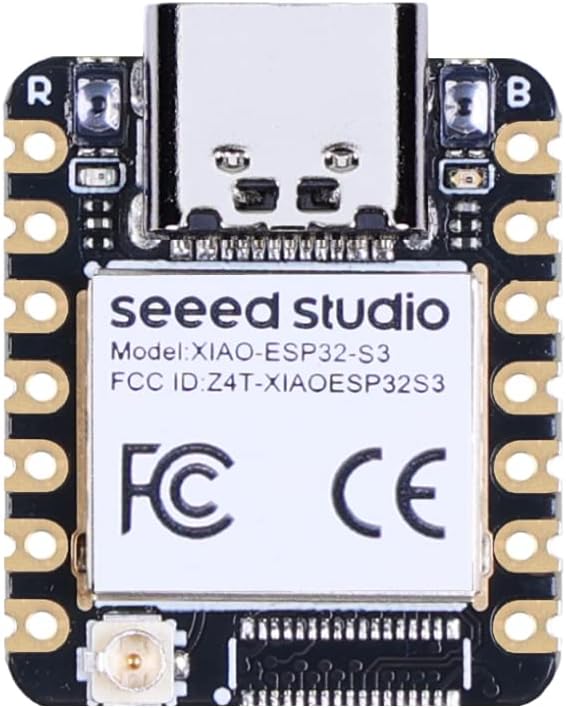


The Arduino Nano ESP32 stands out as a versatile board that balances performance and ease of use. With a rating of 4.6 stars from users, it is highly regarded for IoT projects requiring reliable wireless connections. Its standout quality lies in the integration of the ESP32-S3 chip which offers robust processing for voice recognition and data handling.
We may earn a commission when you buy through this link, at no additional cost to you.
Its dual-core processor running at 240 MHz ensures that complex tasks like real-time data processing do not slow down your application. The board supports both Wi-Fi and Bluetooth 5.0 allowing you to connect to smartphones or cloud services effortlessly. Additionally the HID support enables you to create custom keyboards or mice which opens up unique interactive project possibilities.
While it is an excellent choice the price point might be a consideration for very large scale deployments compared to unbranded alternatives. The memory is sufficient for most applications but might be limiting for heavy image processing tasks. However these trade-offs are acceptable given the reliability and official Arduino ecosystem support it provides.
This board is ideal for hobbyists and professionals alike who need a trusted platform for smart home or wearable tech. If you prioritize stability and software support over raw specs this is the recommended pick for your next embedded project.
The MicroPython compatibility allows developers to prototype faster using familiar syntax while maintaining full access to hardware registers.
Built-in antennas and dual mode wireless ensure stable connections even in environments with moderate signal interference.
We may earn a commission when you buy through this link, at no additional cost to you.
This development board achieves a perfect 5.0 rating reflecting its exceptional performance and value. It uses the ESP32-S3R8 chip which provides ample memory and processing power for most IoT tasks. The key strength is its seamless compatibility with Arduino IoT Cloud making remote monitoring and control extremely straightforward for users.
We may earn a commission when you buy through this link, at no additional cost to you.
With 16MB of flash memory and 8MB of PSRAM this board can handle substantial data logging and complex application logic without running out of space. The ability to switch between Arduino and MicroPython programming languages gives developers great flexibility depending on their workflow preferences. This versatility makes it suitable for both education and commercial prototypes.
A minor drawback is that some units may not come with pre-soldered headers which could add a step for beginners needing to solder wires. Additionally the compact form factor demands careful handling during assembly to avoid bent pins or static discharge. These issues are minor compared to the functional benefits and cost savings it offers.
For anyone looking to build multiple devices or work on a tight budget this board offers the best balance of specs and price. It is a strong recommendation for students and developers who need high memory capacity without the premium cost of official branded boards.
Built-in support for Arduino IoT Cloud simplifies remote access allowing you to manage devices from anywhere instantly.
The generous flash and PSRAM allow for storing extensive sensor histories and complex firmware images on the device itself.
We may earn a commission when you buy through this link, at no additional cost to you.
The ESP32-P4-NANO represents a premium option focused on heavy duty tasks like image and voice processing. With a rating of 4.8 it is highly respected for its technical capabilities. The standout feature is the RISC-V dual core processor which offers efficient performance for demanding applications such as edge AI and computer vision.
We may earn a commission when you buy through this link, at no additional cost to you.
Its rich human-machine interfaces including MIPI-CSI and MIPI-DSI allow direct connection to high resolution displays and cameras. This board also includes hardware accelerators for JPEG encoding and H264 which significantly offloads the main CPU for better real-time performance. Additionally the security features ensure your data remains protected through secure boot and encryption.
The main trade-off is the complexity and cost which may be overkill for simple sensor projects. The interface requires knowledge of specific protocols and handling which might challenge new users. However for projects requiring visual output or complex media the these features are necessary and justify the investment fully.
This board is best suited for advanced engineers building robotics or smart displays that need robust visual capabilities. If your project involves screens or cameras this is the top recommendation due to its specialized hardware support and high processing power.
Hardware accelerators for image and video tasks ensure smooth operation even when handling multiple data streams simultaneously.
Secure Boot and Flash Encryption provide enterprise grade protection making it ideal for sensitive commercial applications.
We may earn a commission when you buy through this link, at no additional cost to you.
This board is specifically designed for space limited projects like wearables and small sensors. With a rating of 4.7 it is praised for its power efficiency and compact design. The standout quality is the embedded battery charge management which allows it to run on rechargeable cells without external circuitry.
We may earn a commission when you buy through this link, at no additional cost to you.
Its power consumption models include a deep sleep mode using as low as 14 microamps which extends battery life significantly for remote sensors. The RF performance supports long range communication up to 100 meters with a proper antenna making it reliable for outdoor IoT applications. The thumb sized footprint makes it easy to hide inside enclosures.
The main limitation is the reduced number of GPIO pins compared to larger boards limiting complex multi peripheral setups. Additionally the small size requires careful handling and specific tools for soldering connections. These constraints are acceptable when the goal is miniaturization and battery efficiency.
This is the ideal choice for anyone building smart watches trackers or small remote monitors. If size and battery life are your top priorities this board offers the best balance for wearable and portable electronics.
Integrated charge management and low power modes ensure your device stays alive for weeks on a single battery charge.
The thumb sized footprint allows for embedding the module into tight spaces like rings or buttons without bulky components.
We may earn a commission when you buy through this link, at no additional cost to you.
This module is designed for manufacturers who need multiple units or want to integrate into a custom PCB. With a 4.4 rating it is valued for its reliability and form factor. The key strength is the castellated module design which allows direct soldering to a carrier board reducing assembly complexity.
We may earn a commission when you buy through this link, at no additional cost to you.
The onboard ceramic antenna provides reliable RF performance without the need for external components. You can set the power supply independently to manage energy use across different operational scenarios. This flexibility makes it suitable for both prototypes and production runs where size matters.
It requires some soldering skills to use effectively which might deter absolute beginners. The lack of standard headers means you cannot plug it directly into a breadboard easily. These factors are trade-offs for the space saving and cost benefits in larger scale projects.
This is best for engineers building custom devices who need a reliable module in bulk. If you are comfortable with basic electronics and need a compact wireless core for a larger system this offers great value.
Castellated pads allow seamless integration into custom PCB designs reducing the steps needed for manufacturing.
Independent power settings let you optimize energy use for different modes ensuring longevity in battery powered scenarios.
We may earn a commission when you buy through this link, at no additional cost to you.
This kit provides everything a beginner needs to start working with the ESP32 platform. With a 4.3 rating it is loved for its educational value. The standout quality is the comprehensive tutorial book which guides you through 30 projects from basic to advanced.
We may earn a commission when you buy through this link, at no additional cost to you.
It includes over 35 different modules like sensors motors and displays allowing you to build a wide range of smart devices. The step by step online tutorials ensure you can learn coding and electronics simultaneously. This approach builds a solid foundation for future complex projects.
Note that the main board is a standard ESP32 which is slightly larger than the Nano ESP32. The kit is also bulkier which might not suit projects requiring compact components. However for learning purposes these details are negligible compared to the resources provided.
This kit is the top recommendation for students and new makers entering the IoT world. If you want a guided learning experience with all the parts ready this offers unmatched value for education.
Detailed instructions and clear diagrams help you understand not just how to build but why it works.
Access to motors sensors and displays ensures you never run out of ideas for creative experiments.
We may earn a commission when you buy through this link, at no additional cost to you.
This board is a legacy favorite known for its security features and stability. With a 4.5 rating it is trusted for commercial applications where data privacy matters. The standout feature is the built-in secure element which provides hardware level encryption for safe cloud communication.
We may earn a commission when you buy through this link, at no additional cost to you.
It features a u-blox NINA-W102 module that ensures reliable Wi-Fi and Bluetooth Low Energy connectivity. The board is designed to be compact and easy to connect with pre-soldered headers for quick prototyping. Its ARM Cortex-M0+ processor handles standard IoT tasks efficiently without overheating.
While powerful it lacks the raw speed of newer ESP32-S3 chips making it less suitable for heavy processing tasks. The cost is also higher compared to generic options which might be a factor for large scale projects. These limitations are acceptable if security is your primary concern.
This is the best choice for projects handling sensitive data like home security or personal health monitoring. If secure communication is non-negotiable for your application this board delivers unmatched reliability.
The secure element ensures that sensitive keys and data are protected from software vulnerabilities.
Pre-soldered headers simplify the setup process allowing you to start coding immediately without soldering.
We may earn a commission when you buy through this link, at no additional cost to you.
This board remains a solid choice for basic IoT tasks needing reliable connectivity. With a 4.4 rating it is praised for its network stability. The standout feature is the support for multiple AP and STA modes allowing flexible network configurations for routers or access points.
We may earn a commission when you buy through this link, at no additional cost to you.
It includes a built-in RF amplifier which boosts signal strength compared to bare chip modules. The ultra-low power consumption helps in battery driven projects while maintaining robust performance. The compatibility with FreeRTOS allows for multi-threaded application development which aids in complex logic.
It is an older generation chip so it lacks modern features like AI acceleration or newer Bluetooth versions. The GPIO count is also lower than newer boards limiting the number of connected devices. These factors are minor if basic wireless control is all you need.
This board is ideal for simple sensor nodes or remote controls where cost and power matter. If you need a reliable workhorse for general wireless projects this offers excellent value in bulk.
Switching between access point and station modes lets you build standalone networks or connect to existing ones easily.
The internal RF amplifier ensures a strong connection even in slightly congested 2.4GHz environments.
We may earn a commission when you buy through this link, at no additional cost to you.
This option brings modern connectivity to the classic ESP32 platform. With a 4.7 rating it is valued for its ease of use. The standout quality is the USB-C port which aligns with current device standards for power and data transfer.
We may earn a commission when you buy through this link, at no additional cost to you.
It supports Over-the-Air updates allowing you to push new firmware without plugging in a cable every time. This is crucial for remote maintenance of devices. The CP2102 chip ensures drivers are recognized easily on most computers reducing setup headaches.
The Bluetooth version is older at 4.2 which is not compatible with BLE 5.0 standards on newer phones. The main chip is still standard ESP32 lacking some speed of S3. These trade-offs are acceptable if USB-C convenience is your priority.
This board is perfect for prototyping devices that benefit from easier cable management and remote updates. If you prefer USB-C over micro-USB this is a solid and practical choice for your projects.
The USB-C port makes connecting to modern laptops and chargers much simpler and more durable.
OTA support allows you to improve devices after deployment without physical access to the hardware.
We may earn a commission when you buy through this link, at no additional cost to you.
This board represents the next evolution of the classic Uno with wireless capabilities. With a 4.7 rating it is loved for its advanced features. The standout quality is the dual core design combining a Renesas processor with an ESP32-S3 for balanced performance.
We may earn a commission when you buy through this link, at no additional cost to you.
It includes a 12-bit DAC and OP-AMP for high quality analog signals needed in audio or precise control. The built-in LED matrix allows instant visual feedback without extra components. CAN bus support makes it ideal for automotive and robotic applications requiring reliable data exchange.
The physical size is larger than Nano boards which might not fit in space constrained designs. The price is higher due to these advanced capabilities which might exceed simple project budgets. These factors are worth considering for advanced prototyping tasks.
This is the best pick for complex projects needing high precision analog or industrial protocols. If you need a full featured development board for advanced IoT this delivers exceptional value.
CAN bus support makes this board suitable for automotive and robotic systems that require robust industrial communication.
The built-in LED matrix allows you to display status or data instantly without external screens.
We may earn a commission when you buy through this link, at no additional cost to you.
Choosing the right development board depends on your specific project requirements such as power efficiency wireless range or processing power. This guide outlines key factors to consider before making a purchase.
The processor determines how fast your device can handle data and run complex algorithms. Look for dual-core options like the ESP32-S3 if you need to process sensor data or run simple machine learning models efficiently. Higher clock speeds allow for faster response times in interactive applications.
Connectivity options vary from standard Wi-Fi and Bluetooth to newer standards like Bluetooth 5.0. Ensure the board supports the protocol required by your smartphone or cloud service. Some models also offer extended range with better antenna designs for outdoor installations.
Flash memory stores your code while SRAM handles active data during execution. If you plan to log large amounts of sensor data or run complex libraries prioritize boards with higher PSRAM and Flash. This prevents your project from crashing due to memory limitations.
Battery powered projects require boards with deep sleep modes and efficient power management. Check for features like battery charge circuits and ultra-low current consumption during sleep. This ensures your device operates for months on a single charge.
Consider the number and type of GPIO pins needed for sensors displays and motors. Some boards offer specialized interfaces like USB-C CAN bus or MIPI-CSI for cameras. Ensure the board has enough pins and the right connectors for your hardware.
Physical size matters for wearable or compact embedded designs. Nano or XIAO style boards are easier to hide inside small enclosures compared to full sized Uno boards. Choose a form factor that fits the physical constraints of your final product.
Compatibility with the Arduino IDE and language options like MicroPython can speed up development. Boards with active communities and official documentation provide better resources for troubleshooting. Check if it supports cloud integration for remote monitoring features.
Prices vary based on brand and included features. Generic or third-party boards often offer similar specs at a lower cost but may lack official support. Decide if you need official Arduino quality or if a budget alternative suits your needs.
For long-term use keep the board in a dry and cool environment to protect the electronics. If your project will be unattended ensure proper heat dissipation or add a protective case. Regularly update your firmware to benefit from bug fixes and security patches.
Yes the Arduino Nano ESP32 is officially compatible with MicroPython. This allows you to write and run Python scripts directly on the board for rapid prototyping. It simplifies coding for those familiar with Python syntax and supports a wide range of hardware functions.
Many models including the ESP32-S3-Nano and Arduino Nano ESP32 support Arduino IoT Cloud. This integration allows you to visualize data and control your devices remotely through a web dashboard. It simplifies the process of connecting your projects to the cloud.
The ESP32-S3 focuses on general IoT tasks with added AI acceleration for voice and vision. The ESP32-P4 is designed for higher performance tasks with rich interfaces like MIPI-CSI for displays. Choose P4 for media heavy applications and S3 for standard wireless projects.
You can update firmware using the Arduino IDE or tools like Esptool connected via USB. Some boards also support Over-the-Air updates allowing you to push changes wirelessly over Wi-Fi. This is useful for maintaining devices that are already deployed remotely.
Yes most ESP32 based boards feature deep sleep modes that consume very little power. Boards like the XIAO ESP32S3 include built-in charge management for efficient battery use. You can design projects that run for long periods on small batteries.
Most development boards have integrated antennas or onboard antennas for Wi-Fi and Bluetooth. You generally do not need external modules unless you require extended range. Check the specific product specs to confirm if an external antenna is supported.
Prices and availability change frequently so always verify current listings before buying. We recommend checking the official pages for the latest updates and community support resources.