
Snapmaker U1
4.5Editor score
4-Toolhead System
True Multi-Material
Smart Calibration
Discover the top 3D printer for small business needs. We compare speed, quality, and features of ten leading models to help you choose the right machine.
Choosing the right 3D printer for small business operations requires balancing speed, reliability, and material versatility. As automation grows, finding a machine that delivers consistent results without constant monitoring is essential for scaling production efficiently.
We evaluated ten leading models based on print speed, build volume, multi-material capabilities, and ease of use. Our analysis focuses on features that directly impact productivity, such as auto-calibration, enclosed chambers, and advanced filament management systems.
Each pick highlights key strengths and potential trade-offs to match your specific workflow demands. Prices and availability fluctuate frequently, so verify current details before purchasing. These selections represent the strongest options for entrepreneurs seeking professional-grade output.
4.5Editor score

4.2Editor score
3.9Editor score
This side-by-side comparison highlights critical specifications across all ten models. Consider build volume, speed, and material support to align with your production targets and workspace constraints.




The Bambu Lab P1S Combo is a high-performance 3D printer tailored for businesses requiring speed and color versatility. With a rating reflecting strong user satisfaction, it excels at producing detailed parts quickly. Its standout feature is the combination of rapid throughput and multi-material support via the AMS system.
We may earn a commission when you buy through this link, at no additional cost to you.
Businesses benefit from the 500mm/s speed and enclosed chamber, enabling production of ABS or ASA parts without warping. Automatic bed leveling ensures consistent quality, reducing failed prints and wasted material. The system supports over 16 colors for branding or aesthetic differentiation without post-processing.
While powerful, multi-color functionality depends on adding the AMS module separately. It also struggles with carbon fiber-reinforced polymers due to nozzle limitations. These trade-offs are acceptable for most prototyping and batch production workflows prioritizing speed and ease.
Ideal for small businesses needing reliable, high-speed output with color options. The P1S Combo balances performance and usability, making it a top choice for scalable manufacturing tasks.
Achieve 500mm/s speeds with 20000mm/s² acceleration to cut downtime between jobs.
Supports PLA, PETG, TPU, and engineering filaments like PC and PA within one system.
We may earn a commission when you buy through this link, at no additional cost to you.
The Snapmaker U1 is engineered for businesses prioritizing material efficiency and complex multi-material prints. Boasting a 4.5 rating, it reduces waste and speeds up multi-color jobs through its SnapSwap system. Its standout capability is true multi-material integration without manual swaps.
We may earn a commission when you buy through this link, at no additional cost to you.
Independent toolheads switch in 5 seconds versus minutes, cutting idle time and purge waste. It supports rigid, flexible, and soluble materials simultaneously for functional prototypes or end-use parts. Smart calibration ensures smooth, dimensionally accurate prints with minimal intervention.
Higher cost and software complexity may deter beginners. However, the ROI from reduced waste and faster cycles justifies the investment for serious production. Its reliability and speed make it a strong premium option.
Best for businesses producing complex parts requiring support structures or dual-material properties. The U1 transforms how mixed-material jobs are handled, minimizing overhead.
Saves up to 5X material by avoiding traditional filament purging during color changes.
AI monitoring and remote app control streamline operations for uninterrupted production runs.
We may earn a commission when you buy through this link, at no additional cost to you.
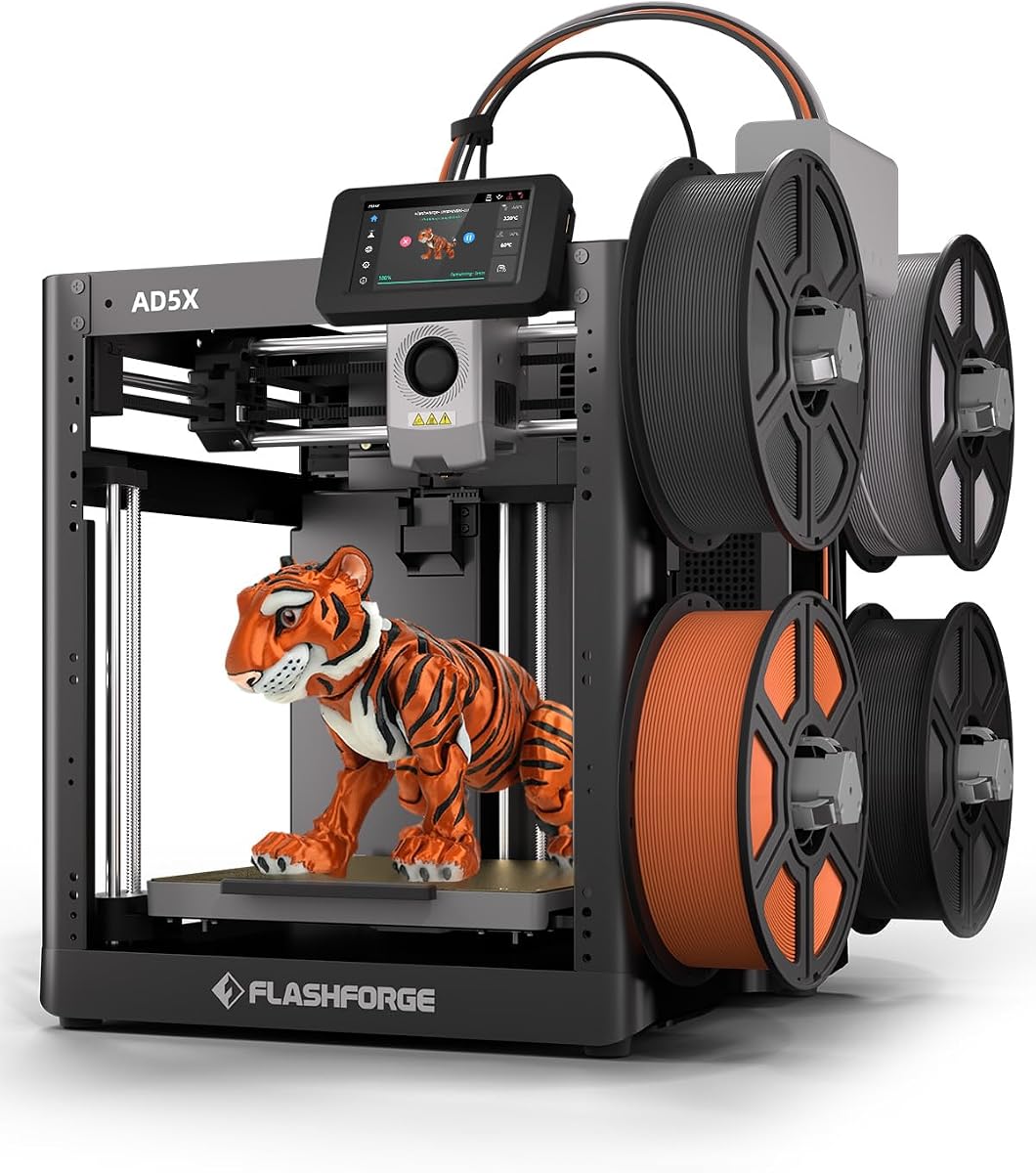
The FLASHFORGE AD5X delivers exceptional speed at a budget-friendly price. Rated solidly by users, it targets small businesses needing rapid prototyping without enterprise costs. Its standout trait is delivering 600mm/s speeds alongside multi-color capability for under typical premium pricing.
We may earn a commission when you buy through this link, at no additional cost to you.
With CoreXY precision and a 300°C extruder, it handles a wide range of filaments effectively. Vibration compensation and auto leveling improve reliability. Multiple nozzle options allow fine details or fast large prints.
Its compact build volume limits large part production. While not as feature-rich as higher-end models, it offers strong value for entry-level production. The trade-off is acceptable for tight budgets focused on output volume.
Ideal for startups or makers needing speed and affordability. The AD5X proves that high performance is accessible without compromising on essential production features.
Balance speed and cost for batch runs without investing in expensive industrial systems.
Choose from 0.25mm to 0.8mm nozzles to match part detail and size needs.
We may earn a commission when you buy through this link, at no additional cost to you.
The P1S offers a streamlined alternative to the Combo, focusing on single-color reliability. It shares the 500mm/s speed and enclosed build volume for consistent output. Its rating highlights user trust in Bambu Lab’s engineering.
We may earn a commission when you buy through this link, at no additional cost to you.
Setup takes just 15 minutes, with auto leveling reducing calibration needs. It excels with PLA, PETG, ABS, and ASA for durable parts. The enclosed chamber stabilizes temperature for professional-grade results.
Multi-color printing requires an extra purchase, which adds cost. For businesses needing color, the Combo is better. Otherwise, this model saves budget without sacrificing performance or quality.
Best for single-material batches needing speed and precision. The P1S simplifies workflows for focused production runs where complexity isn't essential.
Hassle-free assembly ensures you start printing sooner after unboxing the unit.
Enclosed design supports high-temp filaments like ASA for outdoor or functional parts.
We may earn a commission when you buy through this link, at no additional cost to you.
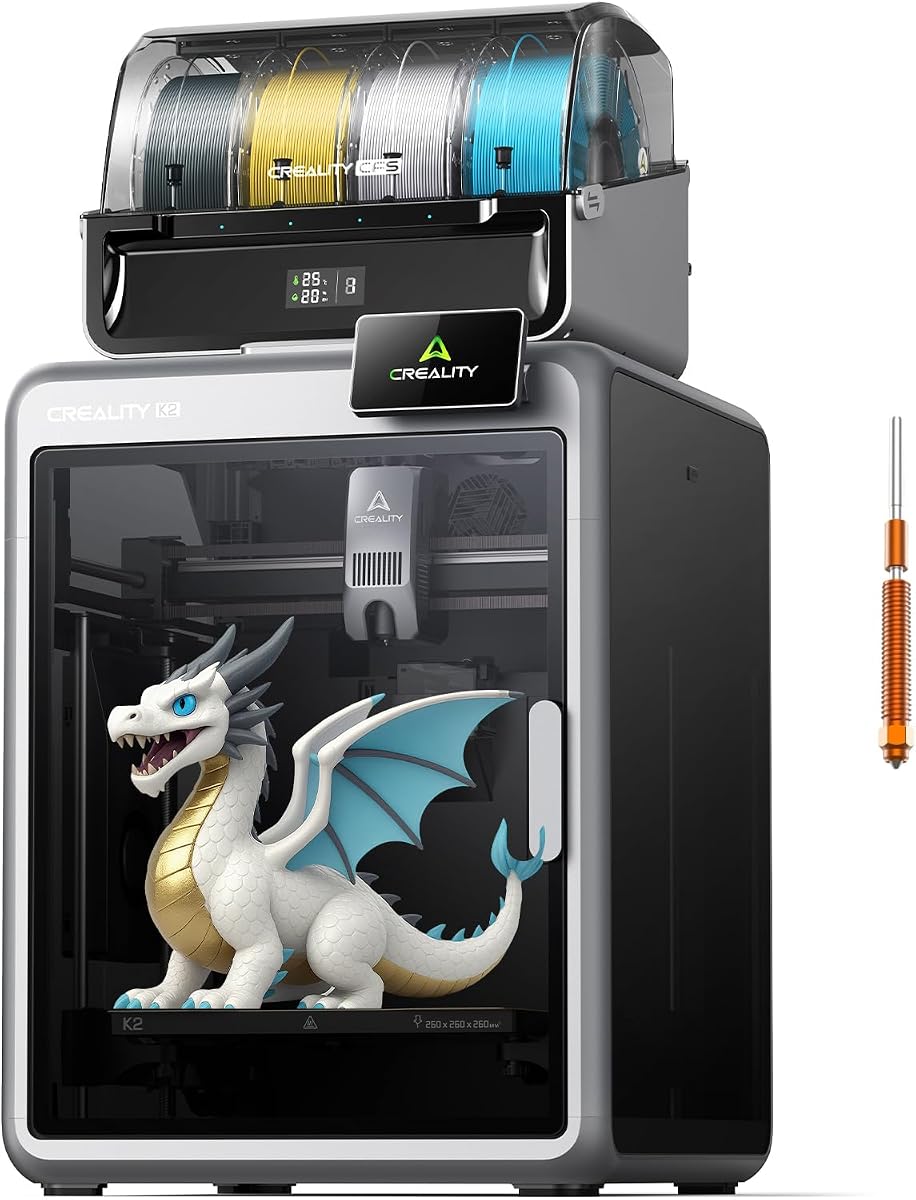
The K2 Combo focuses on usability and quiet performance. Its Silent Mode reduces noise to laptop levels, making it office-friendly. Rated well for balance, it supports up to 16 colors via CFS modules.
We may earn a commission when you buy through this link, at no additional cost to you.
Pre-assembly cuts setup time, and AI cameras monitor for failures. The frame and step-servo motors ensure precision at 600mm/s. It handles PLA, ABS, PETG, and carbon-filament variants reliably.
Firmware updates occasionally lag behind expectations, and filament options depend on CFS compatibility. Still, the convenience and speed justify these minor issues for most businesses.
Best for shared workspaces where noise matters. The K2 Combo blends performance with a user-friendly, ready-to-go experience.
Step-servo motors and balanced fans ensure quiet printing that fits any workspace.
Add up to four CFS units for vibrant multi-color projects without retooling.
We may earn a commission when you buy through this link, at no additional cost to you.
The Creator 5 Pro targets industrial needs with safety and durability. Its 65°C chamber prevents warping in PC or PA. Safety filtration traps fumes, making it suitable for indoor environments.
We may earn a commission when you buy through this link, at no additional cost to you.
Independent toolheads switch without flushing, reducing waste drastically. Linear rails and CoreXY ensure stability at 600mm/s. This model suits businesses prioritizing part integrity and environmental safety.
Cost and setup complexity may deter small teams. However, reliability and material support offer long-term value. It’s built for continuous, high-demand production cycles.
Best for industrial prototyping needing safety and robust materials. The Creator 5 Pro ensures quality and compliance in professional settings.
Active heating allows printing ABS, PC, and PA with minimal warping risks.
Dual HEPA and carbon filtration reduce harmful emissions during long runs.
We may earn a commission when you buy through this link, at no additional cost to you.
The K2 Plus Combo expands capability with a 350mm build volume. Its 600mm/s speed and dual cameras ensure precision on large or complex prints. Rated highly for reliability, it supports 16-color outputs.
We may earn a commission when you buy through this link, at no additional cost to you.
Active heating and hardened nozzles handle engineering filaments like PPA. Automation features reduce user intervention. It’s ideal for parts needing size or advanced material properties.
Cost and footprint may be limiting for smaller operations. Still, for businesses scaling up, the added volume and control justify the investment.
Best for large batches or oversized prototypes. The K2 Plus Combo combines speed with capacity for expanded production.
Print up to 350mm parts without splitting models, saving assembly time.
Dual AI cameras detect failures early, preventing wasted material or time.
We may earn a commission when you buy through this link, at no additional cost to you.
The Adventurer 5M prioritizes speed and ease of use. With 3-second nozzle changes and 600mm/s travel, it minimizes setup downtime. Its CoreXY frame ensures stability for consistent quality.
We may earn a commission when you buy through this link, at no additional cost to you.
Auto leveling and app monitoring streamline operations. Users can swap nozzles in seconds to adjust for detail or speed. It’s efficient for businesses needing quick turnaround.
Its build size limits larger prints, and multi-color options aren't advanced. For rapid, small-scale production, it remains an efficient tool.
Best for fast prototyping and simple production. The Adventurer 5M reduces friction between jobs for steady output.
Detachable nozzles allow rapid shifts between 0.25mm and 0.8mm sizes.
Flash Studio app enables real-time tracking without needing physical presence.
We may earn a commission when you buy through this link, at no additional cost to you.
The A1 offers high precision at a beginner-friendly price. Its acceleration and auto-calibration ensure fast, accurate prints with minimal setup. It’s highly rated for reliability and noise reduction.
We may earn a commission when you buy through this link, at no additional cost to you.
Auto flow compensation and quick-swap nozzles enhance usability. It handles a wide range of filaments and pairs with AMS lite for color. Ideal for small businesses starting out.
Limited build volume requires separate AMS purchase for color. Still, it delivers strong value for low-volume, high-detail tasks.
Best for startups needing easy entry. The A1 simplifies 3D printing without compromising speed or quality.
Full auto calibration handles Z-offset and leveling with zero manual input.
Active noise canceling keeps operations silent, perfect for office environments.
We may earn a commission when you buy through this link, at no additional cost to you.
The K2 Combo offers flexible color printing. With expandable CFS units, it reaches 16 colors for vibrant projects. Its silent mode and pre-assembly ensure convenience.
We may earn a commission when you buy through this link, at no additional cost to you.
RFID filament reading and dry storage improve consistency. It runs at 600mm/s and handles multiple materials well. Ideal for small shops needing color without full industrial features.
Chamber heating is basic, and CFS adds cost. Still, it provides solid value for color projects needing efficiency and simplicity.
Best for businesses expanding color options. The K2 Combo balances affordability with powerful multi-color capability.
RFID systems identify filament properties automatically, reducing errors.
Silent mode and balanced fans keep noise levels low for shared offices.
We may earn a commission when you buy through this link, at no additional cost to you.
Selecting a 3D printer for small business involves evaluating production needs, material requirements, and workspace constraints. Focus on features that boost throughput and reliability.
High-speed printers like those offering 600mm/s reduce wait times, enabling faster turnaround for client orders. Prioritize machines with strong acceleration (20000mm/s² or higher) to handle complex geometries quickly.
Look for CoreXY or high-speed direct drive systems that maintain accuracy even at peak velocities.
Consider maximum print dimensions to ensure they accommodate your part sizes. Large volumes like 350mm³ eliminate the need for splitting models, saving assembly time.
For businesses expecting growth, choose printers with expandable or batch printing capabilities to scale output smoothly.
Multi-color or multi-material systems like AMS or CFS units enable branding and functional prototypes without painting. These reduce post-processing needs.
Evaluate toolhead switching speed to minimize downtime during material changes for efficient workflows.
Support for engineering filaments such as ABS, ASA, PC, or TPU ensures durability. High-temperature extruders (300°C+) and heated chambers prevent warping.
Verify filament compatibility lists to ensure your chosen printer handles the polymers required for your products.
Auto leveling, flow calibration, and AI monitoring reduce human error and intervention. These features improve success rates and free up staff time.
Prioritize user-friendly interfaces and pre-assembled designs to minimize setup time and training needs.
Enclosed designs with HEPA or carbon filtration improve air quality and safety, essential for indoor business spaces.
Check for safety certifications and noise levels if the printer will operate in shared or client-facing areas.
Remote app control, cameras, and real-time alerts allow monitoring without physical presence, supporting flexible workflows.
Wi-Fi and cloud features enable seamless integration with production management systems.
Robust components like steel rails or aluminum frames reduce wear. Quick-swap nozzles and accessible parts minimize downtime.
Choose reputable brands with strong community support and regular firmware updates to ensure long-term performance.
Start by calibrating the bed and extruder using the auto-leveling tools provided. Proper first-layer adhesion is essential for successful prints. Follow manufacturer slicing software guides to optimize settings for your chosen filament.
Schedule regular nozzle cleanings and bed surface checks to maintain print quality. Replace worn parts like nozzles or belts promptly to prevent failures. Monitor temperature sensors and chamber fans for consistent performance.
Store filaments in dry, sealed containers to avoid moisture absorption. Use desiccants if the system includes smart filament management. Perform periodic firmware updates to access new features and improvements.
The Bambu Lab P1S Combo offers the best balance of speed, color support, and reliability. Its high acceleration and auto-leveling make it ideal for rapid iterations. This model suits businesses needing versatile, fast output without complex setup.
Yes, many models support multi-color printing via AMS or CFS units. These systems allow up to 16 colors without manual changes. Verify compatibility before purchasing to ensure seamless integration with your workflow.
Choose printers with near-zero waste systems like Snapmaker U1’s toolhead switching. Avoid traditional purging by using independent toolheads. Efficient swapping drastically cuts material costs over time.
Aim for at least 220mm³ to handle most standard parts. Larger needs may require 350mm³ volumes like Creality K2 Plus. Matching build size to your products reduces printing time and effort.
Enclosed printers stabilize temperature for materials like ABS and ASA, improving print success. They also reduce noise and fumes, making them safer for indoor use. This makes them ideal for professional or shared spaces.
Regularly clean the bed, lubricate rails, and check belts. Update firmware to improve performance and stability. Proper care minimizes downtime and extends the machine's useful life.
Yes, models with 300°C+ extruders and heated chambers handle PC, ASA, and Nylon. Verify temperature ranges and chamber features for your material needs. This ensures reliable production of durable parts.
With proper maintenance, most printers last 3–5 years in active use. High-wear parts like nozzles may need replacement. Invest in robust models to ensure long-term productivity.
The top picks—P1S Combo, Snapmaker U1, and AD5X—cover diverse needs from multi-color speed to cost-effective output. Each excels in specific areas like waste reduction or setup simplicity.
Prioritize features aligned with your goals, such as build size, automation, or material support. Investing in reliability and speed boosts ROI more than chasing extra bells and whistles.
Prices and stock change often, so confirm availability before ordering. Review current specs and community feedback to ensure the selected printer fits your evolving business needs.