
MT-92H Light Meter
4.6Editor score
High Precision Light Measurement
Innovative Split-Sensor Design
Dual Measurement Units
This guide compares ten top analog light meters for photography and film, evaluating accuracy, build quality, and usability to help you choose the right tool.
Finding the right analog light meter ensures precise exposure control for photography and cinematography. These devices measure ambient light to help you set aperture and shutter speed accurately without relying on digital sensors or screen menus.
We evaluated ten highly rated models based on their sensor accuracy, ease of use, and durability. The list includes classic battery-free designs and modern digital hybrids, comparing their performance across studio and field lighting conditions.
Each pick shows specific strengths for different workflows like incident or reflected readings. Prices change frequently so check current listings before purchasing to ensure you get the best value for your specific shooting needs.
4.6Editor score

4.6Editor score
4.7Editor score
The table below provides a side-by-side comparison of all ten models including their key specifications and direct links to view current availability on Amazon.

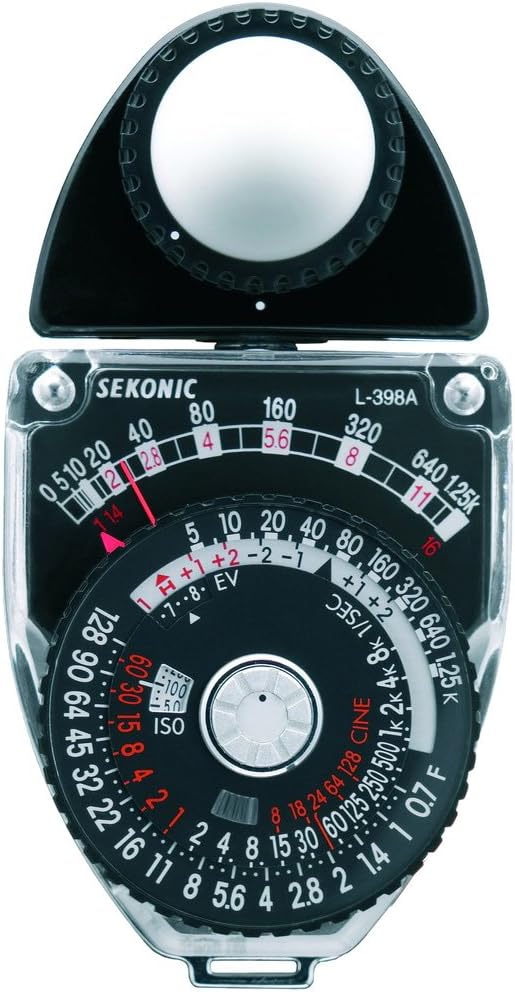


The Sekonic L-398A Studio Deluxe III is a legendary analog light meter known for its battery-free operation and robust design. It holds a rating of 4.6 stars from users who appreciate its reliability and precision in studio and field environments.
We may earn a commission when you buy through this link, at no additional cost to you.
Its standout quality is the integrated amorphous photocell which generates power from ambient light to ensure dependable exposure readings anytime. The full dial readout provides an instant display of complete aperture and shutter speed combinations allowing for efficient adjustments without navigating menus.
While the analog interface is efficient it requires manual dial adjustments which may take time for those used to digital displays. The absence of a digital screen means you rely on the calculator dial which is accurate but less intuitive for quick numerical values.
This meter is ideal for professional photographers and cinematographers who value battery independence and tactile control. It is the perfect choice for studio work or on-location shoots where you need reliable performance without carrying spare batteries.
The integrated sensor eliminates the need for batteries by generating power from ambient light ensuring you never miss a shot due to dead cells.
The adjustable head design allows precise positioning of the incident dome while maintaining a clear view of the display during complex lighting setups.
We may earn a commission when you buy through this link, at no additional cost to you.
The MT-92H Light Meter is a budget-friendly option that delivers high-precision light measurement with a fast refresh rate. It achieves a 4.6-star rating by offering accurate readings and versatile features at an accessible price for hobbyists and pros.
We may earn a commission when you buy through this link, at no additional cost to you.
Its key strength is the innovative split sensor design which enables simultaneous measurement and monitoring while maintaining measurement integrity. The dual measurement units allow you to toggle between Lux and Foot Candles to cater to diverse professional needs with a single button press.
A trade-off is the reliance on 3xAAA batteries rather than a battery-free mechanism which requires periodic checks. The digital display provides precise values but lacks the analog calculator dial some photographers prefer for quick exposure adjustments.
This meter is excellent for set design, factory inspections, or general photography where cost matters. It is recommended for users who need accurate ambient light readings without the higher price tag of specialized camera meters.
Advanced split light sensor technology enables simultaneous measurement and monitoring allowing flexible positioning without losing reading integrity.
Seamlessly toggle between Lux and Foot Candles for precise illuminance measurement catering to diverse professional needs and international standards.
We may earn a commission when you buy through this link, at no additional cost to you.
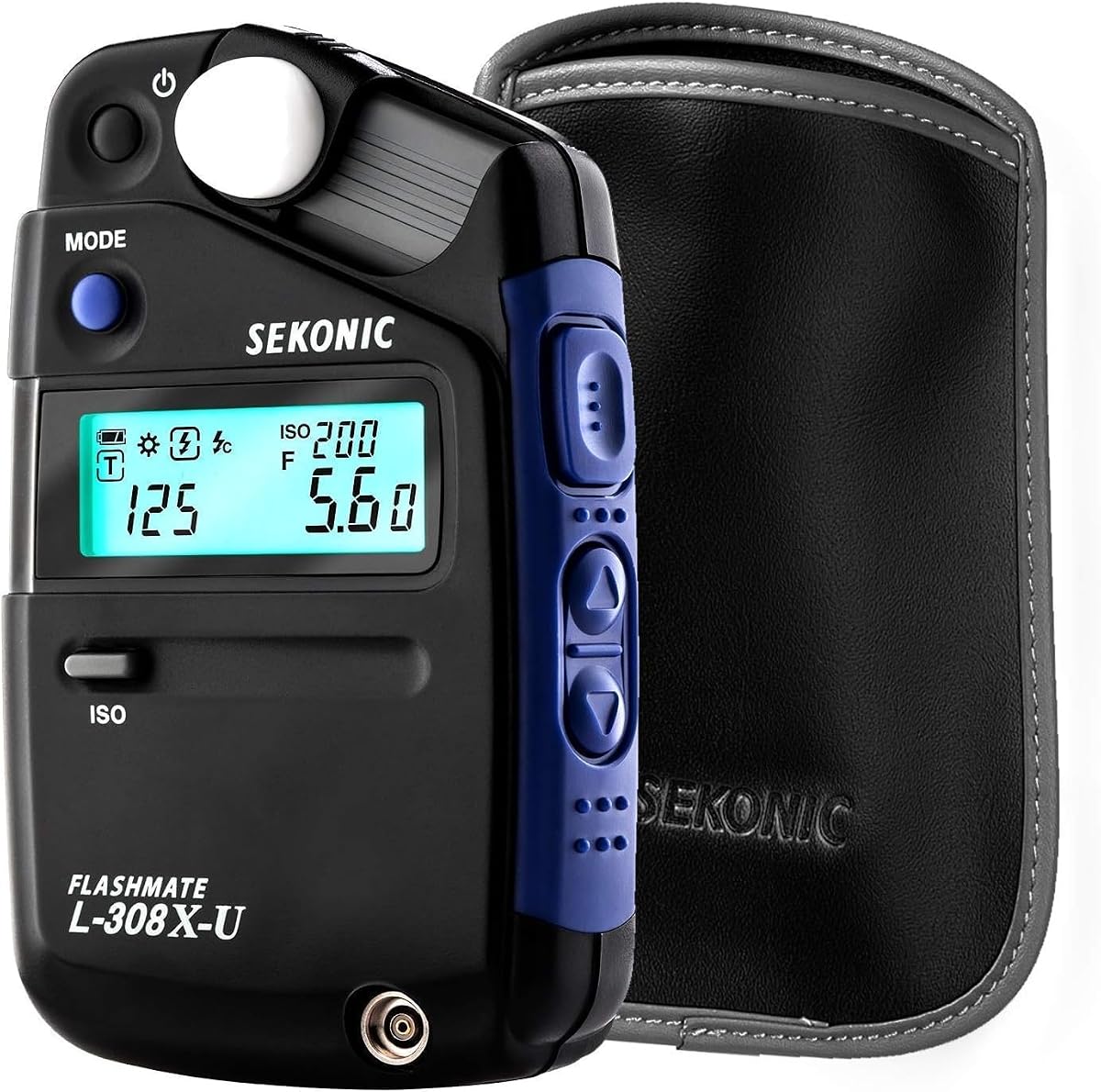
The Sekonic L-308X-U Flashmate is a compact digital light meter designed for both photography and cinematography professionals. It earns a 4.7-star rating for its precise exposure readings and versatile modes that cater to different shooting requirements.
We may earn a commission when you buy through this link, at no additional cost to you.
Its standout feature is the ability to measure exposures accurate down to a tenth-of-a-stop for both ambient and electronic flash light readings in full-stop mode. The HD Cine mode is perfect for DSLR and mirrorless videographers needing to control light using shutter speeds and frame rates.
A trade-off is the requirement for batteries to operate compared to the battery-free models which adds ongoing maintenance. The price is higher than basic digital meters but justified by the precision and specialized cinema modes.
This meter is ideal for photographers and videographers who need precise tenth-stop accuracy and specialized modes. It is the top pick for those working in controlled studio environments or on set where accurate flash and ambient readings are crucial.
Perfect for DSLR and mirrorless videographers who need to take exposure readings and control light using shutter speeds and frame rates.
Compact digital incident and reflected exposure meter with an auto backlight LCD that fits easily in your camera bag.
We may earn a commission when you buy through this link, at no additional cost to you.
This digital illuminance meter is a versatile tool for general light measurement tasks around the home or office. It holds a 4.4-star rating from users who value its wide range and compact design for various non-photography applications.
We may earn a commission when you buy through this link, at no additional cost to you.
Its key strengths include measuring luminosity from 0 to 200000 Lux and ambient temperature with a high accuracy rating. The 4 digit color LCD screen provides clear MIN and MAX readings as well as data hold and auto power off features.
A trade-off is that the accuracy decreases at higher lux levels which may not suit precision photography needs. It is not designed for camera exposure control like aperture and shutter calculations but rather for general illuminance monitoring.
This device is best for set design, factory, office, or home use where you need general light level checks. It is recommended for hobbyists who want a simple tool to monitor light conditions without investing in a professional camera meter.
High accuracy of ±3% rdg ± 8 dgts below 10000 Lux makes it reliable for most home and office lighting checks.
Lightweight and compact design with a 2 year warranty ensures it is ready for use in homes, offices, or factories.
We may earn a commission when you buy through this link, at no additional cost to you.
The Dr.meter Digital Illuminance Light Meter is designed for high precision and fast response in various environments. It has a 4.5-star rating from users who appreciate its reliability for gardening and general light intensity monitoring.
We may earn a commission when you buy through this link, at no additional cost to you.
Its key strength is delivering lightning-fast readings two times per second ensuring you get accurate light intensity data quickly. The PEAK data recording allows you to lock in the highest light pulse value which is perfect for measuring lightning or lasers.
A trade-off is the need for 9V battery replacement which adds a minor maintenance task to your routine. It lacks advanced camera modes like shutter or aperture calculations making it less suitable for professional photography exposure control.
This meter is best for creating the ideal growing environment for plants by measuring sunlight intensity accurately. It is recommended for gardeners and plant owners who need simple and reliable light measurements to ensure their plants thrive.
Instantly lock in and display the highest light pulse value with a single press of the PEAK button for brief high-intensity sources.
Effortlessly toggle between FC and LUX to measure light intensity in the unit that suits your specific needs easily.
We may earn a commission when you buy through this link, at no additional cost to you.
The Extech LT300 Light Meter captures reliable Lux and foot-candle readings up to 40000 lux with precision. It holds a 4.3-star rating for its user-friendly design and advanced functions that help professionals make confident lighting decisions.
We may earn a commission when you buy through this link, at no additional cost to you.
Its key strengths include a large backlit LCD display that makes readings easy to view in dim areas and one-handed operation. Advanced functions like Min/Max and data hold let you log and compare readings to ensure safe and efficient lighting in workplaces.
A trade-off is the limited lux range of 40000 which may be insufficient for very bright outdoor scenes. It does not feature an analog dial interface so you must rely on the digital display for all measurement data.
This meter is ideal for managing energy use, photography, or facility safety in workplaces, studios, and labs. It is the top pick for facility managers or safety inspectors who need portable and reliable tools for lighting inspections.
Cosine and color-corrected sensor provides accurate measurements in all lighting conditions from natural daylight to industrial fixtures.
Large backlit LCD display makes readings easy to view in dim areas while one-handed operation ensures comfort and convenience.
We may earn a commission when you buy through this link, at no additional cost to you.
The Gossen Luna Pro SBC is a classic ambient lightmeter and flashmeter known for its precise EV readout. It holds a 3.7-star rating reflecting its legacy status and specific features favored by professional users in photography.
We may earn a commission when you buy through this link, at no additional cost to you.
Its key strength is the digital readout in EV which is easily transferred to a setting ring where all shutter speed and f-stop combinations can be read at a glance. It also includes a clock with alarm and timer for added convenience.
A trade-off is that it is an older model with lower modern ratings compared to newer digital options. It may lack some of the latest features found in contemporary meters which could affect its appeal for younger photographers.
This meter is ideal for photographers who appreciate legacy gear and specific EV setting transfer capabilities. It is recommended for studio professionals who value its classic design and robust flash and ambient measurement modes.
Digital readout in EV is easily transferred to a setting ring where all the shutter speed f-stop combinations can be read at a glance.
Includes a clock with alarm timer and temperature read out to help manage your shooting environment efficiently.
We may earn a commission when you buy through this link, at no additional cost to you.
The Fluke 941 Light Meter is an illuminance meter tester known for its professional grade quality and reliable construction. It holds a 4.8-star rating reflecting its strong reputation among users who require consistent performance for testing.
We may earn a commission when you buy through this link, at no additional cost to you.
Its key strengths include the brand reputation for accuracy and durability making it a trusted tool in industrial and commercial settings. It is designed specifically as an illuminance meter tester for precise and consistent results.
A trade-off is that it lacks consumer-focused features which may make it overkill for casual photography needs. The higher price point is justified by its robust build but may not be necessary for standard light measurements.
This meter is ideal for industrial or commercial users who need to ensure safe and efficient lighting in their facilities. It is the top pick for facility managers or safety inspectors who prioritize brand reliability and testing accuracy.
Brand Fluke reputation ensures professional grade quality and reliable construction for demanding testing environments.
Designed as an illuminance meter tester to deliver consistent results for safety checks and industrial lighting validation.
We may earn a commission when you buy through this link, at no additional cost to you.
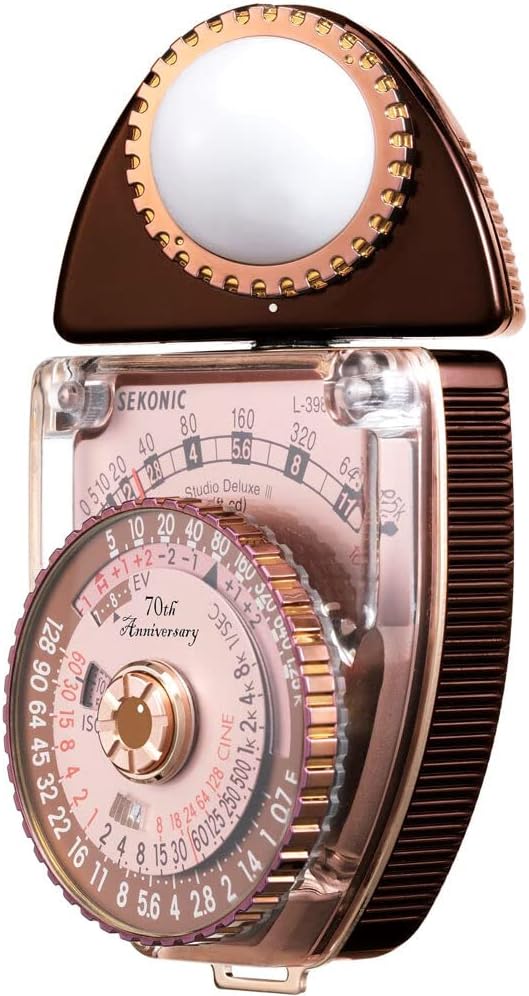
The Sekonic Studio Deluxe III 70th Anniversary Analog Light Meter offers instant reading of full range of aperture shutter combinations. It holds a perfect 5.0-star rating from users who appreciate its legacy and special edition status.
We may earn a commission when you buy through this link, at no additional cost to you.
Its key strength is the instant reading of aperture shutter combinations which ensures efficient workflow adjustments. The 70th Anniversary Edition honors the brand's long legacy with a special design appealing to enthusiasts and collectors.
A trade-off is the premium price for the anniversary edition which may not offer significant functional differences from the standard model. It is a collector item as much as a tool so value depends on the appreciation for the brand's history.
This meter is ideal for photographers who love analog tools and want a piece of brand history. It is recommended for collectors or professionals seeking a unique analog meter with a proven track record of precision and durability.
Celebrates 70th Anniversary with classic analog design offering a tactile workflow that many professionals prefer over digital interfaces.
Provides instant reading of full range of aperture shutter combinations to ensure efficient workflow adjustments during shoots.
We may earn a commission when you buy through this link, at no additional cost to you.
The Sekonic L-398A Studio Deluxe III is a favourite with cinematographers for its reliability and analog design. It holds a 4.4-star rating from users who value its compact analog meter capabilities for incident and reflected ambient light readings.
We may earn a commission when you buy through this link, at no additional cost to you.
Its key strengths include a 180-degree Lumisphere for general readings of 3-D objects and a swivel head that allows you to hold down the metering button and walk the set. No battery is required ensuring dependable operation anytime.
A trade-off is that it is very similar to the standard L-398A with minor price differences which may affect value perception. The analog interface requires manual adjustment which can be slower than digital displays.
This meter is ideal for cinematographers and photographers who need a compact and durable option for varied lighting. It is recommended for those who appreciate the classic analog feel and include accessories like the Lumidisc for selective readings.
Integrated sensor generates power from ambient light ensuring dependable exposure readings anytime without needing batteries.
180-degree swivel head allows you to hold down the metering button and walk the set to check light levels.
We may earn a commission when you buy through this link, at no additional cost to you.
Choosing the right light meter depends on your specific needs whether you need battery-free operation precise digital readings or specialized cinema features.
Analog meters often use amorphous photocells to generate power from light eliminating the need for batteries. This ensures reliability in the field but you must consider if you prefer this or a digital meter that offers numerical precision with battery dependency.
Choose battery-free if you want worry-free operation or digital if you prefer instant numerical readings for complex setups.
Incident measurement uses a dome to measure light falling on the subject while reflected measures light bouncing off it. Most professional meters support both modes but you should check for accessories like lumisphere or lumidisc included in the package.
Ensure the meter supports both incident and reflected modes to handle varied lighting scenarios effectively.
Analog dials provide a calculator display for aperture and shutter combinations whereas digital screens show numerical values. Dials allow quick visual adjustments but screens offer precise numbers for technical monitoring.
Select dials for quick analog workflows or screens for precise digital control depending on your comfort.
Light meters vary in their lux range and accuracy levels with some capable of reading low to high intensity light. Professional models typically offer higher precision while budget models may have wider ranges but lower accuracy at extremes.
Prioritize high accuracy and appropriate range based on your shooting environments such as studio versus outdoor.
Some meters include specialized modes like Cine HD Cine or Photo modes tailored for photographers or videographers. These features allow exposure control using frame rates and shutter angles essential for motion capture work.
Look for dedicated Photo or Cine modes if you work with video or still image photography requiring precise stop accuracy.
Durability is key for field use so check for compact and durable construction that withstands handling. Accessories like cases, straps, and sensor covers protect your investment and enhance usability during shoots.
Choose models with robust build and included accessories to ensure long-term reliability and convenience.
The interface should allow you to adjust settings quickly without complex navigation. Swivel heads and clear displays help maintain workflow efficiency especially during complex lighting setups.
Prioritize models with intuitive controls and display designs that support efficient exposure adjustments.
Price ranges vary significantly from budget digital meters to premium analog options with special editions. Consider what features you actually need to avoid overpaying for specialized functions you won't use regularly.
Balance cost with necessary features to find a meter that offers the best value for your specific workflow.
To use your analog light meter, position the incident dome facing the light source or the sensor towards the subject for reflected readings. Press the button to activate the reading and adjust the aperture or shutter dials to match the indicated value.
Regularly check the display for clear visibility especially in bright or low light conditions. Ensure the swivel head is positioned correctly so you can view the dial without blocking the sensor while measuring.
Clean the meter gently with a soft cloth to remove dust and store it in its case when not in use. For battery-free models, ensure the sensor remains exposed to light periodically to maintain optimal performance.
Incident light meters measure the light falling on the subject using a dome to capture illumination from all angles. Reflected meters measure light bouncing off the subject which can be influenced by the subject brightness color.
Yes many analog meters support Cine modes that allow you to set shutter angles and frame rates specific to video. This ensures accurate exposure control for motion capture.
Some analog meters use amorphous photocells to generate power from ambient light eliminating the need for batteries. Others may require batteries for digital displays or additional functions.
Consider your typical shooting environment such as studio low light or bright outdoor scenes. A wide range ensures accuracy across different conditions but check the accuracy details for your specific needs.
Digital meters often offer precise numerical readings and data hold features which can be more convenient. However modern analog meters also provide reliable accuracy for manual adjustments.
Accessories like Lumisphere Lumidisc straps cases and covers protect your meter and expand its versatility for different readings. Check the product details to see what is included.
A swivel head allows you to adjust the sensor position while keeping the display in view for easy reading during complex setups. This improves workflow efficiency especially when moving around the set.
Professional use may require regular calibration to maintain accuracy but most modern meters are reliable over time. Consult the user manual for maintenance recommendations.
The Sekonic L-398A Studio Deluxe III stands out for its battery-free reliability and full dial readout ideal for pros. Budget options like the MT-92H provide accuracy for general use without high costs.
Prioritize the features that match your workflow such as incident reflected modes or specialized cinema capabilities to maximize value. Choose between analog dials or digital screens based on your preference for quick adjustments or numerical precision.
Always check current prices and availability before purchasing since listings may change frequently. Ensure you select a meter with the right lux range and build quality for your specific studio or field work.