
Pyle PDC22
4.4Editor score
Affordable two-channel design
Built-in hum eliminator
Steel chassis construction
Finding the right bass direct box is crucial for musicians who demand clean, noise-free signal transmission. Whether you play live on stage or record in a studio, a high-quality DI unit ensures your instrument's tone remains intact when connected to mixing consoles or audio interfaces.
We evaluated ten popular bass direct boxes based on build quality, sound fidelity, feature sets, and user feedback. Our analysis covers both passive and active models, highlighting key differences in impedance matching, ground lift options, and overall reliability for professional applications.
Each pick in this guide showcases specific strengths tailored to different needs and budgets. Please note that product availability and pricing can change frequently, so verifying current details on the manufacturer or retailer site is always recommended before making a purchase decision.
4.4Editor score

4.8Editor score
4.8Editor score
As an Amazon Associate we earn from qualifying purchases.
The following table provides a side-by-side overview of each model examined in this guide, highlighting core specifications and design features that distinguish them for bass applications.




The Pyle Premium Direct Injection Audio Box offers an accessible entry point for musicians seeking basic direct box functionality. With a 4.5-star rating from users, it delivers clean signal conversion for guitars and basses without requiring external power.
We may earn a commission when you buy through this link, at no additional cost to you.
Its core strength lies in its simplicity and affordability. The unit includes a built-in hum eliminator and ground lift adapter, making it effective at reducing noise when connecting unbalanced instruments to balanced PA systems. The detachable power cord option adds flexibility for live applications.
While it performs well for home recording or small gigs, the plastic chassis may not withstand heavy touring demands. Users should handle it with care to avoid damage during transport. For occasional use, it remains a practical choice given its low cost.
Budget-conscious bassists or hobbyists who need a reliable tool for casual sessions will find this model sufficient. It effectively converts signals to balanced XLR outputs, ensuring compatibility with standard mixers and interfaces.
This model provides essential impedance matching and hum reduction at a very accessible price point.
It supports both balanced and unbalanced connections, making it versatile for various audio setups.
We may earn a commission when you buy through this link, at no additional cost to you.
The Pyle PDC21 improves upon the basic Pyle line with an all-steel chassis, offering better durability while maintaining a budget-friendly profile. It carries a 4.5-star rating and functions as a passive unit to clean up unbalanced signals from instruments.
We may earn a commission when you buy through this link, at no additional cost to you.
This unit is designed to handle live sound recording applications effectively. It features a hum eliminator and ground lift adapter to minimize interference. The steel construction ensures it can withstand more handling than plastic alternatives, making it suitable for regular rehearsals.
Although it lacks advanced features like attenuation pads, it covers the essentials for connecting instruments to PA systems. Its ability to power up to ten effects pedals makes it a convenient tool for guitarists and bassists alike who use pedals on stage.
For musicians seeking a step up from plastic DIY boxes without a premium price tag, the PDC21 is a solid option. It delivers reliable signal integrity for casual gigs and studio work.
The all-steel chassis provides better protection against wear and tear compared to plastic competitors.
It can power up to ten effects pedals, adding versatility for players who rely on board effects.
We may earn a commission when you buy through this link, at no additional cost to you.
The Radial Pro DI stands out as a reliable workhorse for professional environments. With a 4.7-star rating, it combines a custom transformer with rugged I-beam construction to deliver consistent, high-quality audio conversion for bass and guitar signals.
We may earn a commission when you buy through this link, at no additional cost to you.
Its passive design eliminates the need for batteries or phantom power, reducing failure points during critical performances. The build quality is exceptional, ensuring it can endure the rigors of touring. Users praise its ability to maintain signal integrity without adding noise.
The main trade-off is the single-channel limitation, which may not suit setups requiring stereo outputs. Additionally, the price point is higher than budget options, reflecting its premium materials and engineering. However, this investment pays off in longevity.
Musicians and audio engineers who prioritize durability and sound quality will find the Radial Pro DI an excellent choice. It serves as a dependable solution for both studio tracking and live sound reinforcement.
The custom transformer ensures precise impedance matching and minimal signal loss for clear audio.
I-beam construction offers superior structural integrity compared to standard sheet metal enclosures.
We may earn a commission when you buy through this link, at no additional cost to you.
The Whirlwind IMP 2 earns a top 4.8-star rating by blending professional quality with an economical price point. It is designed for users requiring durability and performance without the cost of high-end boutique units.
We may earn a commission when you buy through this link, at no additional cost to you.
Its standout feature is the TRHL transformer, which is riveted to the chassis for superior mechanical stability and audio fidelity. This design choice helps maintain signal clarity across a wide frequency range, making it ideal for detailed bass recordings and live mixes.
While it shares the single-channel limitation with other passive units, its small footprint and robust build make it highly portable. Users appreciate its reliability, often citing it as a go-to tool for consistent sound in various venues.
For those seeking a balance of affordability and professional results, the IMP 2 is a strong recommendation. It effectively bridges the gap between budget DIY boxes and expensive studio gear.
Riveting the transformer to the chassis enhances durability and reduces internal vibration noise.
Its small size allows it to fit easily into gig bags without sacrificing performance quality.
We may earn a commission when you buy through this link, at no additional cost to you.
The Pyle PDC22 offers a practical dual-channel solution for musicians who need to connect two instruments simultaneously. With a 4.4-star rating, it provides basic direct box functions at a very accessible price point.
We may earn a commission when you buy through this link, at no additional cost to you.
Its main advantage is the ability to handle two inputs in one unit, which can save rack space or simplify pedalboard setups. The unit includes a hum eliminator and ground lift adapter, addressing common noise issues found in live environments.
Users should note that while it features a steel chassis, the overall build quality is oriented toward entry-level use. It may not endure extreme touring conditions as well as premium models, but it serves well for rehearsals and smaller events.
Budget-conscious musicians who need versatility without complexity will find the PDC22 useful. It ensures clean signal transmission for both guitar and bass while keeping costs low.
Having two inputs allows simultaneous connection of multiple instruments, streamlining your audio setup.
The built-in hum eliminator helps reduce ground loop noise for clearer audio output.
We may earn a commission when you buy through this link, at no additional cost to you.
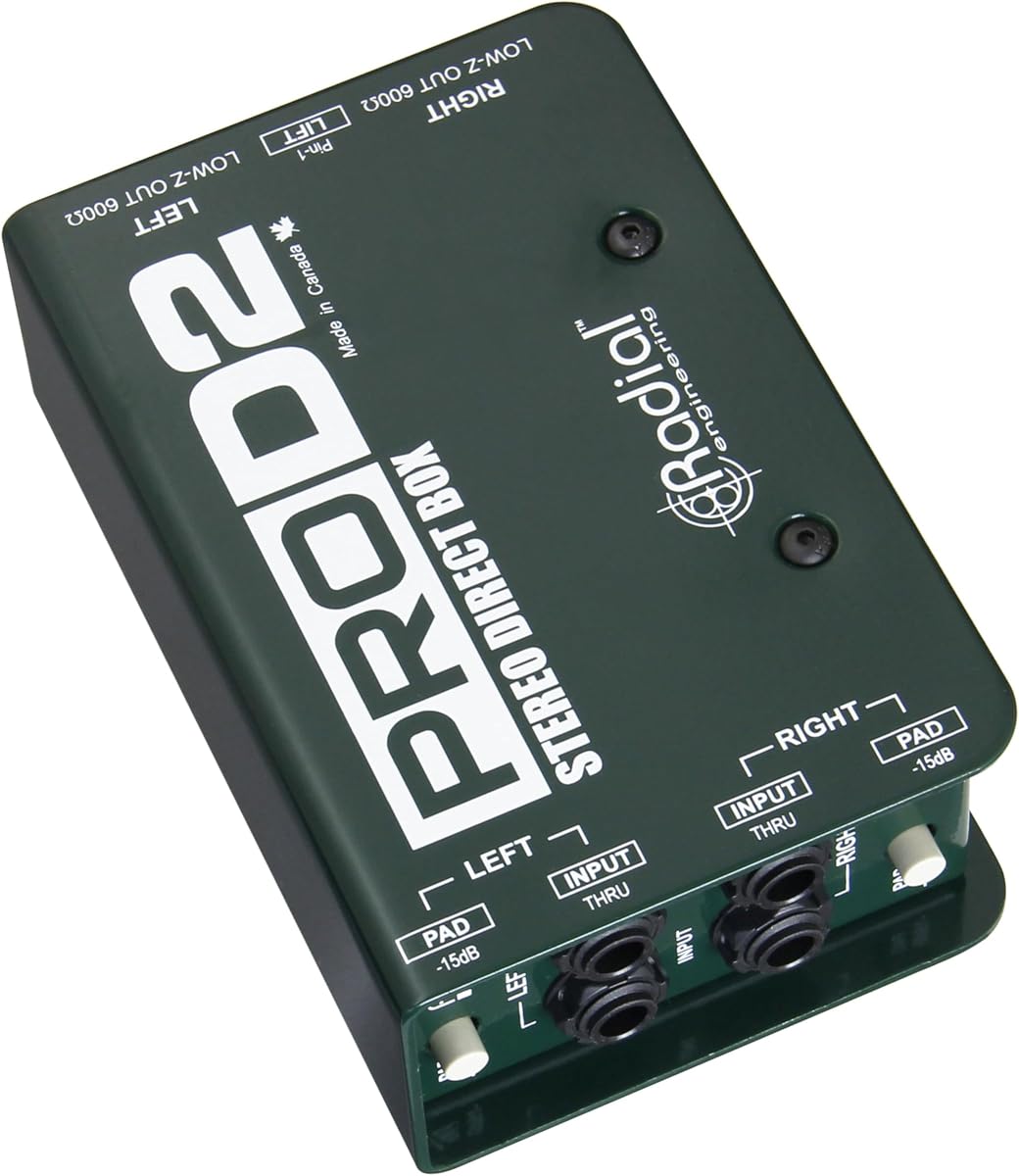
The Radial ProD2 distinguishes itself with stereo isolation capabilities and dual-channel inputs, earning a 4.8-star rating for its professional performance. It is a premium choice for musicians who require clean stereo separation for instruments like keyboards or bass pedals.
We may earn a commission when you buy through this link, at no additional cost to you.
Its isolation transformer ensures that each channel remains free from crosstalk, preserving stereo imaging. The unit also includes a 15dB pad and ground lift switch, providing essential tools for managing signal levels and noise in diverse environments.
The heavy-duty construction makes it ideal for touring, though this adds to the weight. While the cost is higher than single-channel units, the added functionality and durability justify the investment for serious professionals.
For bands and solo artists who need reliable stereo DI capabilities without active power requirements, the ProD2 is a top-tier option. It ensures pristine audio quality for complex setups.
This feature preserves stereo separation by preventing channel crosstalk in complex audio setups.
The included 15dB pad allows safe handling of hot signals to prevent distortion or clipping.
We may earn a commission when you buy through this link, at no additional cost to you.
The Bolanle DB2 Passive 2-Channel DI Box combines versatility with a user-friendly design, earning a 4.6-star rating. It is tailored for both live performances and studio mixing, offering features that enhance signal control and noise reduction.
We may earn a commission when you buy through this link, at no additional cost to you.
Its signal attenuation switch allows users to adjust levels across three settings, preventing overload and accommodating various instruments. The ground lift switch further ensures clean transmission by eliminating ground loop hum. This flexibility makes it suitable for electric guitars, basses, and synths.
The durable, scratch-resistant design adds to its reliability on the road. While slightly more expensive than basic models, the inclusion of reamp capabilities and dual-channel inputs provides value for artists exploring different tones and setups.
Musicians who need a passive box that handles multiple inputs and offers signal control will appreciate the DB2. It effectively bridges the gap between simple direct boxes and more complex gear.
Three attenuation settings help manage input levels to prevent signal overload and distortion.
Reamp functionality allows you to send recorded signals back through amps for tone shaping.
We may earn a commission when you buy through this link, at no additional cost to you.
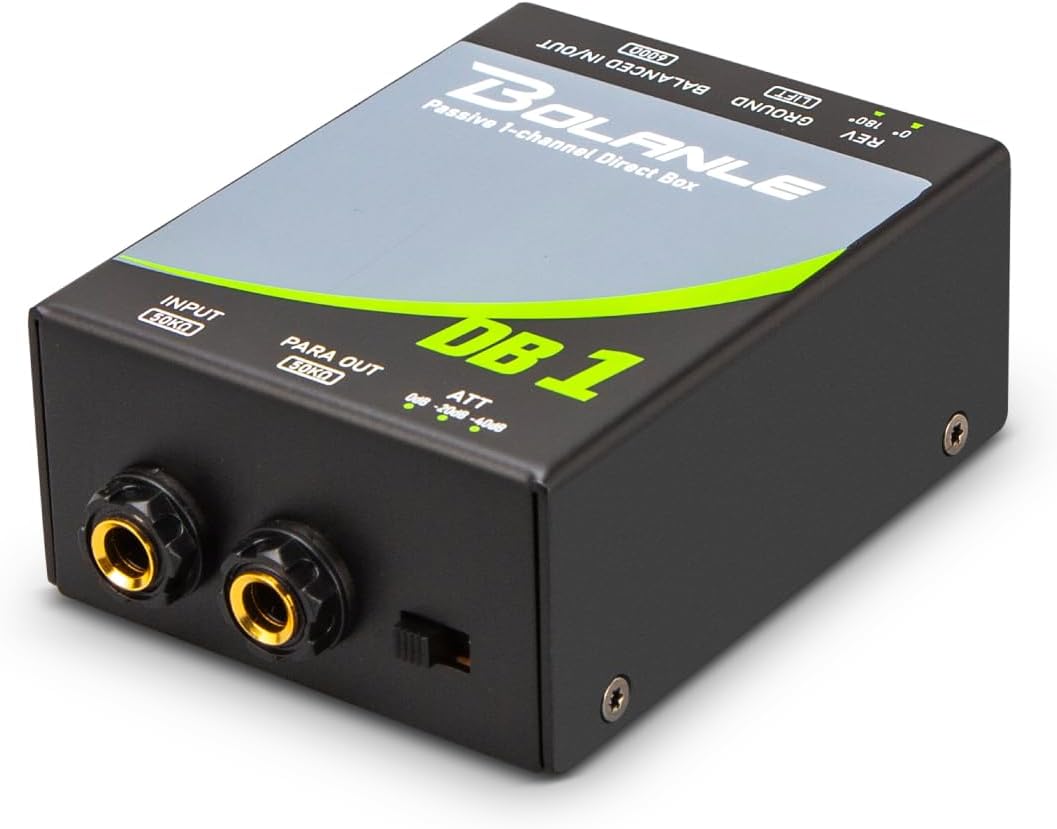
The Bolanle DB1 is a straightforward, compact solution for solo performers or those needing a single channel. With a 4.5-star rating, it focuses on high-fidelity signal conversion without requiring external power sources.
We may earn a commission when you buy through this link, at no additional cost to you.
Its passive operation means there are no batteries or phantom power dependencies, making it incredibly convenient for spontaneous sessions. The parallel output allows you to send a signal to both a mixer and a guitar amp simultaneously, maintaining flexibility.
While it lacks the dual-channel utility of the DB2, it excels in simplicity and durability. The rust-proof and scratch-resistant design ensures it remains functional through repeated transport and usage in various environments.
For bassists or guitarists prioritizing portability and reliability, the DB1 offers excellent value. It ensures clean signal transmission whether you are at home or on stage.
Parallel outputs let you send signals to both mixers and amps without sacrificing tone quality.
Passive design means you never worry about dead batteries during important performances.
We may earn a commission when you buy through this link, at no additional cost to you.
The Bolanle J22 offers unique flexibility with its triple power options, earning a 4.6-star rating among users who value adaptability. It is an active DI box that ensures your signal remains functional even if phantom power is unavailable on stage.
We may earn a commission when you buy through this link, at no additional cost to you.
Its ability to run on 48V phantom power, 9V battery, or USB power makes it ideal for varied environments. The dual channels maintain full stereo separation, which is vital for keyboards and synths. The ground lift switch effectively eliminates interference from noisy stages.
Built with a metal housing, the J22 withstands physical abuse and environmental factors. While it requires a power source, this is a minor trade-off for the reliability and control it offers. The 180-degree polarity reversal switch further enhances its utility.
Musicians playing in venues with inconsistent power or those who need backup options will find the J22 invaluable. It combines active clarity with robust construction for professional results.
Running on phantom, battery, or USB ensures you never face power-related interruptions during sets.
Dual balanced XLR outputs maintain precise stereo separation for immersive audio performance.
We may earn a commission when you buy through this link, at no additional cost to you.
The Radial Pro48 is a trusted active direct box known for its high-resolution audio capabilities and compact design. With a 4.7-star rating, it serves professionals who prioritize signal clarity and ease of integration into rack or pedal setups.
We may earn a commission when you buy through this link, at no additional cost to you.
It relies on standard 48V phantom power, ensuring consistent active performance. The built-in 15dB pad helps manage high-level signals from passive instruments. Its compact size makes it easy to mount on mic stands or fit into crowded signal chains.
While dependency on phantom power is a consideration, the Pro48 delivers unmatched clarity and reliability for demanding environments. It is a staple in many studios and live sound rigs for its consistent performance.
For users seeking a professional active solution that fits anywhere and sounds great, the Pro48 is a strong choice. It offers peace of mind with its robust engineering and precise audio handling.
Active design ensures minimal noise and maximum clarity, suitable for critical recording applications.
Its small form factor makes it ideal for tight pedalboards or portable gig setups.
We may earn a commission when you buy through this link, at no additional cost to you.
Choosing the right bass direct box depends on your specific audio needs, environment, and budget. This section outlines the key factors to consider when selecting a unit for live or studio use.
Passive units do not require power and use transformers to convert signals, making them simple and reliable. Active units require 48V phantom power or batteries to provide stronger signal conversion and higher input impedance.
Choose passive for simplicity and reliability, or active for demanding applications requiring higher gain and signal clarity.
Most bass direct boxes offer single-channel mono outputs suitable for standard signal paths. Stereo units provide dual outputs, essential for preserving stereo imaging from keyboards or dual-output basses.
Prioritize stereo if you need to maintain left/right separation in your signal chain.
A durable chassis made of steel or I-beam construction ensures the unit can withstand the rigors of touring and frequent handling. Plastic casings may be lighter but are more prone to damage.
Opt for metal construction if you plan to travel regularly with your gear.
A ground lift switch allows you to break ground loops that cause buzzing or hum in your audio signal. This feature is critical for maintaining noise-free connections in venues with complex electrical systems.
Ensure your chosen unit includes a ground lift switch to minimize interference.
Standard 1/4-inch inputs allow connection to your instrument, while balanced XLR outputs ensure compatibility with professional mixers and interfaces. Parallel outputs provide flexibility by sending signals to multiple destinations simultaneously.
Check that the inputs and outputs match your current audio equipment needs.
Attenuation pads reduce signal levels before they enter the DI box, preventing distortion from high-output instruments. This feature is particularly useful for active basses or instruments with strong output levels.
Select a model with a pad if you frequently deal with high-gain signals.
Budget options offer basic functionality and may suit casual musicians or home studios. Premium units provide superior durability, sound quality, and features for professional environments.
Balance your budget against the level of performance and reliability you require.
Compact and lightweight designs are easier to transport in gig bags and fit into tight pedalboards. Size matters if you move equipment frequently or have limited storage space.
Choose a compact design if portability is a top priority for your setup.
Connect your bass directly to the input jack using a standard 1/4-inch instrument cable. Run a balanced XLR cable from the output to your mixer or audio interface to ensure noise-free transmission over long distances.
If you hear buzzing or hum in your signal, try engaging the ground lift switch on the direct box. This simple adjustment often resolves ground loop issues caused by incompatible electrical systems in venues.
Store your direct box in a padded case or gig bag when not in use to protect it from dust and physical damage. Regularly inspect cables for wear to ensure consistent performance during every session.
Yes, a direct box converts the high-impedance, unbalanced signal from your bass into a low-impedance, balanced signal that mixes and interfaces expect. This conversion prevents signal loss and reduces noise, especially over long cable runs.
Passive DI boxes rely on internal transformers to convert signals without external power. Active DI boxes require power such as phantom power or batteries to provide stronger gain and better impedance matching for modern instruments.
Absolutely. Both active and passive direct boxes work with active basses. Active boxes often provide better handling for high-output signals, while passive ones offer simplicity and reliability without the need for power.
A ground lift switch helps eliminate ground loop noise by breaking the electrical ground path between your instrument and mixing equipment. This results in a cleaner audio signal free from humming or buzzing sounds.
An attenuation pad reduces the input signal level before it reaches the transformer or circuit. This prevents distortion and clipping when using instruments with high output levels, ensuring a clean and dynamic sound.
Stereo DI boxes are not necessary for standard bass setups but are useful if your bass has dual outputs or you want to preserve stereo effects. For most bassists, a high-quality mono unit is sufficient.
The ten models reviewed here offer a wide range of options for every type of bass player. From budget-friendly entries to premium stereo solutions, each unit brings unique strengths to the table.
Consider your primary use case, whether for live touring, home recording, or both, when selecting a model. Features like build quality, power options, and signal control should align with your performance needs.
Before making your final decision, verify current availability and pricing on retailer sites. With the right direct box, you can ensure your bass tone is transmitted clearly and reliably in any setting.