
PRV AUDIO Car Audio DSP 2.4X
4.7Editor score
LCD display interface
12 preset EQ modes
Remote relay sequencer
This guide compares the top Digital Signal Processor Dsp for Car Audio units, evaluating features like crossover control, EQ bands, and Bluetooth integration
Finding the right Digital Signal Processor Dsp for Car Audio transforms your listening experience by correcting factory limitations. These units offer precise control over timing, frequency, and level to ensure every speaker performs at its peak potential.
We evaluated ten leading models based on channel count, processing power, connectivity options, and ease of tuning. Each product brings unique strengths, from compact Bluetooth-enabled designs to robust 8-channel processors for complex setups.
Each pick highlights key specifications, pros, cons, and ideal use cases to help you decide. Prices and availability fluctuate, so verify current details before purchasing to ensure you get the best value for your specific vehicle.
4.7Editor score
4.6Editor score

4.6Editor score
This side-by-side comparison highlights key specifications across ten top-rated models to help you quickly identify the best fit for your car audio system.





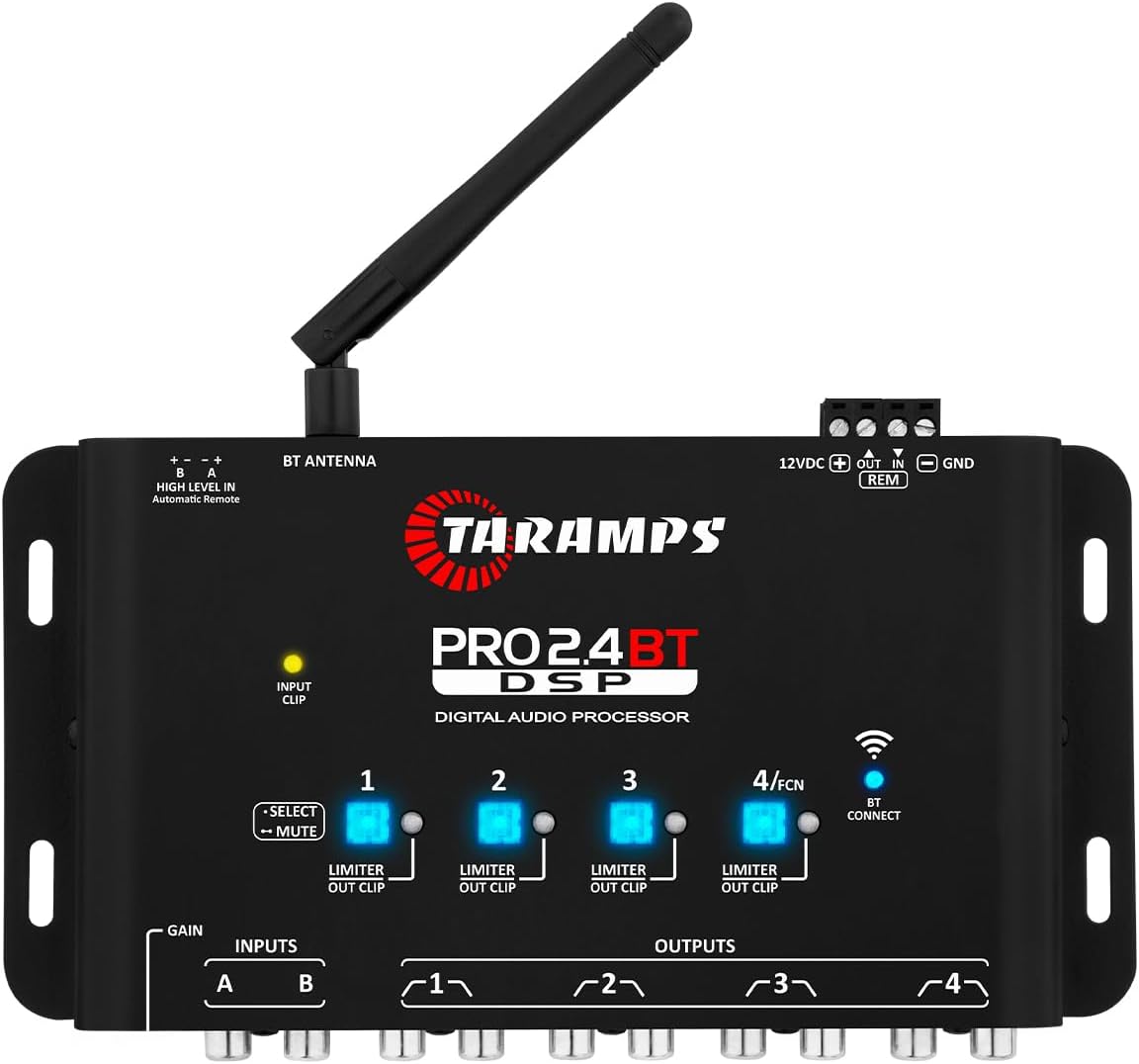
The Taramps Pro 2.4 BT stands out as the best overall Digital Signal Processor Dsp for Car Audio in our lineup. With a strong 4.6 rating, it balances professional-grade processing with user-friendly wireless controls. Its Bluetooth app allows real-time tuning without cables, making adjustments effortless during installation or daily use.
We may earn a commission when you buy through this link, at no additional cost to you.
Its core strengths include 24-bit/48kHz processing for crystal-clear audio and a 15-band graphic EQ for detailed shaping. High-level inputs enable direct connection to factory radios, preserving OEM functionality. The Anti-Puff System eliminates annoying turn-on pops, enhancing integration quality and overall system refinement.
While excellent, it relies on an app rather than onboard physical knobs, which may limit use without a phone. The parametric options are present but less deep than pro-grade units. These trade-offs remain acceptable for most users seeking a versatile, easy-to-use tuning solution.
Ideal for enthusiasts upgrading OEM systems or building compact active setups. If you value wireless convenience and reliable integration, the Taramps Pro 2.4 BT offers exceptional value. Final recommendation: choose this model for its blend of power, control, and modern connectivity.
Bluetooth 5.4 BLE streaming allows instant parameter adjustments from your phone without physical access to the unit.
High-level inputs accept speaker signals directly, eliminating the need for line-out converters on stock head units.
We may earn a commission when you buy through this link, at no additional cost to you.
The PRV AUDIO DSP 2.4X earns the top budget pick with an impressive 4.7 rating. It delivers essential crossover, EQ, and routing features without expensive extras. Its intuitive LCD interface simplifies manual adjustments, making it accessible for beginners and cost-conscious tuners.
We may earn a commission when you buy through this link, at no additional cost to you.
Key strengths include 12 factory presets like Bass Boost and Rock, plus independent gain and crossover per channel. The sequencer feature triggers other amps via remote lead. Four outputs handle full-range or active setups easily, ensuring solid performance for active two-way systems.
Without Bluetooth, tuning requires physical access to the unit or an external interface. Parametric options are limited compared to advanced models. Still, the straightforward design and affordability make it a reliable workhorse for standard upgrades.
Best for budget builds or systems needing simple crossover control. If you want core DSP power without paying for connectivity, this PRV model is ideal. Final recommendation: choose this for reliable, no-frills performance at an excellent price.
Twelve built-in presets streamline initial tuning, saving time for users not ready to manually calibrate.
Remote trigger output allows sequential activation of amplifiers and other accessories, reducing wiring complexity.
We may earn a commission when you buy through this link, at no additional cost to you.
The Banda Audiopart X8AiR leads premium choices with 4.6 stars and pro-grade specs. Its 32-bit/96kHz DSP ensures pristine signal integrity for multi-channel setups. This model excels where others fall short in precision and control, ideal for audiophiles demanding exact soundstage placement.
We may earn a commission when you buy through this link, at no additional cost to you.
Features include 79 EQ bands per channel, allowing surgical correction of resonances. Bluetooth app tuning and 8 outputs support complex multi-amp systems. Time alignment and phase controls refine imaging, while peak limiters protect amplifiers from overload and distortion.
Complexity may overwhelm casual users, and the price reflects its advanced capabilities. Calibration requires patience and understanding of crossover theory. Still, the sonic refinement and flexibility make it unmatched for custom installations.
Recommended for large builds with multiple component speakers or subs. If you seek maximum tuning freedom and high-resolution performance, this unit is worth the investment. Final recommendation: choose this for ultimate fidelity in sophisticated setups.
32-bit/96kHz architecture preserves audio fidelity across all frequency ranges, minimizing digital artifacts.
79-band EQ provides extremely fine control over tone, enabling precise correction of acoustic anomalies.
We may earn a commission when you buy through this link, at no additional cost to you.
The PRV AUDIO DSP 2.8X matches the 2.4X but with eight outputs. It retains the 4.6 rating and core features. This unit is tailored for active systems needing independent control over rear speakers, subs, or midbass.
We may earn a commission when you buy through this link, at no additional cost to you.
Eight independent outputs handle full-range, active two-way, or sub setups. Two inputs allow source switching between A and B. The LCD screen shows adjustments in real time, while presets speed up initial tuning for common music genres.
The lack of app control limits remote tuning access. Parametric EQ options remain basic compared to higher-end competitors. For eight-channel users preferring manual adjustments, the simplicity is a plus rather than a drawback.
Best for active multi-amp builds without Bluetooth needs. If you want maximum outputs without advanced processing, this unit fits. Final recommendation: choose this for practical 8-channel expansion.
Eight outputs let you tune rear speakers separately from fronts, enhancing spatial imaging.
Dual inputs allow switching between sources like radio and Bluetooth without extra wiring.
We may earn a commission when you buy through this link, at no additional cost to you.
This PRV model adds Bluetooth to the 2.4X family, rated 3.7. It keeps core DSP functions while enabling app control. Ideal for users wanting wireless tuning without sacrificing OEM integration. The high-level input allows seamless factory radio upgrades.
We may earn a commission when you buy through this link, at no additional cost to you.
Unique PRV speaker crossover presets simplify setup for specific drivers. Limiters, phase, and delay controls offer per-channel tuning. This is valuable for matching aftermarket speakers to factory outputs, improving clarity without sacrificing factory infotainment.
A lower rating suggests software inconsistencies. Bluetooth pairing can be tricky in some vehicles. Manual adjustments via LCD remain possible but less convenient. Consider it if Bluetooth integration with OEM features is your priority.
Best for factory radio upgrades needing app control. If you value convenience and OEM compatibility, this model fits. Final recommendation: choose this when wireless control and stock integration matter most.
Pre-matched filters for PRV speakers streamline setup, reducing manual crossover calibration needs.
App-based adjustments let you tune from the driver's seat during real-time listening tests.
We may earn a commission when you buy through this link, at no additional cost to you.
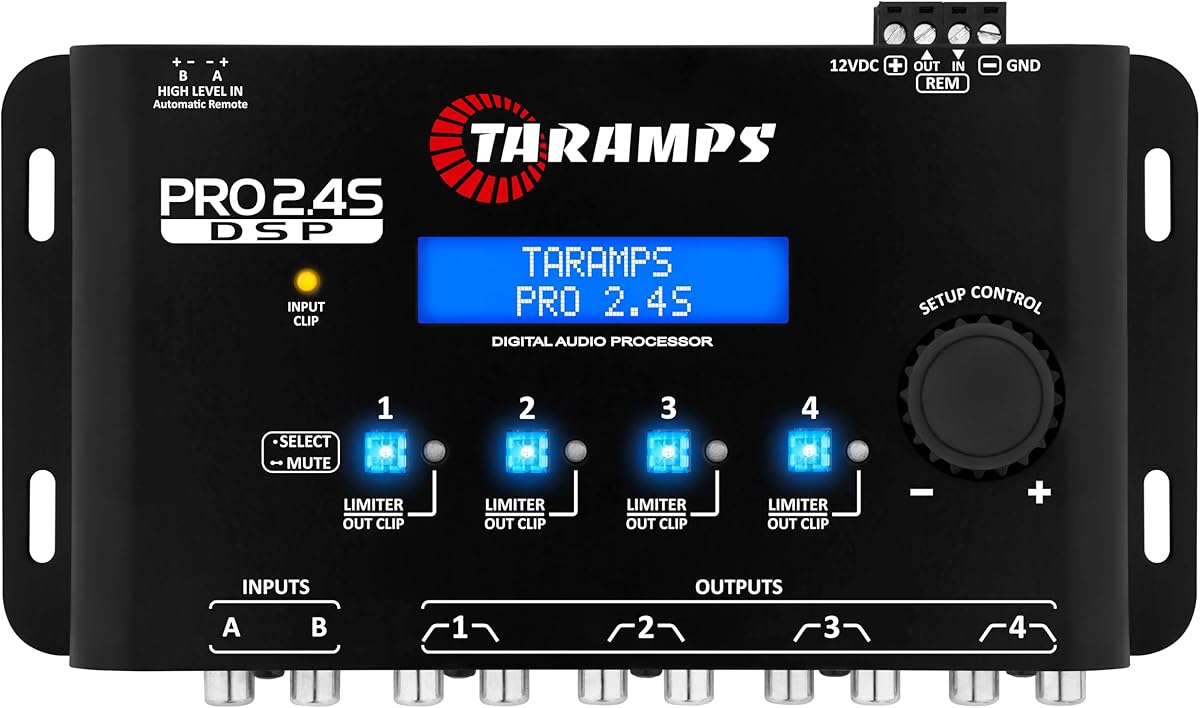
The Taramps PRO 2.4S is a compact, powerful unit rated 4.6. It delivers essential EQ and crossover tools in a small box. Ideal for tight installs, it offers high-level/RCA inputs and clip indicators to monitor signal health.
We may earn a commission when you buy through this link, at no additional cost to you.
Features like Anti-Pop System eliminate turn-on/off noise. Active crossovers and delay alignment refine speaker performance. The unit supports OEM and aftermarket head units easily. Despite being compact, it handles complex routing with ease.
Without Bluetooth, tuning relies on wired connections. Basic remote controls limit automation. Still, the reliable performance and compact design make it a strong contender for space-limited builds.
Best for small installations needing essential DSP features. If you want reliable performance without extra bulk, this unit excels. Final recommendation: choose this for compact, efficient tuning power.
Integrated system prevents amplifier pops during power transitions, protecting speakers and enhancing comfort.
RCA and high-level inputs enable integration with any head unit or factory stereo without extra adapters.
We may earn a commission when you buy through this link, at no additional cost to you.
Rated 4.4, the Taramps PRO 2.8S Black offers eight channels with advanced control. Peak and RMS limiters protect system components, while crossover tuning ranges widely. Ideal for enthusiasts needing channel-by-channel precision and dynamic headroom.
We may earn a commission when you buy through this link, at no additional cost to you.
The unit supports factory and aftermarket head units seamlessly. Delay and phase alignment improve imaging. While basic interface controls limit customization compared to pro units, the eight outputs provide excellent scalability for larger setups.
Bluetooth options are not included, limiting remote access. Still, its robust features and dynamic control make it reliable for serious audio systems. The design ensures durability under demanding conditions.
Best for 8-channel builds needing dynamic control. If you value protection and precision tuning, this model is strong. Final recommendation: choose this for performance-oriented multi-channel systems.
Adjustable RMS and peak limiters safeguard amplifiers and speakers from excessive signal levels.
Independent filters from 10Hz to 22kHz allow precise frequency management per output channel.
We may earn a commission when you buy through this link, at no additional cost to you.
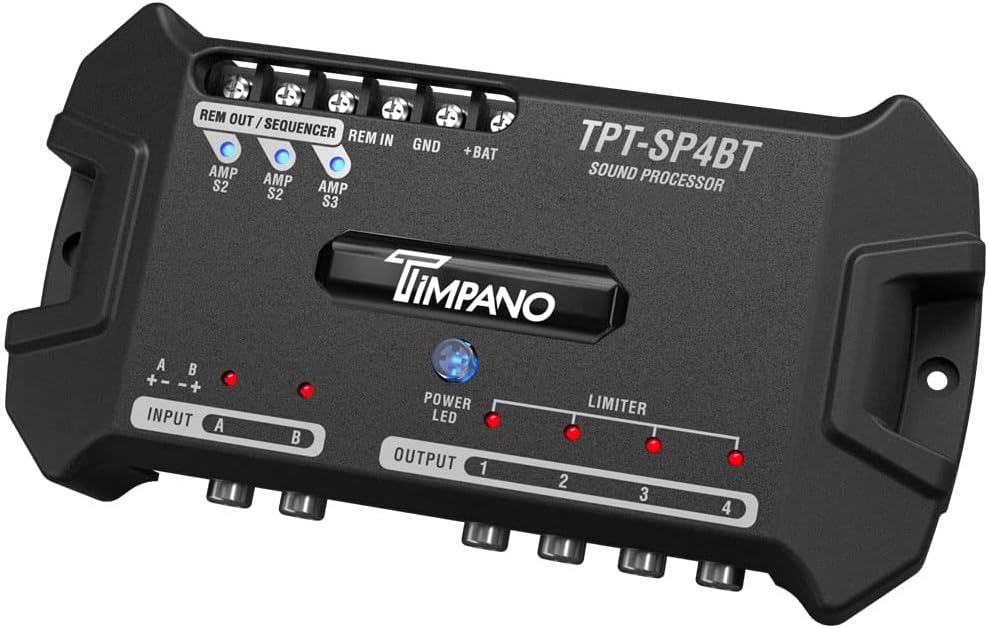
The Timpano TPT-SP4BT earns 4.5 stars with app control and diagnostic tools. Its voltmeter and pink noise generator help monitor system health. Ideal for users wanting convenience plus monitoring capabilities, it handles crossover tuning with a dedicated app.
We may earn a commission when you buy through this link, at no additional cost to you.
Remote relay triggers amps automatically, and the sequencer supports up to three devices. App adjustments include delay, gain, phase, and filter options. This flexibility makes it suitable for active setups needing systematic tuning.
EQ depth is not as granular as pro models. Heavy reliance on the app may be inconvenient without phone access. However, diagnostic tools provide real-time system insights during tuning.
Best for active builds needing monitoring tools. If you want diagnostics and Bluetooth convenience, this unit stands out. Final recommendation: choose this for integrated health checks and wireless setup.
Built-in voltmeter and pink noise generator allow real-time system health and frequency response checks.
Remote trigger outputs automate amplifier startup order, ensuring safe power sequencing for components.
We may earn a commission when you buy through this link, at no additional cost to you.
Rated 4.0, the Dayton Audio DSP-408 is built for precision. It offers 8 outputs with 10-band parametric EQ. Mixing allows combining sources before routing. Ideal for pro setups or home-car hybrids requiring flexible signal paths and robust build.
We may earn a commission when you buy through this link, at no additional cost to you.
Optional Bluetooth dongle adds app control for tuning. Its GUI simplifies complex tasks. While pricey, the performance and input flexibility justify the cost for serious users. It supports home and automotive applications equally well.
The need for a separate dongle may deter some. Manual tuning without accessories is possible but less convenient. For those needing mixing options, this unit delivers unmatched control and reliability.
Best for complex setups needing mixing. If you value professional-grade EQ and flexible routing, this model fits. Final recommendation: choose this for versatile, robust tuning performance.
Inputs can be mixed before processing, enabling custom audio blending for complex installations.
A separate dongle provides app-based control, expanding connectivity options for wireless users.
We may earn a commission when you buy through this link, at no additional cost to you.
Rated 4.4, the Stetsom STX2448 offers unique float mode and subharmonic bass. Ideal for bass enthusiasts needing extra low-end. The encoder button simplifies navigation, while 15-band EQ refines tone. Peak/RMS limiters add protection and precision.
We may earn a commission when you buy through this link, at no additional cost to you.
Float mode allows multiple processing streams, enabling advanced setups. High/RCA inputs work with factory or aftermarket units. While complex, the flexibility and bass tools make it stand out for deep-system builders.
The interface complexity may challenge casual users. Higher price reflects its specialized features. For those prioritizing low-end enhancement and unique signal paths, it delivers unmatched value.
Best for bass-focused custom installs. If you want unique modes and robust control, this model fits. Final recommendation: choose this for low-end performance and flexible processing.
Enhances low-frequency content, adding depth to bass response without requiring larger subs.
Allows multiple independent audio streams, enabling complex routing and processing configurations.
We may earn a commission when you buy through this link, at no additional cost to you.
Selecting the ideal unit depends on your system goals and tuning needs. These factors simplify your search.
Match outputs to your speakers. Active setups need individual channels. 4 to 8 outputs cover most custom builds.
Choose channels that match your amplifier and speaker needs for proper signal routing and crossover.
High-level inputs enable direct factory radio integration. RCA inputs suit aftermarket head units. Both ensure clean signal transfer without adapters.
Verify inputs match your source to simplify installation and maintain sound quality.
24-bit/48kHz is standard for quality. Higher resolution preserves audio detail and minimizes distortion during processing.
Look for sufficient bit depth and sample rate to match your audio sources.
Graphic EQs are easier; parametric are precise. Look for adjustable crossover points and slopes for accurate speaker tuning.
Ensure EQ bands and filters meet your tuning needs.
Precise delay ensures speakers fire together. Phase alignment improves clarity. These controls refine imaging and depth.
Prioritize units with independent time and phase adjustments per channel.
Bluetooth apps enable remote tuning. Onboard LCDs allow physical control. Choose based on convenience.
Consider your preferred tuning method before purchasing.
Limiters and clip indicators protect components. Anti-pop features reduce noise during power transitions.
Select units with built-in safety and diagnostic tools.
Intuitive interfaces reduce learning curves. Good support ensures help with troubleshooting.
Look for clear documentation and responsive manufacturer support.
Install the DSP close to the battery to prevent voltage drops. Ensure secure grounding and use quality RCA or high-level wires. Keep cables away from power lines to minimize interference.
Tune using presets first. Set levels, then adjust EQ and crossovers. Use pink noise or music tracks for alignment. Verify signal paths and limiter settings after changes.
Update software regularly. Avoid moisture and direct heat exposure. Check connections periodically to maintain signal quality. Backup custom settings via app or export.
Not if your DSP has high-level inputs. These connect directly to factory speakers, avoiding extra adapters. RCA inputs need aftermarket head units or line-outs. Match inputs to your source for clean integration.
8-channel units support rear speakers or additional subs independently. This allows full system tuning for active builds. 4-channel models suit two-way setups. Choose based on total component count.
Bluetooth connects your phone to the DSP. An app sends parameter data, allowing real-time adjustments from the car seat. It eliminates cables during tuning and simplifies setup for mobile users.
Yes. DSPs correct frequency response and timing. High-level inputs integrate with factory radios. They add EQ and crossover controls often missing, greatly improving clarity and balance.
Parametric EQ lets you adjust center frequency, bandwidth, and gain. This precise control corrects specific peaks. Graphic EQs are fixed. Parametric offers detailed tuning for complex acoustic environments.
Limiters cap signal levels to prevent amplifier overload and distortion. Peak limiters stop spikes; RMS manage average power. They protect components and ensure consistent sound levels.
Time alignment uses delay to synchronize speaker signals. This creates a centered soundstage. It compensates for distance differences between your ears and speakers for accurate imaging.
Most units save via app or onboard memory. Export to phone storage for backups. Some share via email or cloud. Backup presets to avoid losing custom settings.
We highlighted top picks across categories, from the Taramps Pro 2.4 BT to the Banda Audiopart X8AiR. Each balances features and budget for specific needs.
Prioritize channel count, input types, and tuning ease. Choose connectivity based on your comfort with apps versus physical controls.
Always check current pricing and availability. Specifications can vary slightly by region. These insights ensure a confident purchase for your car audio upgrade.