
STEM Electric Circuit Kit, Electricity Science Project Light Bulb Experiments for Kids Teens
4.5Editor score
Eight distinct circuit experiments
Includes detailed learning book
Fruit battery project included
Compare the top 10 best Electricity Learning Kits for 2026 to find the perfect hands-on STEM science experiment set for kids and students to explore circuits.
Discovering how electricity works is a fundamental part of science education that inspires curiosity in young minds. These kits provide safe hands-on tools to build circuits, explore magnetism, and understand energy principles through guided experiments.
We evaluated the top options based on component quality, project variety, instruction clarity, and safety features. Our selection includes choices for elementary learners to high school students, ensuring every educator can find a suitable tool for their classroom or home lab.
Each pick highlights specific strengths like project count or ease of use to help you decide quickly. Keep in mind that product availability and prices change frequently so verify current details before adding items to your shopping cart.
4.5Editor score

4.7Editor score

4.5Editor score
This table offers a quick side-by-side view of the most important specifications for each kit including project counts target age groups and included components to help you compare options at a glance.



This National Geographic kit stands out as the top pick due to its massive range of over one hundred twenty projects. It receives high praise from parents and teachers for its safety features and engaging design that keeps children occupied for hours while learning core physics concepts.
We may earn a commission when you buy through this link, at no additional cost to you.
The standout feature is the ease of use with snap on wires that eliminate the need for tools. This reduces frustration and allows learners to focus on the science rather than struggling with assembly. The included QR code links to video tutorials which reinforces the written manual effectively.
While the sheer number of projects is impressive it might overwhelm very young children without supervision. Additionally users need to purchase batteries separately which is a minor inconvenience but common across this product category. These trade-offs are acceptable given the educational value provided.
This kit is ideal for families or classrooms seeking a comprehensive long-term resource. It is the best choice for educators who want a reliable tool that grows with students from basic circuits to complex electrical systems without needing to buy additional sets.
With over one hundred twenty activities the kit covers a wide range of topics from light shows to sound systems ensuring no two days of learning feel the same.
The snap on wire system makes setup incredibly fast and intuitive allowing learners to experiment freely without needing screwdrivers or other tools to connect components securely.
We may earn a commission when you buy through this link, at no additional cost to you.
For those seeking an affordable entry point into electrical engineering this kit offers excellent value. It is designed to teach fundamental concepts like series and parallel circuits without breaking the bank. The focus on creative projects like the fruit battery makes it memorable for young learners.
We may earn a commission when you buy through this link, at no additional cost to you.
The included circuit book is a strong asset providing guided learning that builds confidence. Each experiment is designed to demonstrate a specific principle such as conductivity or energy conversion clearly. This structure helps students connect abstract textbook ideas to real world results easily.
The main limitation is the lower component count which restricts long-term exploration compared to larger sets. Some users note the plastic components are basic but they function well enough for the intended experiments. This is a fair compromise considering the low cost and educational outcomes.
This product is perfect for parents wanting to test a child interest in science before investing heavily. It is also suitable for teachers needing multiple units for classroom stations where budget constraints are a priority for the school supply list.
Projects like the fruit battery and salt water power generation spark curiosity by showing how everyday materials can generate electricity in unexpected and fun ways for kids.
The included detailed book walks students through each step with diagrams ensuring that even beginners can follow along and understand the science behind each successful circuit build.
We may earn a commission when you buy through this link, at no additional cost to you.
This kit bridges the gap between classroom theory and practical application for high school students. It covers complex topics like electromagnetism and Ohm's law with professional grade components that mimic real lab equipment. This makes it a premium choice for serious science enthusiasts.
We may earn a commission when you buy through this link, at no additional cost to you.
The combination of electricity and magnetism experiments is unique and allows for a holistic understanding of physical science. The full color manual provides detailed explanations that help students visualize fields and forces. The storage bag keeps all parts organized which is vital for lab environments.
Users should note that the kit is designed for older students so younger children might find the concepts too abstract. Battery dependency is another factor to consider for uninterrupted learning sessions. These are minor constraints for a kit aimed at advanced education levels.
This kit is highly recommended for homeschoolers or teachers preparing students for advanced placement courses. It provides the depth required to prepare students for university level physics by giving them hands on experience with meaningful experimental data collection.
The curriculum covers Oersted experiments and Amperes force investigation giving students a deeper look at how magnetic fields interact with electric currents in real world scenarios.
A dedicated storage bag ensures every component has a place making cleanup easy and preventing loss of small parts during busy classroom or home lab sessions.
We may earn a commission when you buy through this link, at no additional cost to you.
Mysterystone offers a balanced option that combines education with durability. The kit is designed to spark interest in physics through a variety of hands on activities. It includes unique modules like Joule's first law experiment which adds depth to the standard circuit building experience.
We may earn a commission when you buy through this link, at no additional cost to you.
The storage case is a significant advantage as it protects all fifty five items from damage. This makes it easy to transport to school projects or science fairs without worrying about losing components. The manual guides students through the why of each experiment not just the how.
Some users find the manual text dense which might require parental assistance for younger children. Additionally the delicate nature of some modules means they need careful handling during experiments. These factors are manageable with proper supervision and setup.
This kit is ideal for students who want to explore physics beyond simple lights and buzzers. It is a strong choice for families looking for a portable lab that encourages independent exploration and critical thinking about energy and magnetism principles.
The inclusion of specialized modules like the Joule's first law experiment allows students to explore thermal effects of current which is often missing in basic starter kits.
The sturdy storage case ensures the kit stays safe during travel making it a reliable companion for science clubs or mobile learning sessions at home.
We may earn a commission when you buy through this link, at no additional cost to you.
This kit is specialized for those interested in mechanical engineering and motor functions. It provides a focused way to learn how electrical energy converts to kinetic energy through motors. The included propellers and motor holders allow for quick setup and testing of different configurations.
We may earn a commission when you buy through this link, at no additional cost to you.
The simplicity of the design makes it accessible for children aged eight and up to use independently. It is a cost effective way to introduce the basics of motors without the clutter of unnecessary components. This focus helps students understand the core mechanics deeply.
However users must be careful not to run the circuits for extended periods as heat can build up quickly. The limited variety in components means it is best used alongside other kits for broader learning. This limitation is specific to its niche focus.
This product is perfect for STEM classrooms needing a specific unit on motors. It is also suitable for younger inventors who want to build simple fans or cars and see immediate motion results from their electrical circuits.
The kit is tailored to teach how motors work with specific parts like motor holders and propellers allowing students to see energy conversion in action immediately.
With few components and clear instructions setup is fast and frustration free making it a great choice for quick classroom demonstrations or short home experiments.
We may earn a commission when you buy through this link, at no additional cost to you.
This kit stands out for including measurement tools like an ammeter and voltmeter. These components allow students to quantify their experiments making it a valuable resource for data collection. The fifty piece set offers a good mix of electrical and magnetic components for varied projects.
We may earn a commission when you buy through this link, at no additional cost to you.
The forty page full color manual is detailed and supports deeper learning beyond just building. It encourages parent child discovery activities which foster communication and observation skills. The hand crank generator adds a dynamic element to understanding energy sources.
Users should be prepared for a text heavy manual that may require adult support for younger readers. Some components are small so care is needed to prevent loss or choking hazards. These factors are minor given the educational depth of the kit.
This product is ideal for parents wanting a comprehensive home lab experience. It serves well for homeschooling curriculums that emphasize measurement and detailed observation in science lessons for elementary and middle school aged children.
Including an ammeter and voltmeter allows learners to measure current and voltage directly helping them understand the quantitative side of electrical circuits beyond just lights.
The manual encourages family science activities fostering conversation and critical thinking skills as parents and children explore physics concepts together at home.
We may earn a commission when you buy through this link, at no additional cost to you.
This kit is a strong alternative for high school students needing robust materials for their physics labs. It includes a sensitive ammeter which allows for more precise measurements in experiments. The double layer storage box ensures durability and easy transport to school.
We may earn a commission when you buy through this link, at no additional cost to you.
The manual is written with detailed operation steps that guide students through each experiment systematically. This helps learners understand the reasoning behind each step and not just the assembly. It is suitable for junior and senior high school levels focusing on electric circuits and fields.
Users should note that batteries are not included so planning for power sources is necessary. The complexity may be too high for younger students without prior knowledge of circuits. This is a deliberate feature targeting advanced learners specifically.
This product is recommended for schools needing durable lab kits for older students. It is also a great gift for home scholars who want to ensure their high school physics curriculum is backed by practical experimentation.
The sensitive ammeter included allows students to measure smaller current changes providing more accurate data for their experiments than standard kits offer.
A double layer storage box keeps components safe and organized making it easy to carry the kit for field work or school science fairs without damage.
We may earn a commission when you buy through this link, at no additional cost to you.
This basic kit is designed to help students consolidate their knowledge from textbooks into practical application. It focuses on the fundamentals like series and parallel circuits which are crucial for later advanced study. The English instructions make it accessible for a wide range of users.
We may earn a commission when you buy through this link, at no additional cost to you.
The plastic storage box helps keep all components organized and safe from damage. This makes it a reliable option for school clubs or home use where organization is key. The high rating suggests users find it effective for its intended purpose.
Since it is a basic kit it does not include advanced modules or measurement tools. Users must also provide their own batteries which can be an oversight if not planned ahead. These are expected limitations for an entry level product.
This product is perfect for middle school students starting their journey in physics. It is a solid choice for summer camps or school clubs aiming to introduce basic rules of electricity without overwhelming complexity.
It helps students turn abstract textbook theories into concrete experiences reinforcing what they learn in class through hands-on assembly and testing.
The included storage box ensures components are protected and organized making cleanup easy and storage simple between use sessions.
We may earn a commission when you buy through this link, at no additional cost to you.
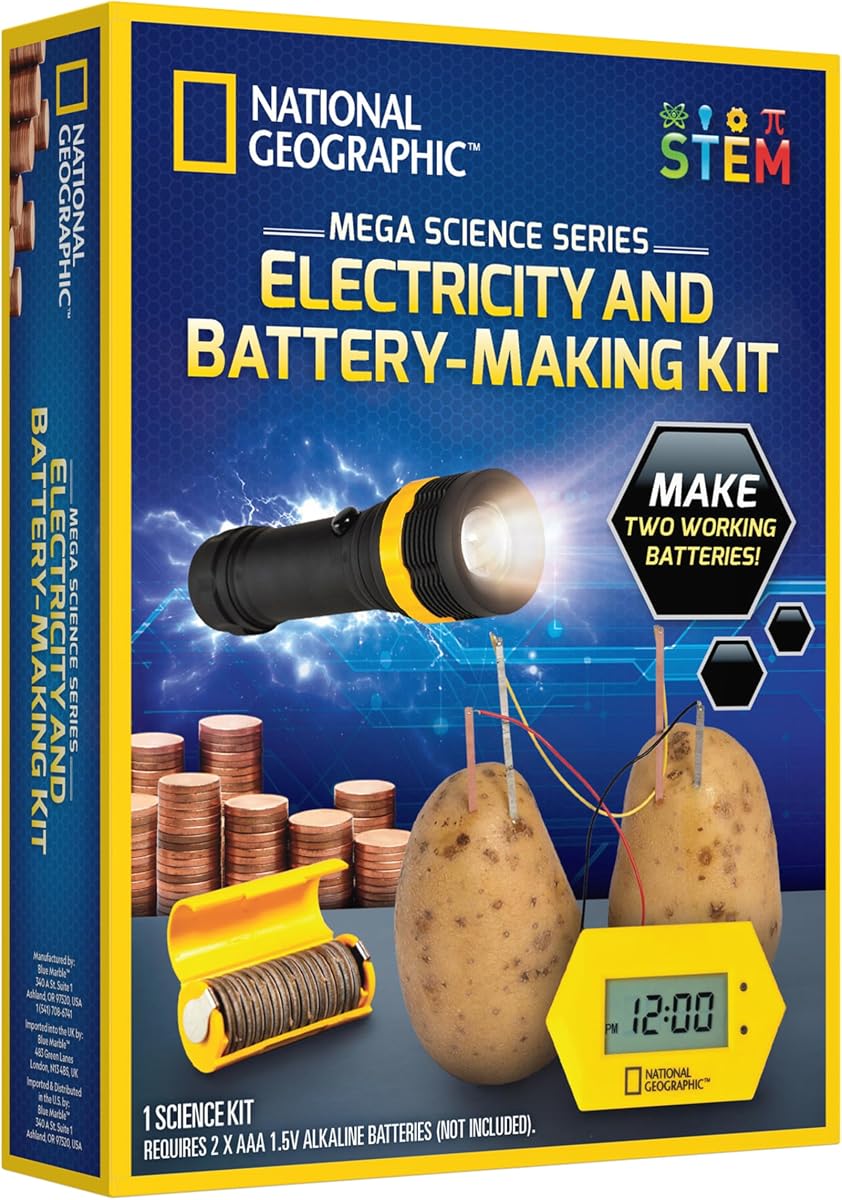
This kit offers a specialized look into how batteries work through two distinct experiments. The potato clock project is a classic way to visualize energy conversion in food. The coin flashlight allows kids to build a battery from coins and see the circuit light up.
We may earn a commission when you buy through this link, at no additional cost to you.
The detailed learning guide provides fascinating insight into the science behind these experiments. It explains why the battery works and how electrons move creating a complete educational loop. This depth is valuable for curious learners who ask how things work.
The main limitation is that it focuses on only two projects rather than a broad range of circuits. It is best used as a supplement to other kits rather than a standalone solution. This is a minor trade-off given the specific value of the experiments.
This product is ideal for a quick science fair project or a fun weekend activity. It is a great gift for curious kids who love building and exploring how batteries generate electricity in simple and memorable ways.
The potato clock project teaches how chemical energy converts to electrical energy using everyday items like potatoes and zinc copper electrodes.
Kids construct a battery using coins to power a flashlight showing how basic materials can generate electricity through chemical reactions in a fun way.
We may earn a commission when you buy through this link, at no additional cost to you.
This upgrade kit extends the basic learning experience with additional projects and components. It includes a traffic light project and a stair double switch circuit which introduce logic and control to the experiments. The transparent storage box makes it easy to see what is inside.
We may earn a commission when you buy through this link, at no additional cost to you.
It is designed for grades 7 to 11 providing opportunities to build models like hand crank generators and wind power cars. The full color manuals support both teachers and students in understanding the basic principles of electricity. It is a comprehensive solution for home labs.
Users should be aware that batteries are not included and need to be purchased separately. The upgrade is similar to the basic kit but with specific logic projects which may appeal to those wanting more complex circuits. This is a reasonable upgrade path.
This product is ideal for educators needing versatile kits for classroom activities. It serves well for students who have mastered basic circuits and want to explore logic and control in electrical systems without moving to advanced electronics.
Projects like the traffic light and stair switch teach basic logic circuits helping students understand how switches control current flow in real world applications.
The transparent box allows quick visual checks of component inventory saving time during setup and making it easy to see if parts are missing.
We may earn a commission when you buy through this link, at no additional cost to you.
Choosing the right kit depends on the learner's age and goals. Here are key factors to consider before you buy.
Select a kit that matches the child's cognitive level to ensure safety and engagement. Younger children need simpler connections and larger parts while older students can handle complex wiring and measurement tools like voltmeters.
Always check the recommended age range on the packaging to find a kit that fits your child's development level for safe and enjoyable learning.
Look for kits that offer a wide range of experiments to keep interest high over time. A good kit should cover basic circuits and advance to electromagnetism or energy conversion to provide a holistic educational experience.
Prioritize kits with diverse projects that teach different principles to ensure long term value and continuous skill development for the student.
Clear instructions are vital for independent learning and safety. Manuals with diagrams, video QR codes, or step by step guides help students understand the why behind the build reducing frustration and encouraging exploration.
Choose kits with detailed manuals and visual aids to ensure students can follow along easily and gain maximum educational benefit from each experiment.
Durable parts ensure the kit lasts through repeated use without breaking. Look for sturdy wires, secure connections, and storage cases that protect components from damage during transport or storage.
Check reviews for durability feedback to ensure the materials will hold up to frequent handling in a classroom or home environment.
Safety is paramount when dealing with electricity and components. Ensure the kit includes insulated wires, battery holders, and clear warnings about voltage limits to prevent heat or shock hazards during experiments.
Always supervise younger children and choose kits with built in safety designs to minimize risks while exploring electrical circuits.
Organized storage helps prevent lost parts and makes cleanup easy. Kits with cases or boxes allow you to store components safely between uses and prepare quickly for future experiments or school projects.
Look for a storage option that keeps parts organized and secure to maintain the longevity of the kit and save time during setup.
Some kits require tools like screwdrivers while others use snap on connections. Decide if you want a tool-free experience for younger kids or if tools add value for precision building for older students.
Select a kit based on your preference for tool usage to align with your available resources and the child's skill level.
Consider how deep the learning goes beyond just lighting a bulb. Kits that explain theory, include measurement tools, or cover advanced topics like magnetism offer more value for older or advanced students.
Choose a kit that offers depth matching the student's current knowledge to challenge them appropriately and expand their understanding of physics.
Always read the manual thoroughly before starting any project to understand safety warnings and setup steps. This ensures you know exactly which parts are needed and how they connect safely before applying power.
Keep all components organized in the provided storage box when not in use to prevent loss. Regularly check batteries for leaks or corrosion to protect the circuit parts from damage during long periods of storage.
Store the kit in a cool dry place away from direct sunlight to avoid warping plastic parts. If components feel loose over time, check the connection points to ensure a secure fit for future experiments.
Most kits require batteries which are typically sold separately to allow flexibility in power sources. Always check the product details to see if batteries are included and which size like AA or AAA is needed for operation.
Yes, reputable kits are designed with safety in mind using low voltage and insulated wires to prevent shocks. However, adult supervision is recommended especially for younger children handling small parts to avoid choking hazards.
Kits range from age 8 to high school level depending on complexity. Younger kids need simple snap on kits while older students can handle complex wiring and measurement tools for deeper learning.
Absolutely, many kits are designed for classroom use with durable storage cases and clear manuals. They are ideal for STEM programs and science fairs where hands on learning is encouraged.
Clean the components with a dry soft cloth to remove dust and debris. Avoid water or liquids on any electrical parts to prevent corrosion and ensure the longevity of the wires and connectors.
Contact the manufacturer or seller immediately as most offer support for missing components. Some provide replacement parts or instructions on how to proceed without the missing piece safely.
Yes, they are perfect for science fairs because they provide tangible experiments and clear educational value. Students can demonstrate concepts like circuits and energy to judges effectively.
Many modern kits use snap on connections that require no tools. Check the product description to confirm if a screwdriver or other tools are needed for assembly and use.
We highlighted the National Geographic kit as the top pick for its massive project variety and user friendly design. The STEM Electric Circuit Kit offers excellent budget value while the EUDAX School Physics Labs provide premium depth for older students.
Prioritize safety and clear instructions when selecting a kit to ensure a positive learning experience for your child. Look for storage solutions and durable components to maximize the lifespan of your investment in STEM education.
Prices and availability change so verify the current details before making a purchase to ensure you get the best deal. Check for any additional accessories needed like batteries to avoid delays in starting your experiments.