
Siraya Tech Tenacious Flexible
4.7Editor score
Softer rubber-like feel
Fast rebound elasticity
High impact resistance
This guide compares the top flexible resin for 3D printing options available in October 2026, evaluating toughness, flexibility, print quality, and ease of use
Flexible resin for 3D printing allows creators to produce parts that bend without breaking. This category includes materials designed to mimic rubber or TPU, offering shock absorption and durability for functional prototypes.
We compared ten leading flexible resins based on shore hardness, elongation at break, print speed, and user feedback. Our analysis covers compatibility with LCD, DLP, and SLA printers to ensure broad usability.
Each pick highlights specific strengths like impact resistance or low odor. Prices and availability change frequently, so verify current details before purchasing to ensure you get the best value for your project.
4.7Editor score
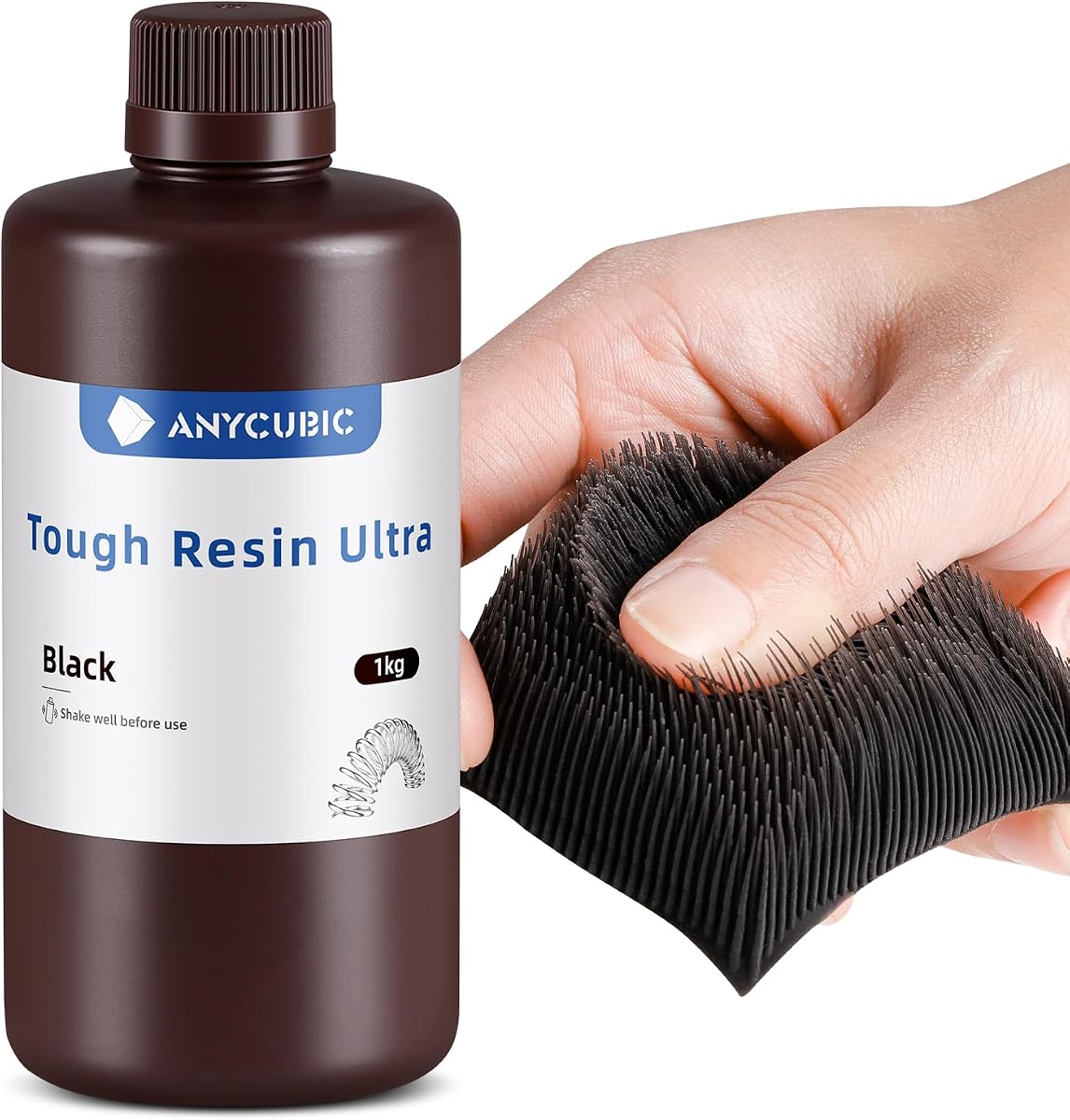
4.7Editor score
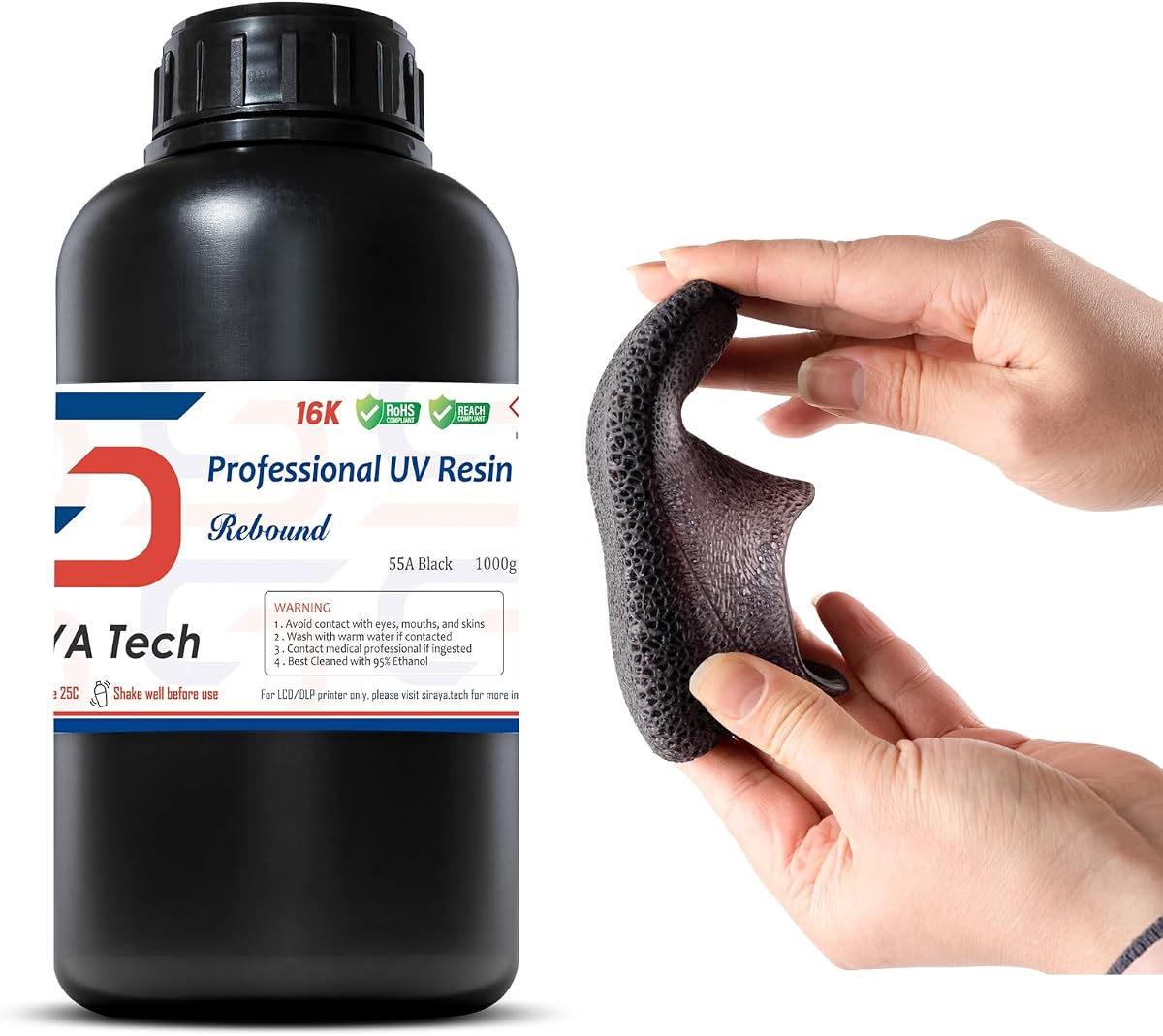
4.2Editor score
The following table provides a side-by-side comparison of all ten flexible resins. It highlights key specifications such as shore hardness, color, weight, and compatibility to help you make an informed decision.


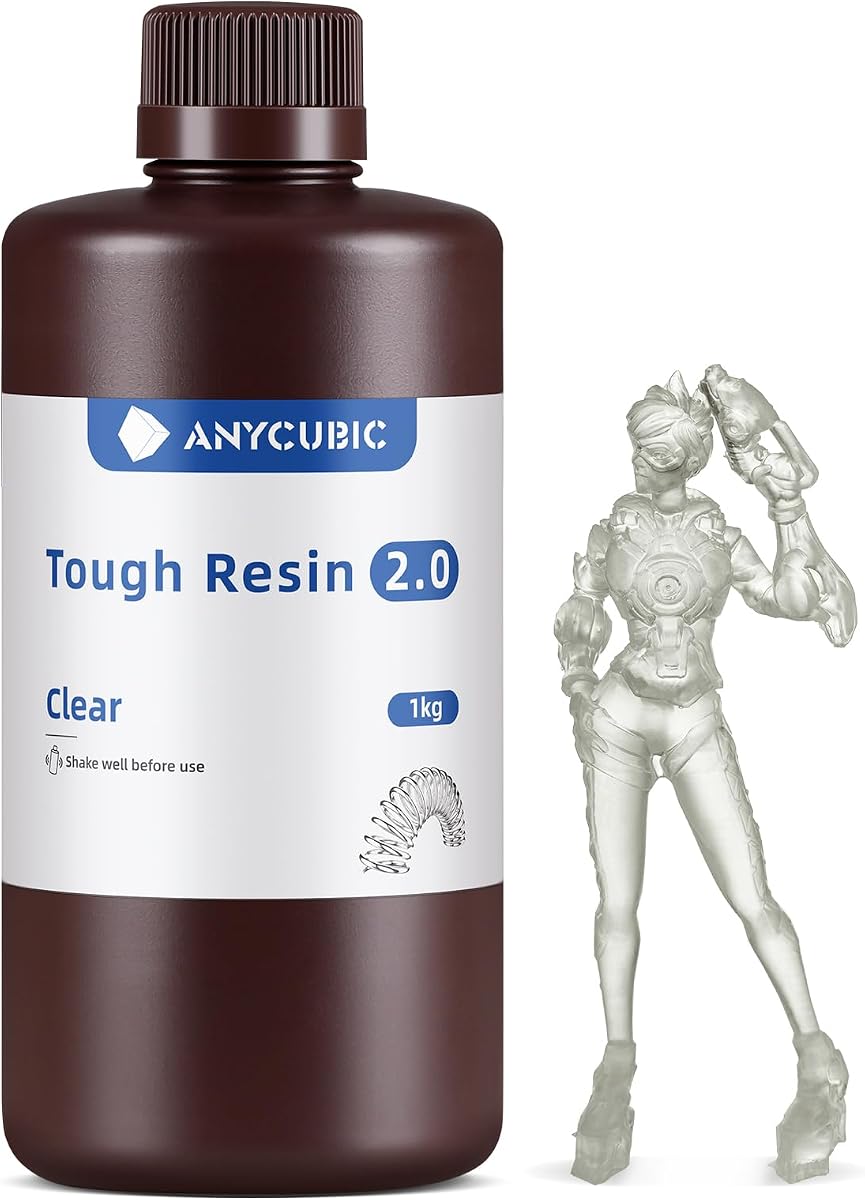

The ANYCUBIC Ultra Tough Resin stands out as a top choice for users needing both flexibility and durability. With a rating of 4.7, it is praised for its ability to recover shape after deformation. This makes it ideal for parts that undergo stress or impact.
We may earn a commission when you buy through this link, at no additional cost to you.
Its exceptional toughness ensures resistance to brittleness and corrosion even in damp environments. The resin offers a gentle skin sensation, making it suitable for wearable models like earphone covers. It also enhances other resins when used as an additive, boosting their durability significantly.
While it performs well, users should note that mixing it with other colors might affect the final shade. Additionally, the price point is higher than standard resins, reflecting its specialized formulation. However, the reduced failure rate often justifies the extra cost for functional prints.
This resin is perfect for makers creating articulated models, daily wearables, or structural parts requiring shock absorption. Its balance of flexibility and strength makes it a versatile option for both hobbyists and professionals looking to reduce print failures.
The non-irritating surface allows for safe direct skin contact, perfect for cosplay accessories or ergonomic grips.
When blended with other resins, it significantly enhances their toughness, offering a customizable solution for complex projects.
We may earn a commission when you buy through this link, at no additional cost to you.
Siraya Tech Tenacious Flex Black offers a significantly softer, more rubber-like feel compared to its classic counterpart. Rated at 4.7, it provides faster rebound and incredible elasticity for resilient prints. This makes it excellent for applications requiring high flexibility and shock absorption.
We may earn a commission when you buy through this link, at no additional cost to you.
The resin withstands extreme bending and compression, quickly returning to its original shape without cracking. It is ideal for soft grips, gaskets, and pliable prototypes that need to maintain integrity under stress. As an additive, it boosts impact resistance in other resins effectively.
However, users should note it may not suit all applications where the original Tenacious resin is used due to its softer formulation. The limited 500g size in black might not suit large projects or those needing transparency. These are minor trade-offs for the performance it delivers.
Buyers seeking a cost-effective option for flexible prototypes should consider this resin. Its balance of price and performance makes it a strong contender for makers who need durable, bendable parts without investing in premium materials.
The new formulation allows for more dynamic and flexible prints that recover quickly after deformation.
Designed to keep models resilient, it ensures accidental drops do not cause deformations or cracks in printed objects.
We may earn a commission when you buy through this link, at no additional cost to you.
Siraya Tech Rebound 55A is designed for applications requiring quick shape recovery and impact absorption. With a 55A Shore hardness, it offers a softer feel than Tenacious Flex while maintaining compression properties. This makes it ideal for shock-absorbing components and seals.
We may earn a commission when you buy through this link, at no additional cost to you.
Unlike other elastomers, it prints on standard LCD and DLP printers without needing A/B mixing. It cleans easily with standard isopropyl alcohol methods, simplifying the workflow. Initial testing shows good resilience during compression cycles for reliable prototyping.
The main drawback is the higher price compared to standard resins, reflecting its specialized elasticity. Long-term performance testing is ongoing, so users should monitor results over time. Despite this, it remains a strong choice for demanding industrial prototypes.
This resin is best suited for personal protective equipment prototypes, consumer products, and industrial gaskets. If your project demands high elasticity and rebound performance, the investment in this premium material is worthwhile for professional results.
No special cleaning is required, allowing it to work with standard printers and cleaning methods like isopropyl alcohol.
Well-suited for industrial prototyping like gaskets and seals where elasticity and rebound performance are critical factors.
We may earn a commission when you buy through this link, at no additional cost to you.
Superflex 3D Printer Resin is designed for fast printing on monochrome LCD printers. It allows printing 50um layers in 1.7 seconds, saving time and electricity. With an 80A Shore hardness, it balances softness and strength for rubber-like prototypes.
We may earn a commission when you buy through this link, at no additional cost to you.
This resin is ISO 10993-5 tested, ensuring safety for applications requiring hygiene. It offers 100% elongation at break, making it suitable for cushioning and shock absorption. Its clear color allows for detailed visual inspection of printed parts.
The 500g bottle size might be limiting for large production runs compared to 1kg options. Proper post-curing is essential to pass safety tests, adding a step to the workflow. However, the speed advantages often outweigh this minor inconvenience for farms.
Users needing quick turnaround on functional prototypes or clear parts will appreciate this resin. Its balance of speed, safety, and flexibility makes it a reliable choice for professional 3D printing farms and hobbyists alike.
Printing 50um layers in 1.7 seconds enhances productivity by at least 40% for high-volume printing farms.
Properly cleaned and fully post-cured prints pass the ISO 10993-5 test, ensuring safe and reliable results.
We may earn a commission when you buy through this link, at no additional cost to you.
SUNLU Flexible 3D Printer Resin provides a balanced softness and strength for durable prototypes. It has a 70A Shore hardness and minimal odor, making printing more comfortable. The leak-proof bottle design protects against damage during transportation.
We may earn a commission when you buy through this link, at no additional cost to you.
This resin offers high compatibility with 99% of printers on the market, including LCD and SLA. It produces a smooth, non-sticky surface finish after cleaning. With low shrinkage, it ensures accurate size and shape of printed parts.
However, user ratings are lower than competitors, suggesting inconsistent print success or specific calibration needs. The gray color might not be preferred for visual projects. These factors should be weighed against the cost and convenience it offers.
For makers seeking a versatile resin with a comfortable print environment, this option is worth considering. The stable formula and leak-proof packaging add value for users prioritizing safety and ease of use.
The minimal odor formula is non-pungent and does not cause irritating odors during the printing process.
Printing wavelength is 365-405nm, ensuring compatibility with 99% of printers on the market including LCD and DLP.
We may earn a commission when you buy through this link, at no additional cost to you.
ANYCUBIC Tough Resin 2.0 features an upgrade in flexural strength and precision. It offers high elongation and resists cracking under stress. The low-odor formulation creates a comfortable printing environment by reducing volatile organic compounds.
We may earn a commission when you buy through this link, at no additional cost to you.
This resin boasts minimal shrinkage for smooth surfaces and clear details. It is optimized for wavelengths between 365nm and 405nm, compatible with most LCD printers. It is suitable for industrial spare parts and high-strength model production.
While effective, the grey color may restrict visual appeal for transparent projects. It operates at standard speeds, which might not suit urgent production needs. However, the durability and precision make it reliable for structural components.
Users needing strong, detailed models for engineering or industrial use should consider this resin. The balance of toughness and precision ensures parts maintain integrity even when dropped or subjected to vibrations.
Minimal shrinkage rate ensures printed models feature a smooth surface and clear details for high-precision needs.
The green formulation significantly reduces volatile organic compounds, creating a calm and comfortable printing environment.
We may earn a commission when you buy through this link, at no additional cost to you.
SUNLU High Toughness 3D Resin offers enhanced flexibility with 5 times higher elongation than standard resins. It features low viscosity and high flowability for shorter curing time. The leak-proof design ensures safe transport and easy printing setup.
We may earn a commission when you buy through this link, at no additional cost to you.
Low shrinkage reduces distortion potential, allowing for best-in-class accuracy. It is compatible with most LCD/DLP/SLA printers on the market. The low odor provides a comfortable printing environment for extended sessions.
The grey color might limit choices for projects requiring transparency or bright colors. While versatile, it does not offer specialized features like skin safety found in other options. However, its balance of performance and price makes it a solid general-purpose choice.
Makers needing reliable structural parts or solid models will appreciate this resin. The high toughness and bendability ensure printed models are unbreakable and durable for practical applications.
The resin has 5 times higher elongation than regular standard resin, making models unbreakable and durable.
R&D team focuses on reducing volume shrinkage, greatly improving the 3D printing success rate.
We may earn a commission when you buy through this link, at no additional cost to you.
ELEGOO Tough 3D Printer Resin boasts a Shore hardness of 84.7D, offering exceptional damage resistance. It withstands certain tension and stress, recovering quickly after deformation. This makes it ideal for structural parts and functional prototypes.
We may earn a commission when you buy through this link, at no additional cost to you.
The resin has fine texture and excellent resistance to brittleness and corrosion even in humidity. It is suitable for printing tools and high-performance models that can be drilled without cracks. The low odor ensures a comfortable working environment.
While durable, the high hardness might limit applications needing extreme flexibility. It offers standard pricing compared to premium specialized resins. However, the performance for structural integrity justifies this trade-off for engineering parts.
Users prioritizing strength and weather resistance for end-use products should consider this resin. Its versatility for tools and fixtures makes it a robust choice for makers needing reliable, tough prints.
The cured resin has a Shore hardness of 84.7D, exceeding that of others for strong damage resistance.
It has high elasticity and flexibility, ensuring excellent performance under extreme temperature conditions.
We may earn a commission when you buy through this link, at no additional cost to you.
ANYCUBIC Tough Resin 2.0 is available in clear, offering high precision and unmatched strength. It significantly reduces the likelihood of breakage for delicate components. The low-odor design makes for a serene and pleasant printing experience.
We may earn a commission when you buy through this link, at no additional cost to you.
This resin ensures high-precision prints with minimal shrinkage. It is highly compatible with different equipment and materials, suitable for industrial applications. The clear color is ideal for inspecting internal structures or aesthetic parts.
Handling clear resin requires care to avoid scratches or clouding during curing. It may cost more than standard grey variants. Despite these considerations, the accuracy and strength are valuable for detailed industrial parts.
Makers needing transparent or high-precision models will find this resin suitable. The combination of toughness and clarity makes it a versatile option for engineering and design prototypes.
Ensures high-precision prints with minimal shrinkage for exceptional accuracy in detailed components.
Offers versatile industrial applications and is highly compatible with different equipment and materials.
We may earn a commission when you buy through this link, at no additional cost to you.
This resin simulates rubber with a Shore 90A hardness, offering both softness and strength. It delivers high elongation and excellent tear resistance for gaskets and protective cases. The formula keeps its cool under stress, bending where ordinary resins snap.
We may earn a commission when you buy through this link, at no additional cost to you.
It provides high precision with a low-odor formula for comfortable workshop use. Perfect for technical applications and detailed models, it handles shock-absorbing components and wearables well. The black color is suitable for most engineering parts.
While effective, specific post-curing requirements may be necessary for optimal properties. The price range is higher than standard resins. However, the reliability and toughness make it a valuable investment for durable prototypes.
Users needing parts that stay flexible under repeated stress will appreciate this resin. Whether prototyping or producing end-use parts, it is ready to flex reliably for makers and engineers.
Simulates the toughness of rubber with both softness and strength, suitable for cushioning and shock absorption.
Delivers high elongation and excellent tear resistance, making it the go-to choice for gaskets and cases.
We may earn a commission when you buy through this link, at no additional cost to you.
Selecting the right flexible resin depends on your specific project needs and printer compatibility. This guide covers key factors to consider for successful printing.
Shore hardness measures resistance to indentation. Lower values like 55A offer more stretch and softness while higher values like 90A provide more stiffness. Choose based on the flexibility needed for your part.
For soft rubber parts aim for 55A to 70A. For tougher parts use 80A to 90A.
Look for resins with high elongation at break to ensure they can withstand drops without cracking. This factor is crucial for functional prototypes that undergo physical stress.
Check product descriptions for tear resistance claims.
Ensure the resin is compatible with your printer type such as LCD, DLP, or SLA. Most flexible resins work at 405nm but verify this to avoid print failures.
Confirm wavelength range matches your device.
Lower viscosity resins flow better and cure faster, improving print speed and success rates. Some options like Superflex offer fast layer printing to save time.
Choose based on your production needs.
Flexible resins often require specific curing times to achieve optimal elasticity. Improper curing can lead to tacky or brittle parts.
Follow manufacturer guidelines for UV curing duration.
Resins with low odor and ISO certifications are safer for indoor printing. Look for non-irritating properties if printing wearable items.
Prioritize low-odor formulations for comfort.
Some resins are available in multiple colors or transparency. Darker resins can absorb UV more efficiently which may impact print settings.
Select color based on aesthetic requirements.
Prices vary based on quality and size. Larger 1kg bottles offer better value for production while 500g suits small projects.
Consider your project volume when buying.
Store flexible resin in a cool dry place away from direct sunlight. Ensure the bottle is tightly sealed to prevent contamination and evaporation before use.
Mix the resin gently before printing to ensure uniform consistency. Do not shake vigorously to avoid introducing air bubbles into your print.
After printing clean parts with isopropyl alcohol and cure them under UV light. Proper curing is essential to achieve full flexibility and strength.
Flexible resin is generally safe after proper post-curing. Products like ANYCUBIC Ultra Tough and Superflex offer skin-safe properties when fully cured. Always wear gloves during printing.
Flexible resin offers higher elongation and impact resistance. It is ideal for parts that bend or absorb shock. Standard resin is more brittle.
Most standard LCD, DLP, and SLA printers work with flexible resin. Ensure compatibility with 405nm wavelengths. No extra hardware is usually required.
Curing times vary by resin and thickness. Follow manufacturer guidelines typically ranging from 5 to 20 minutes. Proper curing ensures optimal properties.
Yes, products like ANYCUBIC Ultra Tough can be used as additives. Mixing can enhance toughness but may affect final colors. Test small batches first.
Store in a sealed bottle away from light. Keep at stable room temperature. Ensure no dust or water enters the container.
Insufficient curing or wrong exposure settings may cause softness. Increase UV exposure time or check layer thickness. Follow recommended settings.
Uncured resin is toxic. Always use gloves and a mask during handling. Cured parts are generally safe but wash them thoroughly before use.
Flexible resins open up possibilities for functional and durable 3D prints. Top picks like ANYCUBIC Ultra Tough and Siraya Tech Tenacious offer reliable performance for various applications.
Prioritize factors like shore hardness and compatibility for your needs. Proper curing and handling ensure the best results for your prototypes.
Check current prices and availability before buying to secure the best value. These products provide a solid foundation for your flexible printing projects.