
TempPro TempAir Digital Hygrometer Indoor Thermometer
4.6Editor score
Compact mini size
3-way mounting options
Face icon comfort indicator
This guide compares the top greenhouse thermometers for accuracy, durability, and smart features to help you monitor conditions and protect your plants
Monitoring temperature and humidity is critical for successful plant growth in any controlled environment. A reliable greenhouse thermometer ensures your crops thrive by preventing extreme fluctuations that can harm sensitive flora.
We evaluated ten leading models based on accuracy, build quality, and ease of use. Our selection includes digital, analog, and smart options suitable for various greenhouse setups and gardener needs.
Each pick highlights key strengths and ideal use cases to simplify your choice. Remember that availability and specific features may vary, so verify current details before purchasing to ensure compatibility.
4.6Editor score

4.5Editor score

4.3Editor score
Explore the side-by-side comparison of our top ten picks to quickly identify the model that best fits your specific greenhouse monitoring requirements and budget constraints.




This digital hygrometer and thermometer is designed to excel in the high humidity environments typical of greenhouses. With a strong IPX5 waterproof rating, it resists moisture damage effectively ensuring long term performance for your monitoring needs.
We may earn a commission when you buy through this link, at no additional cost to you.
The accuracy is impressive with temperature readings within ±1°F and humidity readings within ±2% RH. It provides real-time updates every ten seconds allowing you to track rapid environmental changes that might affect plant health.
While it lacks advanced app connectivity, the physical interface is straightforward. The LCD display is large and clear making it easy to read from across the room. It also tracks twenty four hour maximum and minimum readings for better historical context.
If you need a durable and accurate monitor for your greenhouse without complex smart features this model is an excellent choice. It balances performance and reliability making it a top recommendation for serious gardeners.
The IPX5 waterproof design ensures it handles steam and condensation well which is vital for maintaining accuracy in humid grow spaces.
Twenty four hour max and min records help you understand daily temperature swings and take preventive action before plants are stressed.
We may earn a commission when you buy through this link, at no additional cost to you.
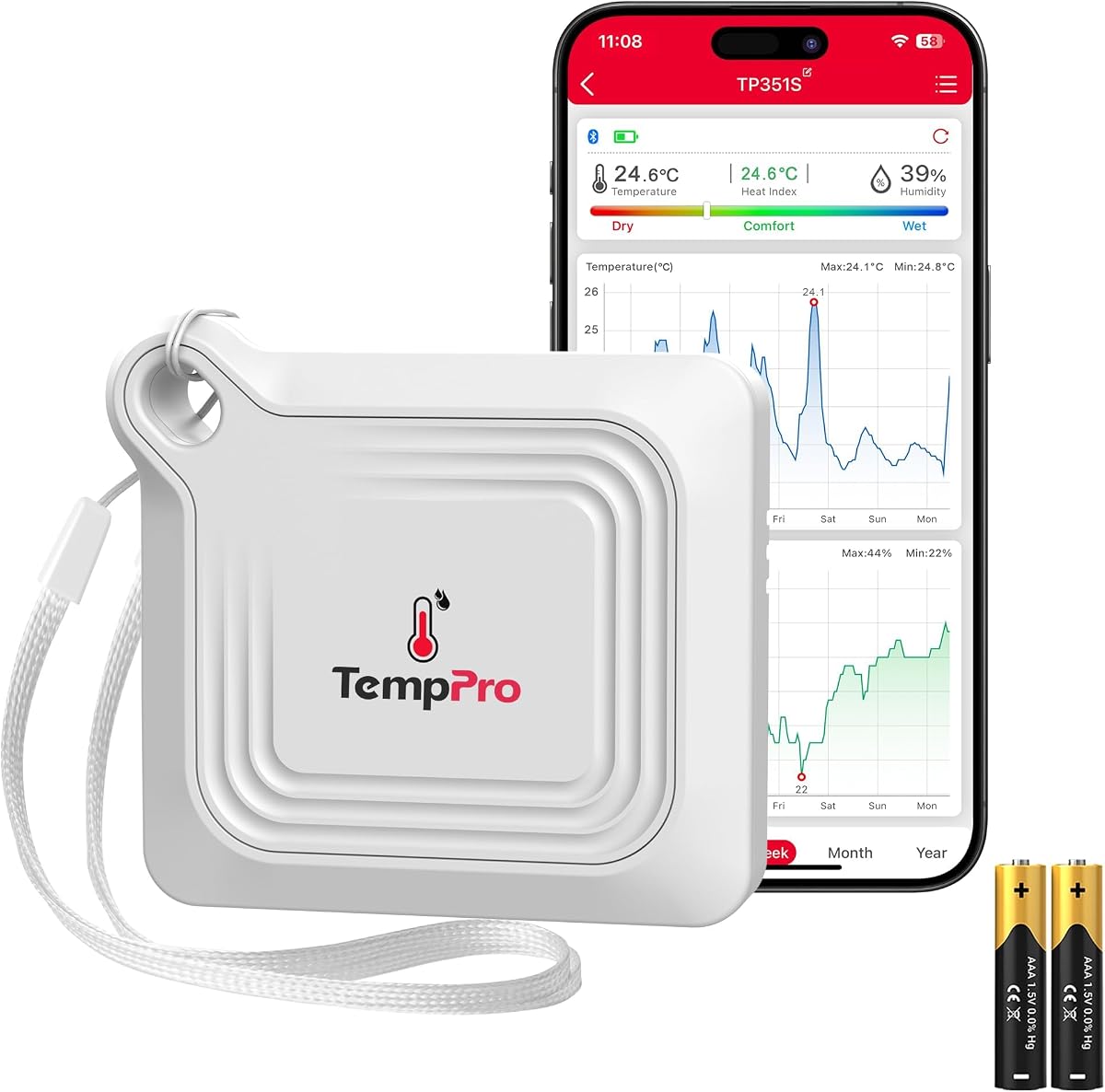
This model offers the convenience of remote monitoring via Bluetooth which is perfect for checking conditions without entering the greenhouse. The app works without user registration which enhances privacy and simplifies setup for new users.
We may earn a commission when you buy through this link, at no additional cost to you.
The sensor uses advanced NTC technology to deliver high accuracy readings. Data can be stored and exported for up to two years allowing you to analyze trends over time for better climate control strategies.
The backlit display is a nice touch for low light conditions. However relying on an app means you need a smartphone nearby to view live data which might not be ideal for all users.
For gardeners who want to track long term trends and access data remotely this thermometer is highly capable. It combines practical hardware features with useful software tools for smart monitoring.
The range of up to 260 feet allows you to place the sensor deep inside a large greenhouse and still check data from your office.
Storing two years of data lets you compare seasonal changes and adjust your heating or cooling needs based on actual past performance.
We may earn a commission when you buy through this link, at no additional cost to you.
This simple digital thermometer focuses on the core need of monitoring temperature extremes. It clearly displays current high and low temperatures helping gardeners understand fluctuations that impact plant health over the day.
We may earn a commission when you buy through this link, at no additional cost to you.
It is versatile enough for indoor or outdoor use with easy wall mounting. The ability to switch between Celsius and Fahrenheit makes it accessible for users with different temperature preferences.
While it lacks humidity tracking or smart alerts, it serves its purpose well as a dedicated temperature monitor. The included battery ensures you can start using it immediately upon purchase.
If you want a straightforward tool to track temperature ranges without extra complexity this model is reliable. It is an affordable solution for basic environmental monitoring.
The focus on maximum and minimum temperatures simplifies decision making by highlighting the most critical temperature changes in your greenhouse.
Wall mounting options allow you to position the device at eye level for easy reading without taking up valuable shelf space.
We may earn a commission when you buy through this link, at no additional cost to you.
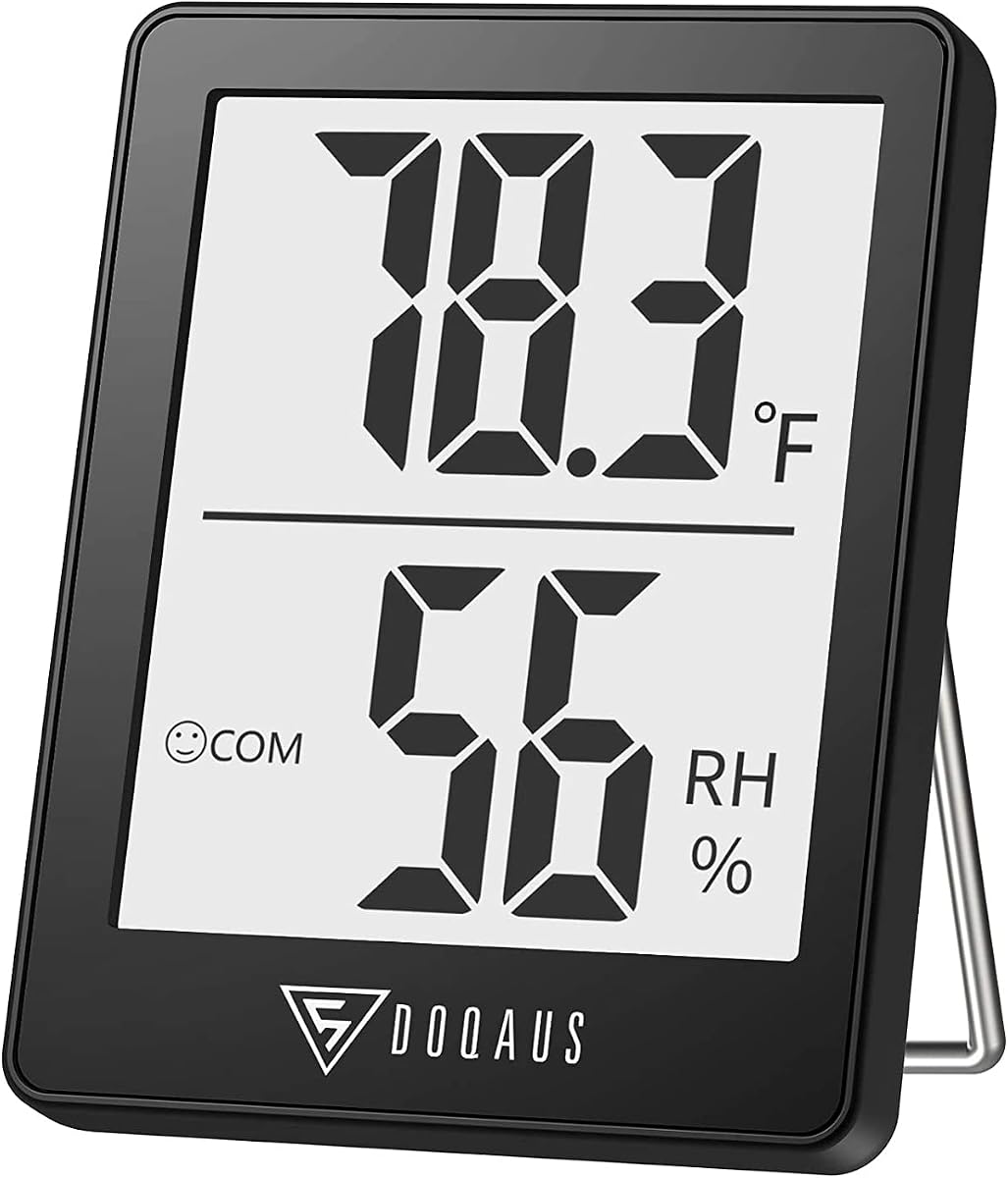
This compact hygrometer offers high accuracy at an affordable price point. Its face icon comfort indicator quickly tells you if the air is dry, wet, or comfortable which simplifies humidity management.
We may earn a commission when you buy through this link, at no additional cost to you.
The refresh rate is fast at every ten seconds ensuring you see the latest updates on temperature and humidity. The display features large bold digits making it readable from various angles.
Due to its small size it fits easily in tight spaces like grow tents or small greenhouses. It does not track maximum or minimum values which might be a downside for some users.
For budget conscious gardeners who need accurate humidity and temperature checks this is a great pick. It delivers essential performance without unnecessary extras.
The face icons provide a quick visual check of air quality so you can adjust humidifiers or dehumidifiers instantly.
The mini size allows placement in cramped corners or on small shelves without obstructing plant growth or airflow.
We may earn a commission when you buy through this link, at no additional cost to you.
This analog thermometer provides a reliable way to monitor conditions without any electronics. It uses a mechanical system that requires no batteries making it a low maintenance choice for passive monitoring.
We may earn a commission when you buy through this link, at no additional cost to you.
The large dial design offers clear visibility of temperature zones. It is built with durable materials including stainless steel for the sensor which ensures it withstands tough conditions over time.
Analog models may respond slower to changes compared to digital ones so patience is needed when adjusting settings. The lack of memory means you cannot track past highs or lows digitally.
If you prefer simplicity and reliability without the need for power sources this analog unit is excellent. It serves well as a secondary check or for areas where electronics might fail.
The mechanical operation means you never have to worry about changing batteries ensuring continuous monitoring without interruption.
The large dial makes it easy to read from a distance and understand temperature zones at a glance.
We may earn a commission when you buy through this link, at no additional cost to you.
This hygrometer stands out for its rapid refresh rate updating readings every five seconds. This speed ensures you get near real-time data which is useful in environments where conditions change quickly.
We may earn a commission when you buy through this link, at no additional cost to you.
The display is a generous 2.3 inches making numbers bold and easy to read. It also includes a comfort indicator using icons to show air quality at a glance.
Mounting options are flexible with a hanging hole stand and magnetic back. It is portable and lightweight allowing you to move it around easily as needed.
For users who want quick updates on environmental changes this model delivers. It balances readability with practical mounting options for versatile placement.
The five second refresh rate allows you to see immediate impacts from opening doors or adjusting fans in your greenhouse.
The large 2.3 inch LCD ensures you can read values clearly even from a distance across the room.
We may earn a commission when you buy through this link, at no additional cost to you.
This Bluetooth thermometer is designed for effortless connection to your smart device. It features an auto-connection technology that makes setup quick and accessible even for less tech-savvy users.
We may earn a commission when you buy through this link, at no additional cost to you.
With a high-accuracy sensor and a range of up to 260 feet you can monitor conditions from anywhere in your home. The app supports data export and two year storage for detailed analysis.
Alerts and online charts provide a complete picture of your greenhouse environment. However the reliance on an app and phone battery can be a limitation for continuous monitoring in remote areas.
If you want to stay informed without visiting the greenhouse constantly this model is a strong choice. It offers a rich set of digital features to help manage your growing space.
The auto-connection feature simplifies daily use by ensuring the device pairs quickly with your phone without manual intervention.
Exporting data allows you to share environmental logs with others or keep detailed records for long-term plant health management.
We may earn a commission when you buy through this link, at no additional cost to you.
Buying in a pack offers excellent value for gardeners needing to monitor multiple zones. These units share the same reliable features as the single version making them ideal for spreading across different areas.
We may earn a commission when you buy through this link, at no additional cost to you.
Each thermometer displays accuracy within standard limits and updates every ten seconds. The face icons help identify comfort levels quickly which is helpful when checking several devices at once.
Having multiple sensors helps ensure consistency across your greenhouse. You can place one near heat sources and another near vents to get a balanced view of conditions.
If you need more than one device for your setup this pack saves time and money. It is a practical solution for broader environmental monitoring.
The three pack provides a lower per-unit cost allowing you to cover more area without buying separate devices individually.
Using identical units ensures consistent reading standards across different parts of your greenhouse.
We may earn a commission when you buy through this link, at no additional cost to you.
This thermometer offers a classic digital display with a traditional look that fits well in garden settings. The flip out roof provides extra protection from rain or sun helping to extend its lifespan outdoors.
We may earn a commission when you buy through this link, at no additional cost to you.
It tracks maximum and minimum temperatures accurately which is crucial for identifying potential frost or heat stress risks. It works equally well indoors and outdoors making it versatile for various applications.
The design is simple without extra smart features which keeps it user-friendly. However it does not measure humidity so you might need a separate device for that purpose.
If you want a durable and reliable tool for temperature tracking this model is a solid pick. It focuses on essential monitoring to help protect your garden.
The flip out roof shields the device from direct elements improving durability when placed outside your greenhouse.
Tracking highs and lows helps you understand the full range of temperature conditions your plants face daily.
We may earn a commission when you buy through this link, at no additional cost to you.
This smart thermometer offers advanced monitoring with a compact design. It uses a Swiss-made sensor for high precision and updates data every two seconds for near real-time accuracy.
We may earn a commission when you buy through this link, at no additional cost to you.
The app allows you to set alerts if conditions move out of range ensuring you are notified immediately. It stores twenty days of data on board and allows export for deeper analysis.
Its small size makes it easy to place anywhere without taking up space. However it is a Bluetooth device which means it must be within range to sync data unlike WiFi models.
For those who want modern features and precise control this model is highly recommended. It provides a smart approach to greenhouse monitoring for tech-savvy gardeners.
The alert system ensures you are notified instantly if temperatures or humidity drop below safe thresholds for your plants.
The mini size allows you to place it in hard to reach spots without interfering with your setup.
We may earn a commission when you buy through this link, at no additional cost to you.
Selecting the right thermometer involves considering accuracy, connectivity, and durability. These factors ensure you can monitor your greenhouse environment effectively.
Accuracy is the most critical factor for any greenhouse thermometer. Look for models that claim high precision such as ±1°F or better for temperature and ±2% RH for humidity. Reliable sensors ensure you make correct decisions about heating or cooling.
Prioritize sensors known for quality to avoid fluctuations that could harm plants.
Greenhouses are often humid or exposed to elements. Choose a device with an IP rating like IPX5 to protect it from moisture. Durable materials ensure long life without needing frequent replacements.
Look for waterproof ratings and sturdy construction to survive damp environments.
Smart models offer Bluetooth or WiFi to let you check data remotely. If you need to monitor from another room choose a Bluetooth version with a good range. Traditional models are simpler but require physical checks.
Decide if you need remote access or a simple physical display.
Some thermometers store data over time to help you track trends. Look for features that allow exporting data for analysis. Understanding past fluctuations helps you adjust your environment proactively.
Choose a model that records history if you need long term insights.
A clear display is essential for quick checks. Large digits or backlit screens help when light is low. Ensure the interface is intuitive so you can read values without confusion.
Ensure the screen is easy to read at a glance.
Consider how the device is powered. Battery-operated models offer flexibility but need replacement. Some analog models do not require power. Check battery life to avoid interruptions in monitoring.
Check battery requirements to plan for maintenance.
Flexible mounting options allow you to place the device optimally. Look for hooks, stands, or magnetic backs. Proper placement ensures the readings reflect the true environment of your plants.
Choose a model with mounting options that fit your space.
Place the thermometer away from direct heat sources or vents to avoid skewed readings. Ensure it sits at the height where plants grow for accurate data on their microclimate.
Clean the device regularly with a soft dry cloth to prevent dust from affecting the sensors. Avoid using harsh chemicals that could damage the exterior or sensor components.
Check the battery periodically and replace it as needed to maintain functionality. Calibrate the device if possible or compare it with another trusted thermometer to verify accuracy.
A good greenhouse thermometer should be accurate within ±1°F for temperature and ±2% RH for humidity. This level of precision helps you make informed decisions about climate control without risking plant health.
Smart thermometers are helpful if you want to monitor conditions remotely or receive alerts. However basic digital or analog models work well if you can check them physically regularly.
Position the thermometer at plant level and away from direct sunlight or vents. This ensures the reading reflects the actual environment where your plants are growing.
Standard indoor models may not withstand high humidity or heat. It is better to choose a device designed for greenhouses or one with waterproof ratings for durability.
Check it daily or set up alerts if using a smart model. Consistent monitoring helps catch sudden changes that could stress plants before they are damaged.
High quality models usually come calibrated from the factory. Periodically compare it with another trusted device to ensure it remains accurate over time.
Choose a model with a protective case or housing to shield the sensor from dust and moisture. Keeping it clean ensures it operates correctly for longer.
We reviewed ten excellent greenhouse thermometers ranging from simple digital units to smart models with Bluetooth features. Each offers unique strengths in accuracy durability and connectivity to suit different needs.
Prioritize accuracy and durability for reliable monitoring. Choose smart features only if you need remote alerts or data tracking for your setup.
Verify current availability and features before purchasing to ensure the model meets your specific requirements for your greenhouse environment.