
EBOOT 30 Pieces Photoresistor Photo Light Sensitive Resistor Light Dependent Resistor 5 mm (5539)
4.6Editor score
Large quantity of resistors
Low cost per unit
Wide operating temperature
This guide compares the top Light Sensor for Arduino modules including photoresistors and digital ICs to help you choose the right one for your project.
Light sensors are essential components for any Arduino project that needs to react to ambient conditions. Whether you are building a smart home system or a garden monitor, selecting the right module ensures reliable performance and accurate data readings for your application.
We evaluated ten popular Light Sensor for Arduino options based on accuracy, ease of use, and compatibility. Our selection includes both analog photoresistors and digital modules like BH1750 and TEMT6000, covering a wide range of budgets and technical requirements for hobbyists and professionals.
Each pick below highlights specific strengths such as cost efficiency, precision, or integration simplicity. Prices and availability can change frequently on online marketplaces so please verify the latest details before purchasing to ensure you get the best value for your money.
4.6Editor score

4.5Editor score
5.0Editor score
This table provides a side by side comparison of all ten selected Light Sensor for Arduino modules highlighting their key specifications and unique features to help you make an informed decision.



This module ranks as the top choice for its precision and ease of integration. It uses the BH1750FVI chip which provides digital output eliminating the need for analog to digital conversion on the Arduino. This results in cleaner data and more consistent results across different lighting conditions.
We may earn a commission when you buy through this link, at no additional cost to you.
The BH1750FVI chip from ROHM ensures accurate readings across a wide range of light intensities. Users can detect changes in ambient light reliably making it ideal for projects like automatic street lights or smart displays. The I2C interface simplifies wiring requiring only two data pins to communicate with the microcontroller.
While it offers superior accuracy it does require basic knowledge of the I2C protocol which might be a barrier for absolute beginners. Additionally the price is slightly higher than basic photoresistors. However the added precision and digital output usually justify the extra cost for most serious projects.
If you need reliable and accurate light data for an Arduino project this module is the ideal choice. It strikes a perfect balance between performance and ease of use making it suitable for both hobbyists and professionals who value consistency in their sensor readings.
The digital output avoids noise issues common with analog sensors ensuring stable data for your code.
Its small footprint allows for easy integration into tight spaces on your project board.
We may earn a commission when you buy through this link, at no additional cost to you.
This pack offers the best value for money with thirty resistors included for a low price. It is perfect for beginners who want to experiment with light detection without spending much on electronics. The components are standard and widely available for future replacements or additional projects.
We may earn a commission when you buy through this link, at no additional cost to you.
The GM5539 resistors are reliable and work well with basic Arduino analog inputs. They respond quickly to changes in light making them suitable for simple projects like light activated switches. The package contains enough units to allow for multiple projects or sharing with a coding.
You will need to build a simple voltage divider circuit to read these on an Arduino which adds a step compared to module options. Since they are analog components the readings can vary slightly due to noise. However for cost sensitive projects this is a minor drawback.
For those on a tight budget or needing bulk components for educational purposes this pack is highly recommended. It provides a solid foundation for learning how light sensors work while keeping material costs to an absolute minimum for your workshop.
Buying in bulk reduces the cost per unit significantly which is great for classroom or bulk prototyping use.
These resistors are standard parts compatible with almost any microcontroller project needing light detection.
We may earn a commission when you buy through this link, at no additional cost to you.
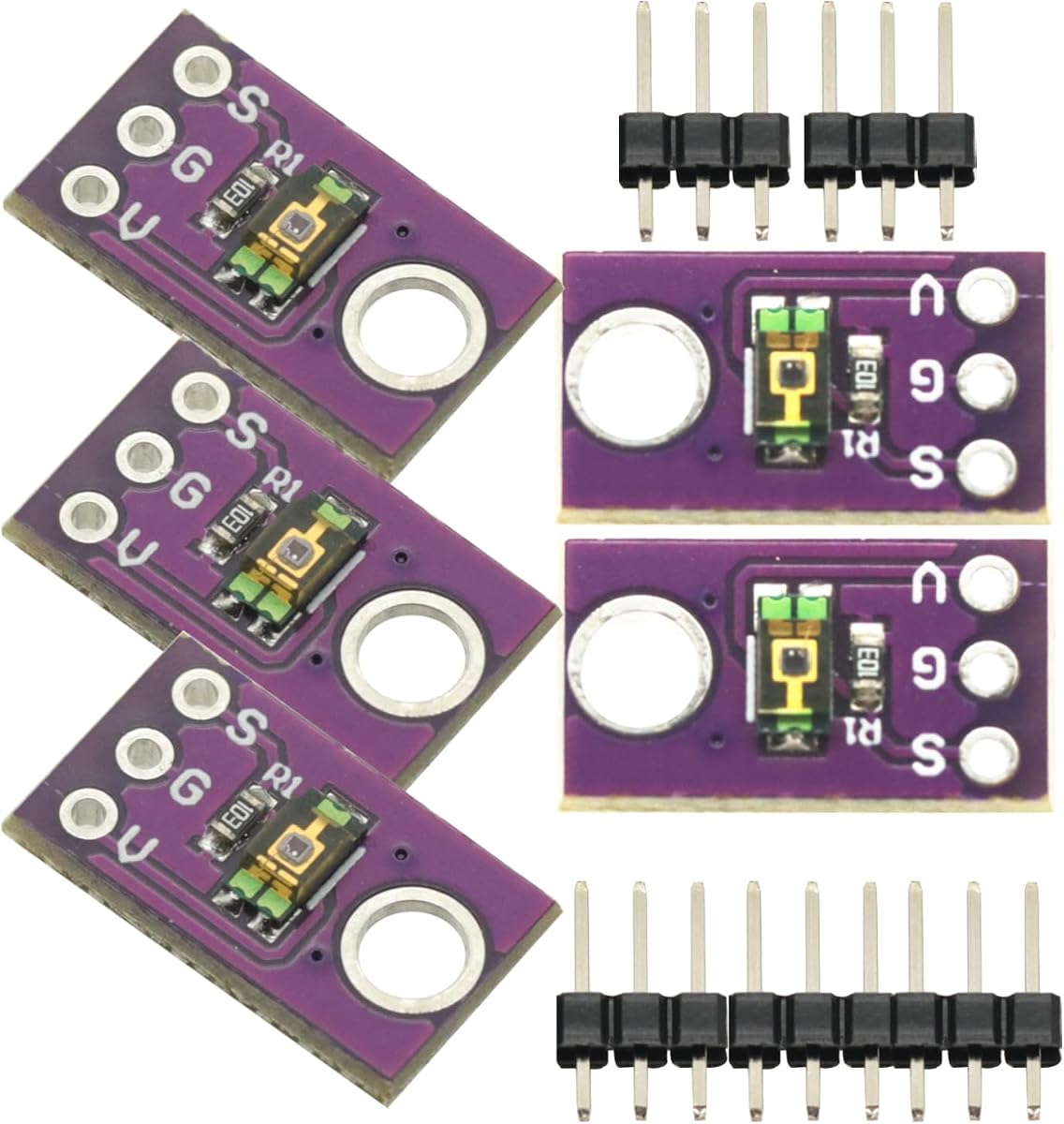
The TEMT6000 is a professional grade sensor designed for high accuracy applications like display dimming. It delivers smooth and consistent readings that mimic human eye response making it excellent for user facing interfaces. The five pack ensures you have spares for critical production prototypes.
We may earn a commission when you buy through this link, at no additional cost to you.
Unlike standard resistors this photodiode based sensor offers linear response to light changes which simplifies software calibration. It is widely used in consumer electronics for backlight control and its performance on Arduino projects is equally impressive. The output signal is clean and ready for precision control.
The main drawback is the cost which is higher than hobbyist modules. Also it may require more careful calibration to get the exact lux values for your specific application. For professional projects however the performance gap is worth the investment.
If you are building a commercial product or a high end prototype this sensor is the best choice. It provides the level of reliability and accuracy needed for applications where light detection impacts user experience directly or industrial automation.
The spectral response matches human vision which makes it perfect for adjusting screen brightness naturally.
A linear output curve means changes in light result in proportional changes in voltage simplifying your code.
We may earn a commission when you buy through this link, at no additional cost to you.
This set provides six modules offering a good value for those wanting to build multiple projects. Each module includes a comparator which allows for easy digital switching without complex code. The ability to adjust the threshold physically makes setup intuitive and quick.
We may earn a commission when you buy through this link, at no additional cost to you.
The LM393 comparator ensures a clean digital output signal which is useful for triggering relays or alarms. You can also use the analog pin for more granular data reading. This dual output flexibility makes it a versatile choice for various automation tasks.
The build quality is functional but basic which is typical for this price range. The potentiometer can be a bit sensitive so adjustments might need to be repeated. However for general hobbyist use it performs reliably enough for most light detection tasks.
For users who need multiple sensors for a smart home or garden project this pack is a strong candidate. It balances cost and functionality well allowing you to monitor light levels across different areas without a high upfront investment.
The physical potentiometer allows you to set the light level that triggers the digital output easily.
Having both analog and digital outputs lets you choose the right data type for your specific needs.
We may earn a commission when you buy through this link, at no additional cost to you.
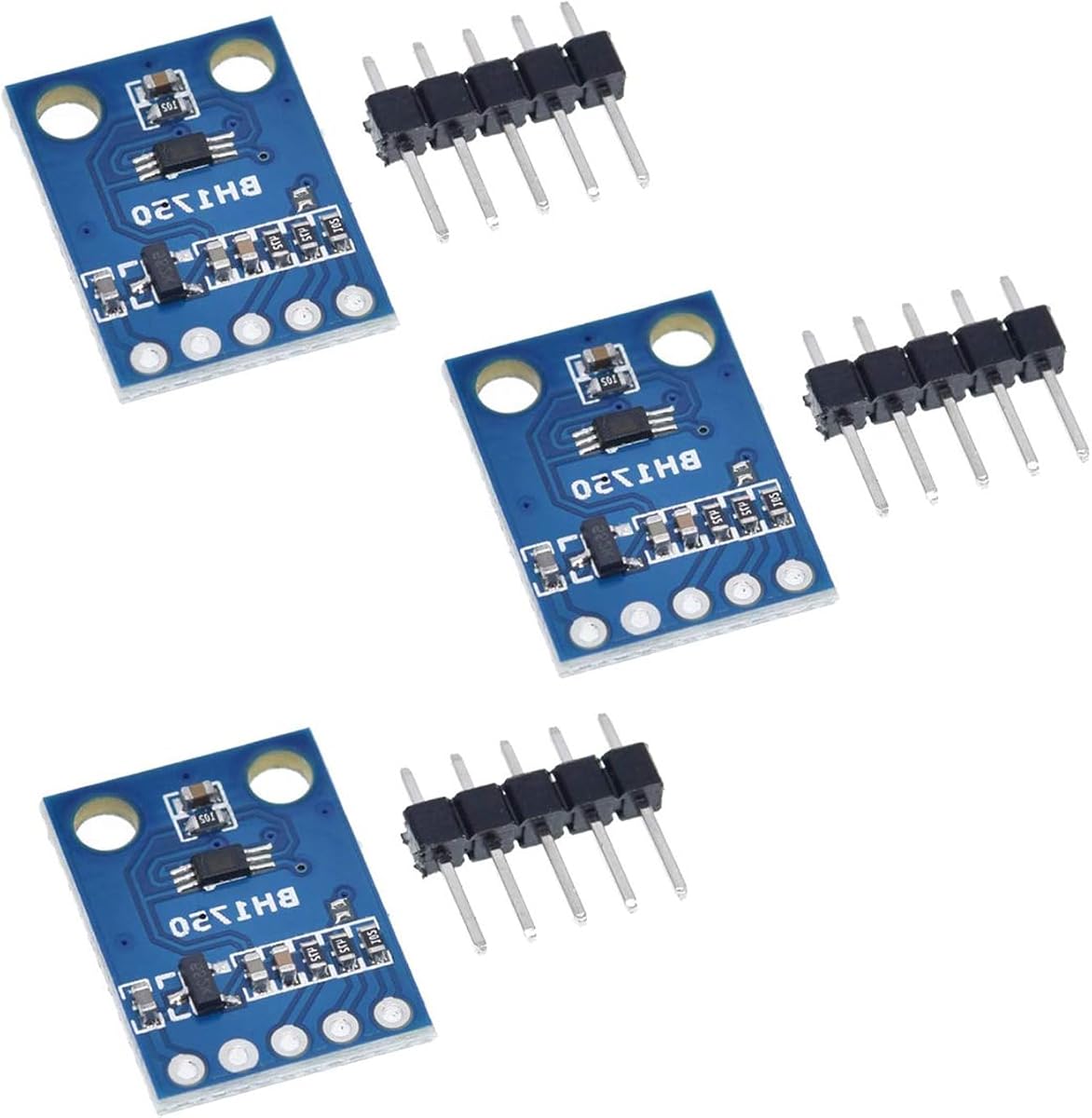
This pack offers three high quality modules that perform consistently well in various lighting conditions. The BH1750 chip ensures precise readings which is crucial for projects requiring accurate environmental data. Users appreciate the compact size which fits easily on crowded breadboards.
We may earn a commission when you buy through this link, at no additional cost to you.
The digital output simplifies the data processing on the Arduino side. You do not need to worry about filtering noisy analog signals which saves processing power for other tasks. The modules are plug and play making them accessible even for those with limited electronics experience.
The small size might make handling a bit tricky during soldering or mounting but it also helps in integration. While it uses I2C this is a standard protocol that most users will find easy to implement with existing libraries. It is a robust choice for reliable sensing.
If you need a few reliable modules for different parts of a project this pack is an excellent option. The high customer rating reflects the consistent quality and performance that users have experienced with these specific units over time.
The module requires minimal setup allowing you to focus on the logic of your project quickly.
Accurate sensing ensures your automated systems react correctly to actual light levels.
We may earn a commission when you buy through this link, at no additional cost to you.
This photodiode module is designed to sense light from a specific direction making it ideal for targeted detection tasks. The 10 pack ensures you have enough units for multi point monitoring or large scale experiments. The board includes fixing holes for secure installation in enclosures.
We may earn a commission when you buy through this link, at no additional cost to you.
The directional nature of the photodiode reduces interference from background light which improves accuracy in specific applications. The adjustable sensitivity potentiometer allows you to fine tune the threshold for the environment. Both digital and analog outputs provide flexibility in how you process the data.
The limited field of view can be a drawback if you need to detect light from a broad area. However this is also a benefit for line following or specific light source tracking. The PCB size is compact and fits well in most hobbyist projects.
For projects that require detecting a light source from a specific angle this module is very effective. The large pack makes it economical for teams or schools where many sensors are needed simultaneously for group projects or competitions.
Focusing on a specific direction helps avoid false triggers from ambient background light sources.
Screw holes allow the sensor to be firmly attached to a chassis or box for stability.
We may earn a commission when you buy through this link, at no additional cost to you.
This ten pack provides a great resource for projects needing multiple sensor points simultaneously. The LM393 comparator ensures the digital output is strong enough to drive small loads or relays directly. This simplifies wiring when controlling larger devices based on light conditions.
We may earn a commission when you buy through this link, at no additional cost to you.
The high driving capability means the output signal is robust and less susceptible to interference from long wires. This is particularly useful in larger setups like smart gardens or industrial simulations. The potentiometer allows for quick field adjustments without reprogramming.
The analog output can pick up some noise so digital triggering is often preferred for reliability. The build is functional and standard for this class of module. It works well for most educational and hobbyist applications requiring reliable switching.
For teams or classrooms needing multiple sensors this pack is a practical choice. The combination of quantity and reliability makes it suitable for experiments where many nodes must report light status to a central controller effectively.
The strong output can directly power a relay module making it a simple switch for lights or motors.
A high current drive ensures the signal reaches your controller reliably even over longer cables.
We may earn a commission when you buy through this link, at no additional cost to you.
This sensor is designed to be compatible with a wide range of microcontrollers including ESP32 and Raspberry Pi. It comes with tutorials that help beginners get started quickly with code examples. The adjustable threshold allows for fine tuning sensitivity to suit different environments.
We may earn a commission when you buy through this link, at no additional cost to you.
The dual output option provides flexibility to use either a simple trigger or a proportional light value. This versatility makes it useful for various types of projects from simple night lights to complex automation systems. The board is compact and fits well in tight enclosures.
The pack size is smaller than some others but it includes all essential components for a few test setups. The build quality is standard for hobbyist modules. It works well for most general purpose light detection needs in home automation or educational contexts.
If you are using an ESP32 or similar WiFi enabled device this module is a convenient option. The included documentation helps streamline the development process making it easier to integrate into IoT projects effectively.
Designed to work with popular boards ensures you do not face connectivity or driver issues.
Tutorials provide a quick start for new users wanting to understand sensor integration logic.
We may earn a commission when you buy through this link, at no additional cost to you.
This pack offers fifty photoresistors making it an excellent choice for schools or bulk prototyping. The GL5516 type is a standard reliable component widely used in electronics. With a very high rating users can expect consistent performance across the entire pack.
We may earn a commission when you buy through this link, at no additional cost to you.
The resistance values are well defined in bright and dark conditions which simplifies circuit design. You do not have to worry about large variances between parts in the same pack. This consistency is crucial when building multiple identical nodes for a larger system.
Since these are just components you will need to build the necessary voltage divider circuit yourself. This adds a small step to the process but allows for custom circuit design. For those comfortable with basic electronics this is a minor inconvenience.
For anyone needing a large stock of sensors for ongoing work this pack is unbeatable. The high customer rating confirms that the quality meets expectations for bulk purchases and ensures reliability in various projects over time.
Buying in such large quantities drastically reduces the per unit cost which is ideal for education.
Uniform characteristics across the pack mean your projects will behave predictably without individual calibration.
We may earn a commission when you buy through this link, at no additional cost to you.
This module is optimized for applications like smart cars where space is at a premium. The compact design allows it to fit into small chassis areas without obstructing other components. The LM393 chip provides a stable comparison for reliable switching decisions.
We may earn a commission when you buy through this link, at no additional cost to you.
The dual output options let you choose between a simple on off state or a proportional light reading. This flexibility is useful for varied requirements such as triggering a sensor or logging light intensity over time. The voltage range covers most common Arduino and 3.3V boards.
The pack is small so it is best for single projects rather than bulk needs. The build quality is solid for a hobbyist module. It performs well for general purpose detection and the wiring is straightforward for most users.
For mobile robotics or compact device projects this module is a practical choice. The small footprint and standard voltage compatibility make it easy to integrate into space constrained designs effectively.
The compact PCB design allows for installation in tight areas where larger modules would not fit.
Supporting both 3.3V and 5V ensures compatibility with a wide range of modern microcontrollers.
We may earn a commission when you buy through this link, at no additional cost to you.
Selecting the right light sensor involves understanding your project needs including accuracy and power constraints.
Photoresistors are simple and cheap but analog modules offer better precision. Digital modules simplify the code and reduce noise issues in your readings.
Choose analog for simple tasks and digital for complex projects needing accurate data.
Some sensors provide both digital and analog outputs. Digital is useful for triggers while analog gives a continuous range of light values.
Consider if you need a simple on off signal or detailed light intensity data.
Ensure the sensor matches your Arduino voltage logic either 3.3V or 5V. Mismatched voltage can lead to inaccurate readings or damage the component.
Always check the datasheet to confirm voltage requirements before connecting power.
Modules like BH1750 use I2C which saves pins on your board. Resistors usually connect to analog pins. Plan your pin usage accordingly.
Select an interface that aligns with the available pins on your microcontroller.
Check the lux range to ensure the sensor can detect your specific light levels. Some are optimized for daylight while others work better in dim light.
Match the sensor range to your environment for the best performance.
Compact modules are essential for tight enclosures like robots or small housings. Larger boards might be easier to solder but harder to mount.
Pick a size that fits your project's physical constraints comfortably.
Bulk packs are cost effective if you need multiple units for a network. Single modules are better for one-off prototypes.
Balance your budget with the number of sensors required for your setup.
Digital sensors often require less calibration than analog ones. Modules with potentiometers allow physical threshold tuning without code.
Consider how much effort you want to spend on setting up the sensor.
Start by wiring the sensor according to the voltage requirements. Connect VCC to power and GND to ground. Use a digital pin for trigger signals or an analog pin for variable data.
Install the sensor in a location exposed to the light source. Avoid direct sunlight if you expect indoor levels to prevent saturation of the readings.
Regularly check the connections for loose wires or corrosion. Ensure the sensor lens is clean and free of dust to maintain consistent accuracy over time.
The BH1750 module is highly recommended for its digital precision and ease of use. It offers accurate readings and simplifies coding compared to analog resistors.
Most modern modules come pre assembled with headers ready for breadboards. However some basic components might require soldering if you are building custom circuits.
Many modules support both 3.3V and 5V logic. Always verify the voltage compatibility on the specific product page to ensure safe operation.
Use the analogRead function for resistors or the I2C library for digital modules. The code examples are often available in the product description.
Analog sensors give a continuous voltage value while digital sensors provide a binary output or processed data. Digital usually requires less code complexity.
Most hobbyist modules are not waterproof by default. You will need to seal them in a case if using them outdoors in rain or humidity.
Use the built-in potentiometer to adjust thresholds physically. For digital sensors calibration involves setting software limits based on known light levels.
Yes you can use the digital output to trigger relays which switch AC or DC lights. This is a common application for smart home projects.
We have explored ten diverse Light Sensor for Arduino options from budget photoresistors to professional grade modules. Each pick serves specific needs whether you value cost precision or simplicity in your automation project.
Prioritize accuracy if you need detailed light data and opt for digital interfaces to reduce wiring complexity. For simple triggers basic analog modules remain a cost effective and reliable choice.
Prices and availability fluctuate so verify the current listing details before buying. Selecting the right sensor ensures your project functions reliably and meets your performance goals effectively.