
Ortizan C7 Powered Studio Monitors Pair
4.6Editor score
Bluetooth 5.3 wireless connectivity
24-bit DAC for fidelity
Professional tuning for flat curve
Choosing the right Edm Studio Monitor is crucial for producers who need accurate sound representation. These monitors reveal every detail in your mix, ensuring your tracks translate well across different systems and environments.
We evaluated ten top-rated models based on sound accuracy, build quality, connectivity options, and value. Our analysis focuses on how each unit performs in real-world production scenarios for music creators and podcasters.
Each pick showcases specific strengths like bass response or imaging precision. Prices and availability change often, so check current listings before buying to ensure you get the best deal for your studio setup needs.
4.6Editor score

4.8Editor score

4.6Editor score
As an Amazon Associate we earn from qualifying purchases.
This side-by-side comparison highlights key specifications and features across all ten selected Edm Studio Monitor models to help you identify the best fit for your production needs.



The YAMAHA Hs5 is a top choice for producers seeking accurate sound reproduction. With a 4.8 rating, it delivers uncolored audio essential for precise mixing decisions.
We may earn a commission when you buy through this link, at no additional cost to you.
Its bi-amplified system provides 70 watts of power, ensuring dynamic range and clarity. The frequency response from 54Hz to 30kHz captures deep lows and crisp highs effectively.
While it lacks wireless connectivity, the focus on pure sound makes it worth the trade-off. The XLR and TRS inputs support professional audio interfaces seamlessly.
Producers needing reliable monitoring should choose this pair. It remains a benchmark for studio accuracy in this category today.
This model emphasizes sonic purity without any coloring or alternation of the original sound.
Balanced XLR and TRS phone jack inputs accept balanced or unbalanced signals for versatile setups.
We may earn a commission when you buy through this link, at no additional cost to you.
The PreSonus Eris E4.5 offers accessible studio monitoring with accurate sound. Rated 4.5, these monitors deliver tight bass and clear highs for music production.
We may earn a commission when you buy through this link, at no additional cost to you.
With 50 Watts of amplification, they produce enough volume without losing clarity. The ultra-wide sweet spot ensures consistent sound from different angles.
Trade-offs include a smaller woofer and plastic construction. However, the power saver mode and multiple inputs add practical value for home studios.
Ideal for beginners seeking professional features without high costs. These monitors help develop critical listening skills effectively.
High and low-frequency tuning controls allow customization for room size and speaker orientation.
Includes balanced TRS inputs, RCA, and front-panel aux for phones.
We may earn a commission when you buy through this link, at no additional cost to you.
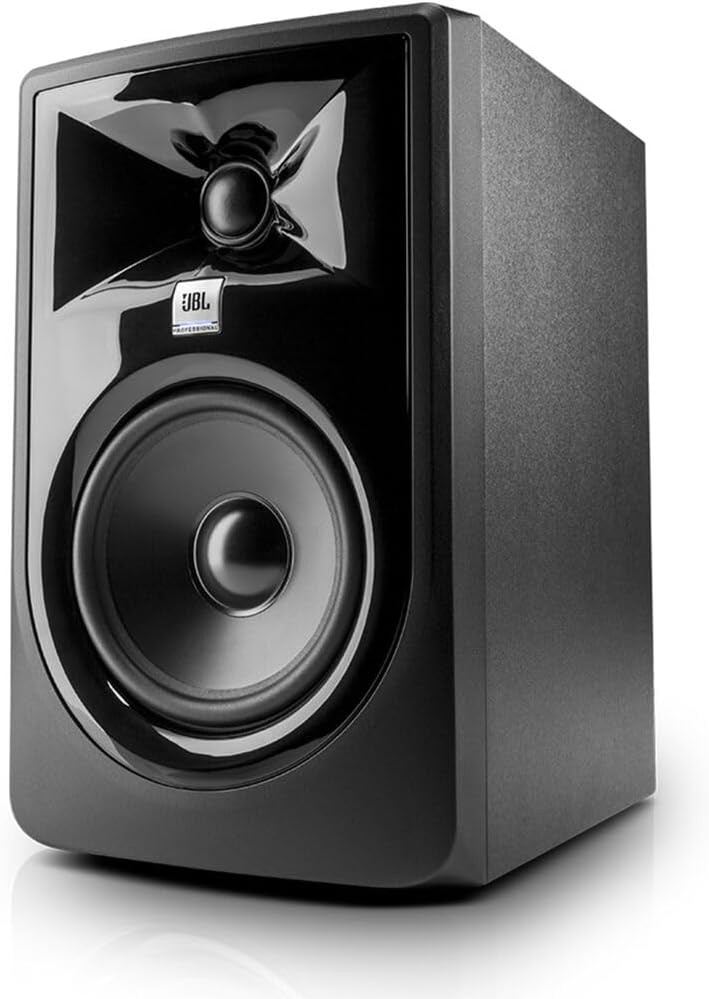
JBL 305P MkII monitors deliver crystal-clear imaging ideal for production. With a 4.7 rating, they excel at revealing mix details accurately.
We may earn a commission when you buy through this link, at no additional cost to you.
The patented Image Control Waveguide creates a wide sweet spot. Powerful 82-watt amplifiers support deep bass via Slip Stream ports.
Boundary EQ adjusts frequency response to suit your room. The only con is sensitivity to placement due to front-firing ports.
Producers needing immersive sound should choose this pair. It balances quality and performance well for various applications.
Patented waveguide delivers precise, immersive sound with a wide sweet spot.
Boundary EQ and HF Trim adjust frequencies to suit any room.
We may earn a commission when you buy through this link, at no additional cost to you.
The Edifier MR3 offers Hi-Res Audio certification for superior sound. Rated 4.5, it provides a flat response suitable for precise monitoring.
We may earn a commission when you buy through this link, at no additional cost to you.
It supports multi-point Bluetooth, connecting multiple devices simultaneously. The EDIFIER ConneX app allows in-depth EQ adjustments.
While power is lower than others, versatility shines. The customizable modes cater to both music and media consumption needs.
Listeners wanting wireless flexibility should buy this. It bridges the gap between casual and professional use.
Delivers a flat response across 52Hz to 40kHz for accurate monitoring.
EDIFIER ConneX app offers personalized EQ control.
We may earn a commission when you buy through this link, at no additional cost to you.
The PreSonus Eris E7 XT provides deep lows and smooth highs. With a 4.8 rating, it excels at accurate mixing contour.
We may earn a commission when you buy through this link, at no additional cost to you.
It includes Studio One Prime software, adding value over its price. The EBM waveguide yields solid imaging and a wide sweet spot.
Acoustic tuning controls tailor monitors to your space effectively. Note it is sold individually, so budget for a pair.
Producers needing software integration should pick this. It offers high performance and tools for starting production.
Innovative waveguide yields a wide sweet spot and solid imaging.
Includes Studio One Prime and Magic plug-in suite over $1000 value.
We may earn a commission when you buy through this link, at no additional cost to you.
The Ortizan C7 delivers professional tuning at an affordable price. Rated 4.6, it faithfully reproduces audio signals with balanced sound.
We may earn a commission when you buy through this link, at no additional cost to you.
It features a built-in 24-bit DAC for minimized signal loss. Bluetooth 5.3 allows fast, stable pairing with devices.
While the build is simple, the curve meets monitor standards. This makes it ideal for small budgets or secondary setups.
New producers on a budget should choose this. It offers reliable quality without financial strain.
The built-in 24-bit DAC captures digital audio directly minimizing signal loss.
Obtains flat curve required by monitor speakers after lab adjustments.
We may earn a commission when you buy through this link, at no additional cost to you.
The KALI AUDIO LP-6 V2 offers superior sonic accuracy with low noise. With a 4.5 rating, it emits sounds as they are in your mix.
We may earn a commission when you buy through this link, at no additional cost to you.
Features include 12dB noise reduction to minimize turbulence and distortion. The front port ensures uniform air exit velocity.
Boundary EQ adapts the audio to any placement environment. It delivers 80 watts effectively but is sold individually.
Producers wanting precise detail should consider this. It exceeds its price point significantly in performance.
12dB noise reduction and low distortion upgrades deliver clear sounds.
Updated boundary EQ ensures high-quality audio output no matter where placed.
We may earn a commission when you buy through this link, at no additional cost to you.
The Edifier MR5 delivers powerful sound with 110W RMS. Rated 4.5, it supports detailed audio reproduction across a wide frequency range.
We may earn a commission when you buy through this link, at no additional cost to you.
It features physical knobs and app-based room tuning for customization. Bluetooth 6.0 and multi-connectivity ensure versatile connections.
The large cabinets fill mid-sized rooms effectively. While the footprint is significant, it reduces distortion significantly.
Users requiring high SPL and tuning flexibility should choose this. It balances professional features with modern convenience.
110W RMS Class D amplifier delivers 101dB peak SPL.
Tailor sound to space using physical knobs or the EDIFIER ConneX App.
We may earn a commission when you buy through this link, at no additional cost to you.
The Mackie CR4.5BT combines studio quality with creative flexibility. Rated 4.7, it features a tone control knob to shape sound.
We may earn a commission when you buy through this link, at no additional cost to you.
Flip the location switch for desktop or bookshelf modes. This optimizes listening for close studio work or casual distance.
While tone shaping adds fun, it may color sound. For gaming or partying, this versatility is a major advantage.
Creators needing both work and play speakers should pick this. It adapts well to varied daily use.
Use the tone knob to boost bass and add high-end sparkle.
Optimize for desktop or bookshelf mode depending on placement.
We may earn a commission when you buy through this link, at no additional cost to you.
The Yamaha HS8 offers premium features for demanding productions. Rated 4.6, its 8-inch woofer reaches deep lows down to 38Hz.
We may earn a commission when you buy through this link, at no additional cost to you.
With 120W amplification and an advanced magnetic circuit, it handles high SPL effectively. This ensures clarity even at loud volumes.
Space requirements are significant. However, professionals needing deep bass accuracy justify the cost and size.
Serious producers wanting industry-standard sound should buy this. It remains a benchmark for high-end nearfield monitoring.
38Hz to 30kHz frequency response captures deep lows accurately.
75W LF plus 45W HF bi-amp system for high-performance 120W power.
We may earn a commission when you buy through this link, at no additional cost to you.
Selecting the right Edm Studio Monitor depends on understanding key factors that influence sound quality and usability in your environment.
Driver size directly affects low-frequency response. Larger drivers like 8 inches reproduce deeper bass, while smaller 4-inch drivers suit limited spaces.
Choose a size that matches your room dimensions and bass requirements.
Active monitors have built-in amps for optimal driver matching. Passive monitors require external amps but offer flexibility in signal processing.
Active monitors are generally preferred for simplicity and studio compatibility.
Wider frequency response ensures all audio details are captured. Look for flat response curves that do not artificially boost highs or lows.
Flat response is essential for accurate mixing and mastering decisions.
Balanced inputs like XLR and TRS reduce noise interference. RCA and auxiliary inputs offer convenience for consumer electronics and mobile devices.
Ensure your monitor supports the outputs of your audio interface.
Acoustic tuning controls help adapt sound to your specific room. Features like boundary EQ adjust for wall proximity effects.
Proper room treatment enhances monitor performance beyond hardware alone.
Cabinet materials like MDF reduce resonance and distortion. High-quality components ensure longevity and consistent performance over time.
Durable construction prevents unwanted colorations from cheap materials.
Price often reflects performance but not always suitability. Identify essential features versus nice-to-haves like Bluetooth connectivity.
Balance cost with the specific needs of your production workflow.
Stereo imaging requires a matched pair of monitors. Some models sell as singles, requiring a second purchase for full stereo experience.
Ensure you budget for a pair if stereo sound is critical.
Position monitors at ear level and form an equilateral triangle with your listening position to optimize stereo imaging.
Avoid placing monitors directly against walls to prevent bass buildup; use stands or isolation pads to decouple vibration.
Regularly dust cabinets with a soft cloth and allow units to rest after long sessions to protect internal components.
Studio monitors provide a flat frequency response to reveal the true sound without boosting specific frequencies. Regular speakers add color to music, making mixes sound better than they actually are. This accuracy ensures your tracks translate well to other systems.
Headphones are great for detail but lack the physical feel of speakers. Monitors help train your ears to recognize room acoustics and stereo width. Many pros use both for different stages of production.
Active monitors have built-in amplifiers, ensuring matched power for each driver. This reduces complexity and potential signal loss. Passive monitors require external amps, adding cost and setup time.
Place monitors at ear height and angled inward toward your head. Ensure the distance between monitors equals the distance to your listening spot. This setup creates the best stereo sweet spot.
Basic treatment like bass traps and absorption panels improves sound accuracy significantly. Monitors reveal room flaws rather than hide them. Treatment is highly recommended for professional results.
For small rooms under 200 sq ft, 5-inch monitors work well. Larger rooms benefit from 7 or 8-inch monitors for better low-end response. Consider your room size when selecting.
The top picks range from budget-friendly Ortizan options to premium Yamaha models. Each offers distinct advantages like Bluetooth versatility or deep bass response.
Prioritize features that match your production workflow and room size. Accuracy and connectivity often matter more than price points.
Prices fluctuate regularly, so verify current listings before purchasing to ensure you get the best deal available.