
ELEGOO 0.96 Inch OLED Display Screen Module
4.6Editor score
Self-luminous pixels
Three modules included
I2C connection saves space
This guide compares the top ten Arduino LCD Display modules for makers and engineers, evaluating features, compatibility, and value for diverse embedded
Selecting the right Arduino LCD Display is crucial for creating interactive electronics projects. Whether you need simple text output or vibrant graphics, the display choice defines user experience. This guide explores various modules to help you find the perfect fit for your specific requirements.
We have analyzed ten top-rated display modules based on user feedback and technical specifications. Our comparison covers interface types, resolution, compatibility with common microcontrollers, and ease of integration. This ensures you can make an informed decision without getting lost in technical details or confusing product descriptions.
Each pick highlights key strengths and ideal use cases for different project types. You will find options ranging from basic character screens to advanced touch interfaces. Please note that prices and availability change frequently, so verify current details before purchasing your next component.
4.6Editor score

4.5Editor score

4.4Editor score
The following table provides a side-by-side overview of the top ten display modules. It highlights essential specifications like interface type, resolution, and key features to help you quickly identify the right hardware for your needs.




The Hosyond 3pcs I2C IIC 1602 LCD Display Module is a top choice for makers needing reliable text output. With a solid 4.5 rating, it offers a straightforward interface that simplifies wiring compared to parallel LCDs. The blue backlight ensures visibility in various lighting conditions.
We may earn a commission when you buy through this link, at no additional cost to you.
Its I2C interface reduces pin usage significantly, leaving more GPIOs available for sensors and actuators. The built-in potentiometer allows precise adjustment of the backlight intensity, which is useful for energy efficiency. Compatibility with Arduino and Raspberry Pi makes it versatile for diverse projects.
While it only displays 16 characters per line, this is sufficient for most basic status readouts. The included three-pack provides spare units for testing or multi-device projects. You will need standard I2C libraries, which are widely available online.
Ideal for IoT prototypes or home automation dashboards, this module balances cost and functionality well. It is an excellent starting point for beginners looking to add visual feedback to their circuits without complex hardware setups.
Using I2C means only four wires are needed for power and data, freeing up valuable pins on microcontrollers for other components.
Supports a wide range of boards including Arduino, Raspberry Pi, and ESP32, ensuring it fits into existing project ecosystems.
We may earn a commission when you buy through this link, at no additional cost to you.
The ELEGOO 0.96 Inch OLED Display Screen Module stands out for its crisp self-luminous pixels. Rated 4.6 stars, it delivers high contrast without requiring a backlight, making it ideal for battery-powered projects. The fixed yellow and blue zones help organize information clearly.
We may earn a commission when you buy through this link, at no additional cost to you.
Its compact size and I2C interface make it easy to integrate into small enclosures. The three-pack allows for prototyping multiple devices simultaneously or keeping spares on hand. It supports both 3.3V and 5V systems with proper configuration.
While the colors are fixed rather than programmable, this limitation simplifies coding for status indicators. The lack of touch input is expected at this price point but restricts interactive use cases. Power consumption remains low even when fully lit.
Perfect for robotics dashboards or sensor readouts, this OLED module offers exceptional value. It is a budget-friendly choice that does not compromise on display quality or ease of use for standard embedded tasks.
Self-luminous pixels consume less power than backlighted LCDs, extending battery life in portable applications significantly.
Fixed yellow and blue zones allow users to visually separate headings from data without complex software logic.
We may earn a commission when you buy through this link, at no additional cost to you.
The ELEGOO 2.8-Inch TFT Touch Screen is a premium option for projects needing rich visual interfaces. With a 320×240 resolution, it supports detailed graphics and interactive menus. The included stylus enables precise touch input for complex navigation.
We may earn a commission when you buy through this link, at no additional cost to you.
Its shield format connects directly to Arduino UNO headers, simplifying assembly. The onboard SD card slot allows storage of images or large datasets, enhancing project scope. This makes it suitable for handheld devices or control panels.
The parallel interface requires more I/O pins than I2C but offers faster refresh rates for animations. Resistive touch is durable but less sensitive than capacitive options. The tutorial CD provides guidance for setup, though online resources may be updated.
Ideal for advanced makers building custom interfaces, this display offers robust functionality. While it demands more hardware resources, the trade-off is a versatile screen capable of handling complex user interactions.
Touch input with a stylus allows for buttons and menus that go beyond simple button presses or rotary encoders.
MicroSD slot enables storing assets locally, reducing the need for constant external data transfers during operation.
We may earn a commission when you buy through this link, at no additional cost to you.
The GeeekPi 2-Pack I2C 1602 LCD Display Module offers a reliable solution for text-based feedback. With a high 4.6 rating, it is favored for its simple connection method that reduces clutter. The blue backlight ensures readability in dark environments.
We may earn a commission when you buy through this link, at no additional cost to you.
Its I2C protocol minimizes I/O usage, making it ideal for projects with limited pins. The included two-pack provides flexibility for dual-display setups or backup units. A potentiometer allows precise adjustment of backlight intensity and contrast.
This module is compatible with a broad range of boards including Arduino and ESP32. While it lacks color or graphics, it is robust for displaying sensor data or status messages. The compact dimensions fit easily into custom enclosures.
Best for standard IoT or home automation tasks, it balances performance and simplicity. It is a strong choice for those who prioritize ease of wiring and reliable operation over advanced graphical features.
Reducing wiring needs leads to cleaner layouts and easier troubleshooting within crowded prototyping breadboards.
Supports various development boards, ensuring flexibility if you switch between Arduino, Pi, or STM32 projects.
We may earn a commission when you buy through this link, at no additional cost to you.
The Freenove I2C IIC LCD 1602 Display Serial 16×2 Screen New Type (2 Pack) brings stability to text displays. With a 4.4 rating, it features a new integrated circuit that enhances reliability over older models. This ensures consistent performance during operation.
We may earn a commission when you buy through this link, at no additional cost to you.
Its I2C interface saves ports, and the new type integrates conversion circuitry for better signal integrity. It supports mainstream controllers like Arduino and ESP32, providing example code for quick implementation. A technical support team is available for questions.
While it lacks a physical tutorial, online resources are accessible via the product box. The two-pack ensures you have backups for experiments or multiple units. It maintains standard character limits but offers robust construction for DIY needs.
Recommended for hobbyists seeking reliable components, this module simplifies prototyping. The focus on stability and support makes it a solid option for long-term projects where consistent operation is critical.
Integrated conversion circuits in the new model provide more stable communication compared to external adapter boards.
Access to online examples and technical teams reduces setup time and troubleshooting efforts for beginners.
We may earn a commission when you buy through this link, at no additional cost to you.
The SunFounder IIC/I2C/TWI LCD1602 Display Module is praised for its ease of use. Rated 4.6 stars, it offers a simple interface with clear pin labels to reduce confusion. The provided library allows direct calls for quick display setup.
We may earn a commission when you buy through this link, at no additional cost to you.
Only four wires are needed for connection, keeping wiring minimal. The adjustable backlight and contrast via potentiometer ensure visibility in different environments. It is designed for 5V systems, which is standard for most Arduino projects.
While it is a basic character display, the straightforward design makes it accessible for beginners. The note about age suitability suggests it is geared towards educational or adult hobbyist environments. It is a reliable choice for standard status displays.
Suitable for school electronics or beginner maker projects, this module offers a hassle-free experience. Its user-centric design ensures that focus remains on the project logic rather than hardware configuration.
Pre-written libraries allow immediate functionality without writing low-level code for display control.
Printed pin labels help prevent wiring errors, which is crucial for users with limited electronic experience.
We may earn a commission when you buy through this link, at no additional cost to you.
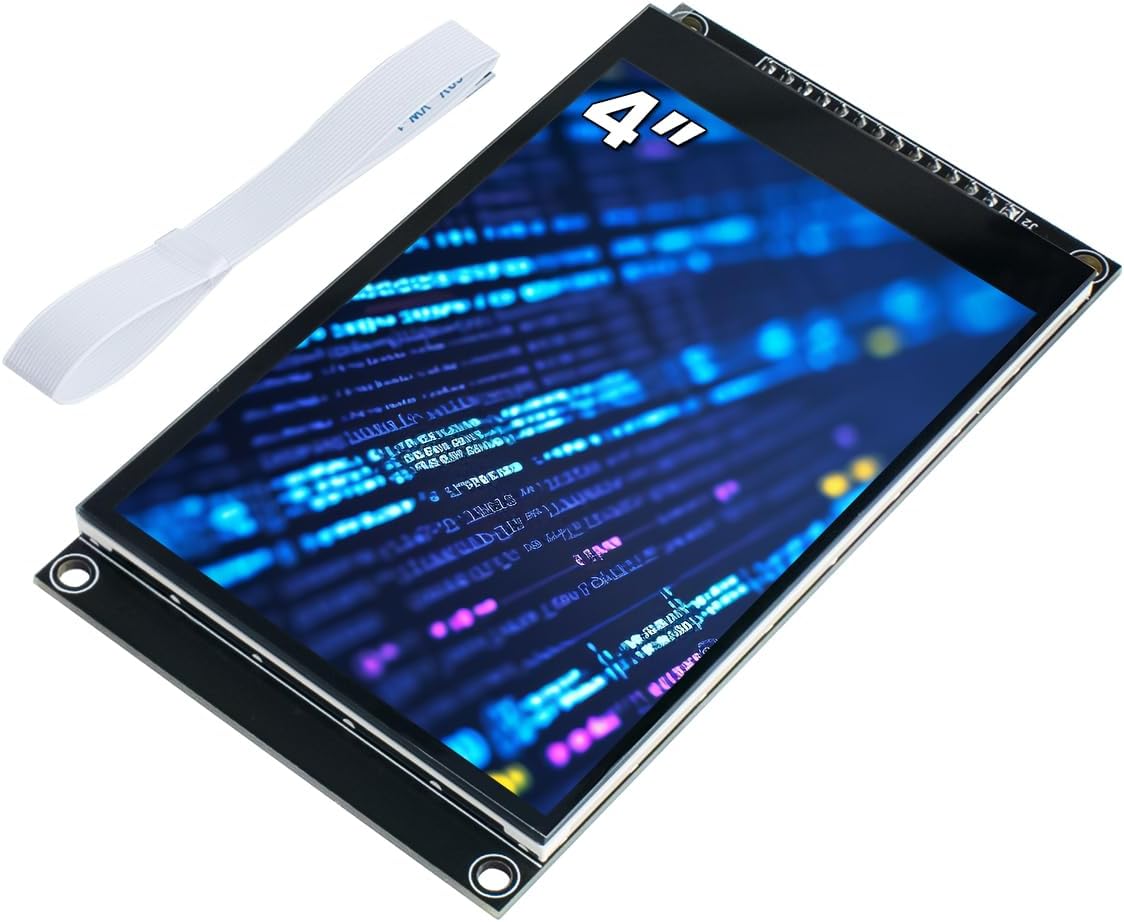
The Hosyond 4.0 Inch 320×480 TN Capacitive Touch Screen LCD Display Module is designed for larger visual output. With a 3.9 rating, it offers a significantly bigger screen size than standard modules. The capacitive touch provides better usability than resistive options.
We may earn a commission when you buy through this link, at no additional cost to you.
Its 320×480 resolution allows for detailed graphics and text. The SPI interface saves pins compared to parallel, though it is more complex than I2C. A TF card slot enables storage expansion for assets or logs. It supports both 5V and 3.3V logic levels.
Examples are provided for various controllers, but compatibility with older boards may require checking. While the lower rating reflects some complexity or build variability, the feature set is robust. The bright display is visible even in moderate lighting.
Ideal for handheld projects or home automation panels, this screen is a good choice for high visual impact. It is suited for advanced users comfortable managing SPI and touch driver configurations for a polished interface.
Capacitive touch allows for smoother interaction and is more durable than resistive screens requiring pressure.
TF card slot supports expanding project capabilities without relying solely on microcontroller memory.
We may earn a commission when you buy through this link, at no additional cost to you.
The Hosyond 5 Pcs 0.96 Inch OLED I2C IIC Display Module offers exceptional value with five units. Rated 4.6 stars, it features a self-luminous design that ensures high contrast and visibility. The compact size fits easily into tight spaces on boards.
We may earn a commission when you buy through this link, at no additional cost to you.
It uses the SSD1306 driver, which is well-supported by libraries for Arduino and ESP32. Since no backlight is needed, power consumption is minimal. This makes it suitable for battery-operated devices requiring long runtime. The included mix of blue and yellow screens adds variety.
Custom fonts can be created using software, though none are embedded. This provides flexibility for custom labels and symbols. The bulk pack is perfect for prototyping multiple devices or keeping a reserve for future builds.
Best for projects needing multiple displays, this bulk set is highly economical. It combines performance with versatility, making it a top choice for makers building several devices simultaneously or maintaining an inventory for repairs.
Purchasing five modules allows for large scale prototyping without additional shipping costs or time.
User-defined fonts enable tailored interfaces that match specific project branding or requirements.
We may earn a commission when you buy through this link, at no additional cost to you.
The 2inch LCD Module Mini LCD Screen provides a compact yet high-resolution solution. With a 4.3 rating, it features an IPS panel for wide viewing angles and vibrant colors. The 240×320 resolution ensures sharp graphics in a small footprint.
We may earn a commission when you buy through this link, at no additional cost to you.
It uses an SPI interface, which requires minimal GPIO for control. The module supports both 3.3V and 5V logic but requires matching voltages to avoid damage. The LED backlight ensures visibility even in dim environments. Dimensions are small enough for handheld devices.
Drivers for the ST7789V chip are widely available, facilitating software setup. While it needs careful voltage handling, the color reproduction is superior to standard character LCDs. It is ideal for small dashboards or wearable tech.
Recommended for portable projects, this display balances size and quality effectively. It is an excellent choice for makers needing visual fidelity without sacrificing portability or board space.
IPS technology ensures that images look consistent from various angles, which is vital for handheld interfaces.
SPI interface uses fewer pins than parallel LCDs, allowing more room for other components on small boards.
We may earn a commission when you buy through this link, at no additional cost to you.
The AITRIP 2PCS 2.0 inch TFT Display OLED LCD Drive IC ST7789V 240RGBx320 Dot-Matrix Interface Compatible with Arduino, Raspberry Pi, ESP32, STM32 is a high-rated option for embedded projects. With a 4.7 rating, it delivers vibrant colors and a solid build. The two-pack offers great value for prototyping.
We may earn a commission when you buy through this link, at no additional cost to you.
Its 240×320 resolution on an IPS panel ensures clear images and wide viewing angles. The SPI interface simplifies wiring while maintaining speed. Backlight LED ensures visibility in low-light conditions, and pin labels are clearly marked for easy setup.
Compatible with many mainstream development boards, it provides flexibility for various projects. It is designed for 3.3V and 5V systems, but users should verify logic levels. The modules are small enough for handheld electronics or compact IoT devices.
Best for dashboard projects or robotics, this display combines reliability with quality. The high customer rating reflects consistent performance, making it a recommended choice for both new and experienced hobbyists.
Compatibility with ESP32 and STM32 allows for integration into IoT projects beyond standard Arduino systems.
Marked pins reduce the risk of wiring errors during initial hardware assembly and testing phases.
We may earn a commission when you buy through this link, at no additional cost to you.
Selecting the right display requires evaluating several key factors to match your project needs.
Choose between character LCDs for simple text and graphical OLED or TFT screens for images. LCDs are cost-effective for status displays, while OLEDs offer better contrast and lower power consumption for portable use. TFTs provide full color for complex interfaces.
For text-only outputs, stick with character LCDs. For visual richness, prefer OLED or TFT panels.
I2C interfaces use only four wires and are easier to wire than parallel interfaces. SPI allows faster data transfer for graphics. Ensure the interface matches your microcontroller's available pins and library support.
Use I2C for simplicity and SPI for higher performance graphical needs.
Resolution dictates how much detail can be shown. A 1602 module displays limited characters, while 128×64 or higher allows for diagrams. Size must fit within your enclosure constraints.
Select resolution based on content complexity and size based on physical space.
Check if the module needs 3.3V or 5V power. OLEDs generally consume less power than LCDs. Consider battery life if the project is portable.
Verify voltage matches your board to prevent damage and ensure stability.
Resistive touch is cheaper and durable, while capacitive touch offers better user experience. Touch screens require more code but enable intuitive interfaces.
Add touch only if user interaction beyond buttons is required.
Some modules include SD card slots for storing assets or logs. This can reduce dependency on external storage devices. Check if the module has onboard memory or supports expansion.
Prioritize modules with expansion if storing large amounts of data locally is essential.
Ensure there are well-maintained libraries for the display driver chip like SSD1306 or ST7789V. Good documentation speeds up development and reduces debugging time.
Choose drivers with strong community support to simplify coding tasks.
Look for modules with robust soldering and sturdy frames. Industrial grades handle heat and vibration better. Consumer grades work fine for hobby projects but may not survive harsh environments.
Select higher build quality if the device will face frequent handling or rough conditions.
Connect the display securely to your microcontroller using appropriate headers or jumper wires. Ensure power and ground connections are correct to prevent short circuits. Double-check pin assignments before applying power.
Install the necessary libraries in your development environment. Initialize the display object in your code and configure contrast settings. Upload a test sketch to verify proper operation before finalizing your project.
Keep the display clean by dusting regularly with a soft cloth. Avoid pressing too hard on the screen, especially for touch models. Store unused modules in anti-static bags to prevent damage from moisture or static discharge.
I2C uses only four wires and addresses devices on a shared bus, saving pins. SPI requires more wires but offers faster data transfer for graphics. I2C is easier to implement for simple displays, while SPI suits complex visuals.
Most OLED and some TFT modules support both 3.3V and 5V. Always check the voltage requirements on the datasheet. Using a logic level converter may be necessary for 5V-only displays on 3.3V boards.
Yes, multiple I2C displays can share the bus if they have unique addresses. For SPI displays, separate chip select pins are needed. Use a multiplexer if pin availability is limited for multiple devices.
Some modules have a potentiometer for manual adjustment. Others use code to control brightness levels. Consult the documentation for your specific model to adjust settings correctly.
LiquidCrystal for LCDs, Adafruit SSD1306 for OLEDs, and Adafruit GFX for SPI displays. Most manufacturers provide example code on their websites. Libraries handle initialization and basic rendering tasks.
They work outdoors but may suffer from sunlight glare. Look for modules with high brightness ratings for outdoor visibility. Using a physical shade or cover can improve readability significantly.
We explored ten top-rated modules ranging from simple character screens to advanced touch interfaces. Each option brings unique strengths suited to different project requirements. Whether you need high contrast or vibrant color, there is a module here that fits.
Prioritize compatibility and interface type to ensure smooth integration with your existing hardware. Consider power needs and display size to match your enclosure and battery constraints. Planning ahead saves time during the assembly phase.
Prices and availability change frequently so verify current listings before purchasing. Check reviews and support resources to confirm the module meets your expectations. With the right choice, your project will have a reliable visual interface.