
Alstar Laser Collimator Alignment for Marca Newtonian Telescopes 1.25 Inch
4.5Editor score
Standard 1.25 inch fit
Red laser with 7 brightness settings
Includes detailed setup instructions
Achieving precise optical alignment is crucial for getting the best views from your Newtonian or reflector telescope. A reliable laser collimator for telescope alignment ensures that your mirrors are perfectly aligned, resulting in sharper images and clearer star fields during your observing sessions.
We have evaluated the leading laser collimators available in the market based on build quality, ease of use, calibration stability, and compatibility with different focuser sizes. Our selection includes options ranging from budget-friendly units to professional-grade tools designed for serious astronomers.
Each pick in this list highlights key features, pros, cons, and specific use cases to help you choose the right tool for your needs. Please note that prices and availability are subject to change, so check the latest details before making your purchase decision.
4.5Editor score

4.5Editor score
4.7Editor score
As an Amazon Associate we earn from qualifying purchases.
The following table provides a side-by-side comparison of all ten laser collimators reviewed in this guide. You can quickly compare their key specifications, compatibility, and unique features to find the best fit for your telescope setup.
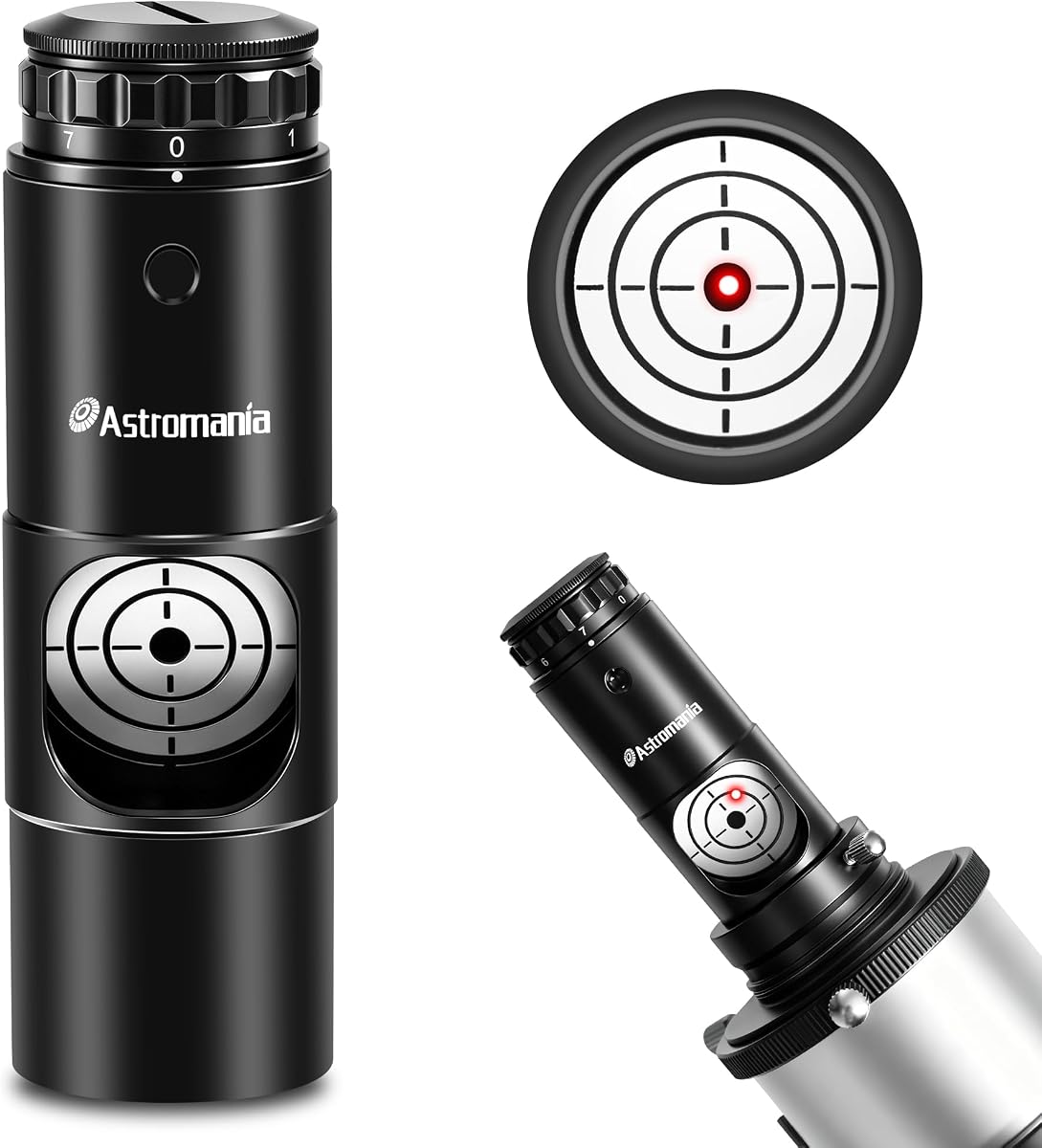


The Astromania Laser Collimator stands out as a top choice for astronomers seeking a reliable alignment tool without breaking the bank. With a strong 4.5 star rating, this model offers a perfect balance of performance, durability, and ease of use for both beginners and experienced observers.
We may earn a commission when you buy through this link, at no additional cost to you.
Its standout feature is the removable 2 inch adapter, which makes it compatible with both standard 1.25 inch and 2 inch diameter focusers. The unit features a red laser beam with seven brightness levels, allowing you to adjust intensity based on ambient light conditions. The durable anodized aluminum body ensures it withstands the rigors of outdoor observing trips.
While the included battery is convenient, replacements require a CR2032 lithium cell which may not be readily available everywhere. Additionally, the three adjustment openings are sealed to protect internal mechanisms, so you need a small screw to access them for calibration checks. These are minor trade-offs given the overall value and performance.
This collimator is ideal for anyone looking for a straightforward, effective tool to achieve precise collimation quickly. Whether you are a beginner learning the ropes or an experienced astronomer needing a backup tool, the Astromania unit delivers the reliability you need for clearer views.
The removable 2 inch adapter ensures this tool works across a wide range of telescope models, eliminating the need for multiple collimators.
Seven brightness levels let you optimize the laser visibility whether you are aligning in a bright garage or under a dark sky.
We may earn a commission when you buy through this link, at no additional cost to you.
For those on a tight budget, the Alstar Laser Collimator offers an excellent entry point into precision telescope alignment. Rated 4.5 stars by users, this tool provides the essential features needed to collimate Newtonian telescopes effectively without the premium price tag.
We may earn a commission when you buy through this link, at no additional cost to you.
This unit is designed specifically for 1.25 inch focusers, making it perfect for standard Newtonian setups. It features a red laser beam with seven brightness levels to suit various lighting conditions. The construction uses durable metal material, ensuring longevity. Importantly, the laser comes fully adjusted, saving you time on initial setup.
The main limitation is that it does not support 2 inch focusers, which might be a constraint if you upgrade your telescope later. Also, the battery is not included, so you will need to source a CR2032 cell separately. Despite these minor drawbacks, it remains a highly functional and affordable option.
This collimator is best suited for beginners or those with standard 1.25 inch telescopes who want a no-fuss tool. If you prioritize value and simplicity, the Alstar unit delivers solid performance and clear instructions to get you observing quickly.
The laser comes pre-adjusted, allowing you to start collimating immediately without needing to tweak settings or calibrate upon arrival.
Its compact body fits naturally in your palm, making it easy to handle and carry to dark sky sites without added bulk.
We may earn a commission when you buy through this link, at no additional cost to you.
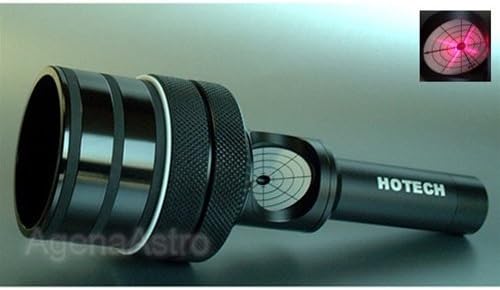
The HoTech SCA Laser Collimator is a game changer for astronomers who demand the highest level of precision. With an impressive 4.7 star rating, this unit solves a common problem in laser collimation: the slop in the adapter mechanism between the laser and the telescope focuser.
We may earn a commission when you buy through this link, at no additional cost to you.
Its innovative self-centering adapter technology ensures precise and repeatable installation in all brands of 1.25 inch and 2 inch focusers. Unlike standard models that rely on thumbscrews or compression rings, this patented mechanism keeps the laser centered on the optical axis. The unit comes with a CR123 battery, ready for immediate use.
The higher price point might be a consideration for casual observers, but the accuracy gain is significant for serious imaging or visual use. The CR123 battery is less common than CR2032, so you may need to buy extras. These are small sacrifices for the enhanced performance.
This tool is best for advanced users or anyone investing in high-end optics who cannot afford alignment errors. If precision is your top priority and you want a tool that stays true to calibration, the HoTech SCA collimator is the definitive choice.
This mechanism ensures the laser stays perfectly centered in the focuser, eliminating the alignment errors common with standard adapters.
Whether you have a 1.25 inch or 2 inch focuser from any manufacturer, the adapter guarantees a consistent, tight fit every time.
We may earn a commission when you buy through this link, at no additional cost to you.
The SVBONY Laser Collimator is a well-regarded tool known for its versatility and reliability. Users appreciate its ability to handle both 1.25 and 2 inch focusers easily. With a triple cemented lens design, it offers a stable red dot that improves alignment consistency.
We may earn a commission when you buy through this link, at no additional cost to you.
The metal body ensures durability, and the seven brightness levels allow for flexible use in different environments. This collimator simplifies the alignment process, making it faster than manual methods. It is particularly useful for astronomers who upgrade between different telescope configurations.
Some users find the instruction manual quite detailed, which is helpful but might be overwhelming at first. Additionally, battery inclusion can vary by region or specific SKU, so it is best to check current listings. These are minor issues that do not detract from its overall utility.
This collimator is a great all-rounder for anyone needing a reliable tool for reflector telescopes. Whether you are setting up for a night session or calibrating during the day, the SVBONY unit provides the precision you need for clearer views.
This lens design improves the stability of the red dot, ensuring consistent alignment readings across multiple uses.
The removable 2 inch adapter means you can use this tool with your current scope and future upgrades without buying a new one.
We may earn a commission when you buy through this link, at no additional cost to you.
The SVBONY Red Laser Collimator Bundle offers a comprehensive solution for alignment and viewing. While ratings are still pending, the features promise excellent utility. It includes a 62 degree wide angle eyepiece, adding value for users looking for enhanced viewing options alongside collimation.
We may earn a commission when you buy through this link, at no additional cost to you.
Designed for standard 1.25 inch focusers, this unit features a Class I laser safety rating, making it safer for eyes during use. The red laser has adjustable brightness, allowing for flexibility in different observing environments. This bundle is ideal for those who want a complete package.
The lack of current ratings means users should rely on brand reputation and feature set. The bundle nature might mean different items based on the specific SKU, so checking details is key. However, the inclusion of accessories like the eyepiece adds significant value.
This tool is suited for astronomers wanting a collimator plus extra utility in one purchase. Whether you are focused on lunar observation or deep sky targets, the wide angle view and reliable alignment capabilities make this a compelling package.
The 62 degree field of view enhances your viewing experience, providing a more immersive look at the night sky.
Complying with Class I standards, this laser is designed to be safer for your eyes during alignment sessions compared to Class IIIA.
We may earn a commission when you buy through this link, at no additional cost to you.
The Alstar Laser Collimator with both 1.25 and 2 inch options is perfect for those planning to upgrade their equipment. It features a triple cemented lens for stable beam projection and a 45 degree side window to monitor reflection accuracy. This makes it a professional-grade tool for precise alignment.
We may earn a commission when you buy through this link, at no additional cost to you.
The 2 inch adapter is included, making it versatile for different focuser sizes. The laser has seven brightness levels, allowing for use in various light conditions. However, note that the battery is not included, so you will need to source a CR2032 cell separately.
The sealed adjustment openings protect internal mechanisms but require a tool to access. This design ensures calibration is maintained over time but adds a small step for tuning. Despite this, the unit offers solid performance and reliability for both beginners and pros.
This collimator is ideal for anyone looking for a future-proof tool that grows with their telescope. Whether you are aligning for casual viewing or imaging, the included adapter and precision features make it a smart investment.
Included 2 inch adapter means you are ready for future telescope upgrades without needing to purchase another collimator.
The 45 degree side window lets you check if the laser reflects back on itself for precise adjustment verification.
We may earn a commission when you buy through this link, at no additional cost to you.
This SVBONY collimator bundle includes a phone adapter, making it unique for those who capture images with their smartphones. The collimator supports eyepieces from 25 to 48mm and works with a wide range of popular phone models. It also includes a removable 2 inch adapter for standard focusers.
We may earn a commission when you buy through this link, at no additional cost to you.
The collimator itself is user-friendly with seven brightness levels and a solid metal build. The phone clamp features an adjustable locking mechanism and high density EVA pads to protect your device during use. This setup is especially handy for astrophotography beginners who want to try mobile imaging.
One limitation is that the phone adapter does not fit 2 inch eyepieces. Additionally, compatibility is best with specific brands, so checking your model beforehand is wise. These constraints are offset by the convenience of integrating your phone into the observing workflow.
This bundle is ideal for those interested in combining collimation with mobile astrophotography. If you want to take photos of the sky without investing in a dedicated camera yet, this setup offers an accessible entry point with solid alignment capabilities.
The included phone adapter allows you to mount your mobile device directly to the eyepiece for easy astrophotography.
Fits eyepiece diameters from 25 to 48mm, covering most standard scopes and optical devices.
We may earn a commission when you buy through this link, at no additional cost to you.
This SVBONY bundle offers both a laser collimator and a Cheshire eyepiece, providing two robust methods for aligning your telescope. The Cheshire eyepiece is precision machined from aluminum and requires no batteries. The laser unit features seven brightness levels and includes a 2 inch adapter.
We may earn a commission when you buy through this link, at no additional cost to you.
The Cheshire eyepiece is useful for secondary mirror collimation and works well during daylight or with illuminated tools. The laser handles primary mirror alignment quickly. Together, they cover all aspects of telescope alignment effectively. Users rate this bundle highly for its completeness.
The main limitation is that the Cheshire eyepiece is best used during the day or with specific lighting. The bundle price is higher than individual components, but the value of having two tools is significant. This ensures you have options depending on conditions.
This bundle is ideal for astronomers who want a comprehensive alignment kit. Whether you are setting up a Newtonian or SCT telescope, having both tools ensures you can achieve precise collimation in various scenarios.
With both a laser and Cheshire eyepiece, you have backup options to ensure accurate alignment regardless of light conditions.
The Cheshire eyepiece allows for alignment during the day when laser use might be less effective due to ambient brightness.
We may earn a commission when you buy through this link, at no additional cost to you.
The Alstar standard model offers a reliable solution for beginners looking for a straightforward collimation tool. Rated 4.5 stars, it comes fully adjusted and ready for use. The metal construction ensures durability, and the red laser has seven brightness levels for flexibility.
We may earn a commission when you buy through this link, at no additional cost to you.
Designed for 1.25 inch focusers, this unit provides clear instructions in German and English. This makes it accessible for a wide range of users. The adjustment openings are sealed to protect against dust, which helps maintain calibration over time. It is a great choice for standard telescopes.
Battery replacement requires unscrewing a small cap at the rear, and a CR2032 cell is not included. This is a minor inconvenience compared to the overall utility. The unit allows single-person operation, making collimation faster and easier compared to older methods.
This tool is perfect for anyone starting their astronomy journey with a Newtonian telescope. The combination of solid build, clear instructions, and ease of use makes it a recommended pick for entry-level alignment needs.
The unit arrives fully adjusted, saving you time and ensuring accurate performance right from the first use.
Sealed adjustment openings protect the internal alignment from dust and debris, preserving accuracy over time.
We may earn a commission when you buy through this link, at no additional cost to you.
The Ocal Pro V4.0 Electronic Collimator represents the cutting edge of telescope alignment technology. It uses software-guided calibration circles to enable quick and precise adjustments. Compatible with both Newtonian and Schmidt Cassegrain telescopes, it offers a portable solution for field adjustments.
We may earn a commission when you buy through this link, at no additional cost to you.
Each unit is factory-centered to pixel-level precision, ensuring you start with optimal baseline accuracy. The all-in-one design makes it convenient for mobile astronomy setups. This tool is particularly useful for those who want to avoid the guesswork of traditional collimators.
The main consideration is the higher price and the requirement to set up with a smartphone. Some users may prefer mechanical tools over electronic ones. However, the precision and ease of use are significant benefits for serious astronomers aiming for perfect alignment.
This electronic collimator is ideal for those seeking the highest accuracy in a modern package. Whether you are preparing for critical imaging or fine-tuning your scope, the Ocal Pro delivers professional-grade capabilities in a user-friendly format.
Built-in calibration circles help you make precise optical axis adjustments without needing manual estimation or guesswork.
The all-in-one design allows you to perform complete collimation on-the-go, perfect for field adjustments and travel setups.
We may earn a commission when you buy through this link, at no additional cost to you.
Choosing the right laser collimator depends on your telescope type, your alignment needs, and your budget. Here are the key factors to consider to ensure you get the best tool for your setup.
Ensure the collimator matches your focuser size. Most basic models support 1.25 inch focusers, while many versatile options include adapters for 2 inch focusers. If you upgrade your equipment later, a dual-size unit saves you from buying a new tool.
Look for models that mention removable adapters or dual compatibility to future-proof your purchase.
A red laser beam with adjustable brightness levels is ideal for different lighting conditions. Some units offer seven levels to help you see the beam clearly in bright environments or adjust for dark skies. Also check the safety rating; Class IIIA lasers are common, but Class I or II are safer for eye protection.
Prioritize units with adjustable brightness to accommodate both daytime and nighttime alignment sessions.
Since collimators are used outdoors, a durable metal construction is essential. Look for units with anodized aluminum bodies that resist wear and tear. This ensures the internal alignment remains stable over time and the tool survives transport to dark sky sites.
Select a model with solid metal casing to guarantee long-term reliability and protection against environmental factors.
Precision laser collimators must maintain calibration to be effective. Some models come with sealed adjustment openings to protect internal mechanisms from dust. Others feature self-centering adapters that prevent slop and ensure the laser stays true over repeated uses.
Choose tools with sealed internal mechanisms or advanced centering tech to maintain accuracy over time.
A good collimator should be easy to set up and use alone. Look for features like front emission openings and side windows for monitoring reflection. Detailed instruction manuals in multiple languages also help beginners understand the process quickly without frustration.
Opt for units with clear instructions and intuitive layouts to make alignment a straightforward task.
Check which battery the collimator uses. Most common are CR2032 or CR123 cells. Some units include the battery, while others require you to buy it separately. This affects immediate usability, especially if you are planning an outing soon after purchase.
Prefer models that include the battery or use common types to avoid setup delays.
Advanced users may benefit from features like triple cemented lenses for stability or bundle options with accessories like phone adapters or Cheshire eyepieces. These additions can enhance utility, allowing for astrophotography or dual-method alignment without buying extra parts.
Consider bundles or models with extra features if you have specific needs like imaging or multiple telescope types.
Prices vary widely from affordable options under $30 to high-end models over $200. Determine how critical precision is for your use case. Beginners might find standard models sufficient, while astrophotographers may need premium units for perfect alignment.
Balance cost against features to find a collimator that fits your specific needs and budget constraints.
To use the collimator, insert it into your telescope's focuser until it fits snugly. Adjust the laser brightness to suit your environment. Turn on the laser and observe the beam on the primary mirror or secondary mirror target depending on your setup.
Align the secondary mirror first by adjusting the screws until the laser dot is centered on the primary mirror mark. Then adjust the primary mirror until the dot returns to the center of the collimator window. This ensures both mirrors are properly aligned.
Store the collimator in a protective case when not in use to prevent dust and damage. Keep it away from extreme temperatures. Check calibration occasionally by comparing with known targets or another alignment tool to ensure continued accuracy.
A laser collimator is a tool that emits a laser beam through the focuser to help align the optical mirrors of a telescope. It ensures the primary and secondary mirrors are perfectly aligned to produce the sharpest possible images. This tool is especially useful for Newtonian and reflector telescopes.
If you own a Newtonian or reflector telescope, a laser collimator is highly recommended to maintain optical accuracy. It helps you achieve precise alignment which improves image clarity. For refractors, it may not be necessary unless you are doing advanced maintenance.
To check calibration, insert the collimator into the focuser and rotate it slowly. If the laser spot stays centered on a fixed target like a piece of paper, the collimator is calibrated. If it moves, the internal alignment may need adjustment.
Yes, laser collimators can be used during the day, but visibility may be reduced due to ambient light. Using a screen or paper to capture the laser dot helps. Some models offer adjustable brightness to improve daytime visibility.
Not all collimators fit 2 inch focusers natively. Many models designed for 1.25 inch focusers come with removable 2 inch adapters. Always check the product specs to ensure compatibility with your focuser size before purchasing.
Battery life depends on usage patterns. Most CR2032 or CR123 batteries last several hours of continuous use. If you use the collimator for short alignment sessions, one battery can last months. Rechargeable options are rare but available in some advanced models.
Yes, laser collimators designed for telescopes typically comply with Class IIIA safety standards. They are safe for eye exposure provided you do not stare directly into the beam. Most units have safety features to prevent accidental eye exposure.
It is recommended to collimate your telescope before every observing session, especially if you have moved it or bumped it. Regular collimation ensures consistent image quality and prevents degradation of the telescope's optical performance over time.
In this guide, we reviewed ten laser collimators ranging from budget-friendly options to premium tools for high precision. Our top picks include the Astromania for overall value, Alstar for affordability, and HoTech for advanced accuracy.
When choosing a collimator, prioritize compatibility with your focuser, build quality, and features like adjustable brightness. Consider your experience level and whether you need basic alignment or advanced tools for imaging and future telescope upgrades.
Remember that prices and availability may change, so check the latest details before buying. Whether you are a beginner or a seasoned observer, a reliable laser collimator is an essential tool for getting the best views from your telescope.